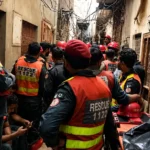







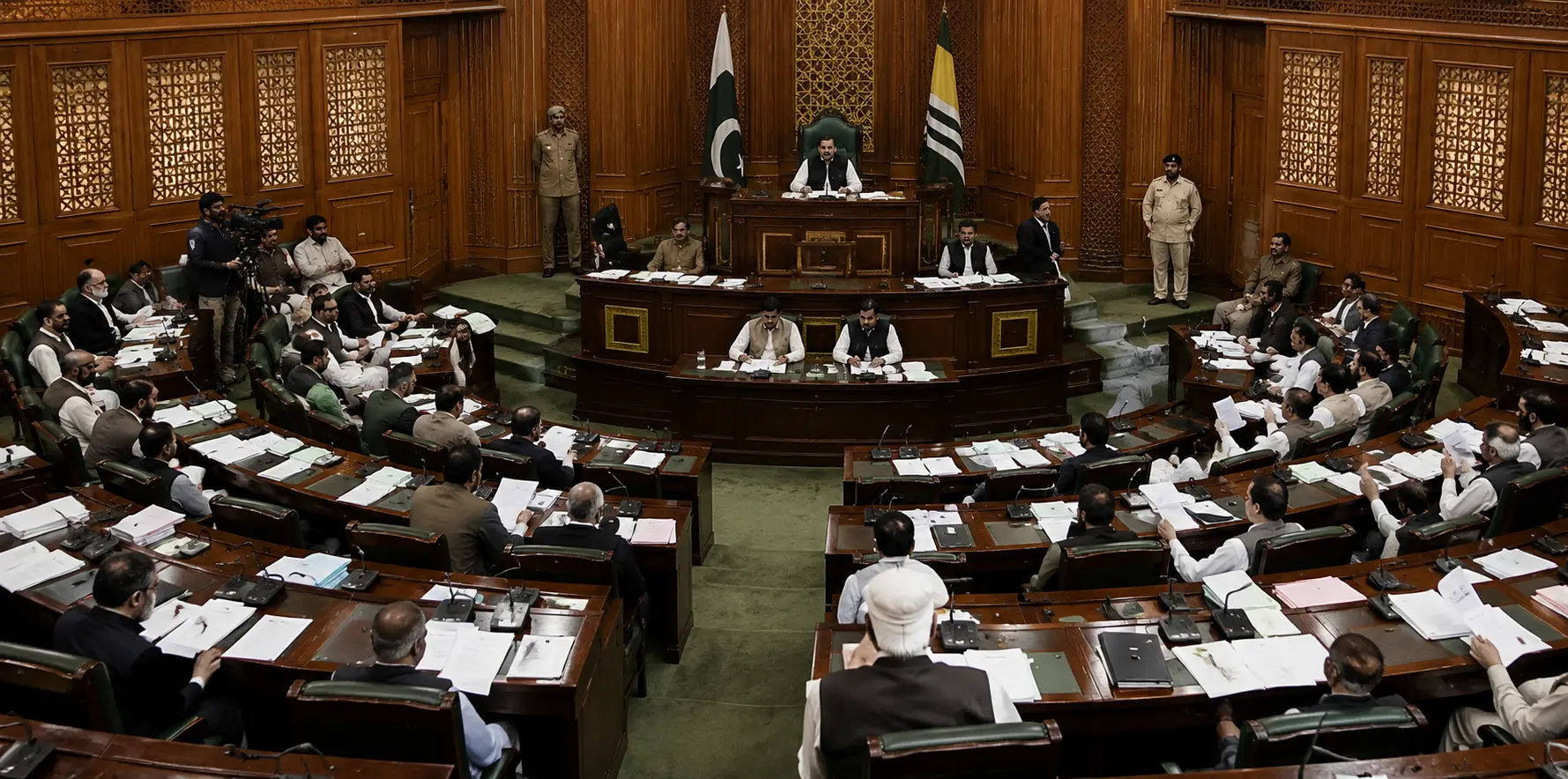

The Azad Jammu and Kashmir (AJK) Legislative Assembly has unanimously adopted resolutions supporting the creation of an independent Truth and Reconciliation Commission to investigate the recent violence in Rawalakot, as political tensions continue ahead of the second phase of the territory’s legislative elections.
The resolutions were passed during a special sitting of the assembly on July 30, attended by nine lawmakers. Members called for an impartial inquiry into the clashes that have shaken several districts in recent weeks and urged authorities to pursue dialogue to help restore public confidence. The assembly also stressed the need to address allegations of electoral irregularities before the remaining phases of voting proceed.
The move comes as campaigning intensifies before polling in the Muzaffarabad Division, scheduled for August 2. Security remains heightened across the region following weeks of unrest linked to protests, clashes and political disagreements over the electoral process.
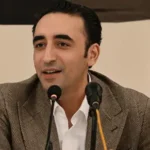
Separately, Pakistan Peoples Party (PPP) Chairman Bilawal Bhutto Zardari warned that any election perceived as lacking credibility in Azad Kashmir could have wider political consequences. He said an allegedly “stolen” election would not only undermine public trust in the democratic process but could also place additional strain on the relationship between coalition partners at the federal level.
Bilawal’s remarks have added another political dimension to an already sensitive situation, with opposition parties and civil society groups continuing to call for transparency throughout the electoral process. While allegations of election irregularities have been raised by various political actors, these claims remain disputed and have not been independently verified.
The proposed Truth and Reconciliation Commission has yet to be formally established, and no details regarding its mandate, membership or timeline have been announced. However, supporters argue that an independent inquiry could help clarify the circumstances surrounding the Rawalakot violence, establish accountability where necessary and reduce political tensions before the remaining phases of the election.
The developments highlight the increasingly close link between the security situation and the electoral process in AJK. With polling scheduled to continue through August 10, authorities face the challenge of ensuring a peaceful voting environment while addressing concerns raised by political parties, rights organisations and local communities.
As election preparations continue, attention will remain focused on whether the proposed commission moves beyond the resolution stage and whether upcoming polling proceeds without further unrest. The outcome is expected to influence both the credibility of the AJK elections and the broader political landscape in Pakistan.