







For decades, Pakistan’s automotive industry followed a familiar formula. Cars were designed overseas, while local manufacturers focused on assembling them for the domestic market. From compact hatchbacks to family sedans and commercial vehicles, innovation largely arrived from abroad. Electric vehicles, meanwhile, seemed like a technology reserved for countries with larger economies and more advanced manufacturing capabilities.
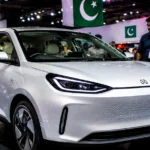
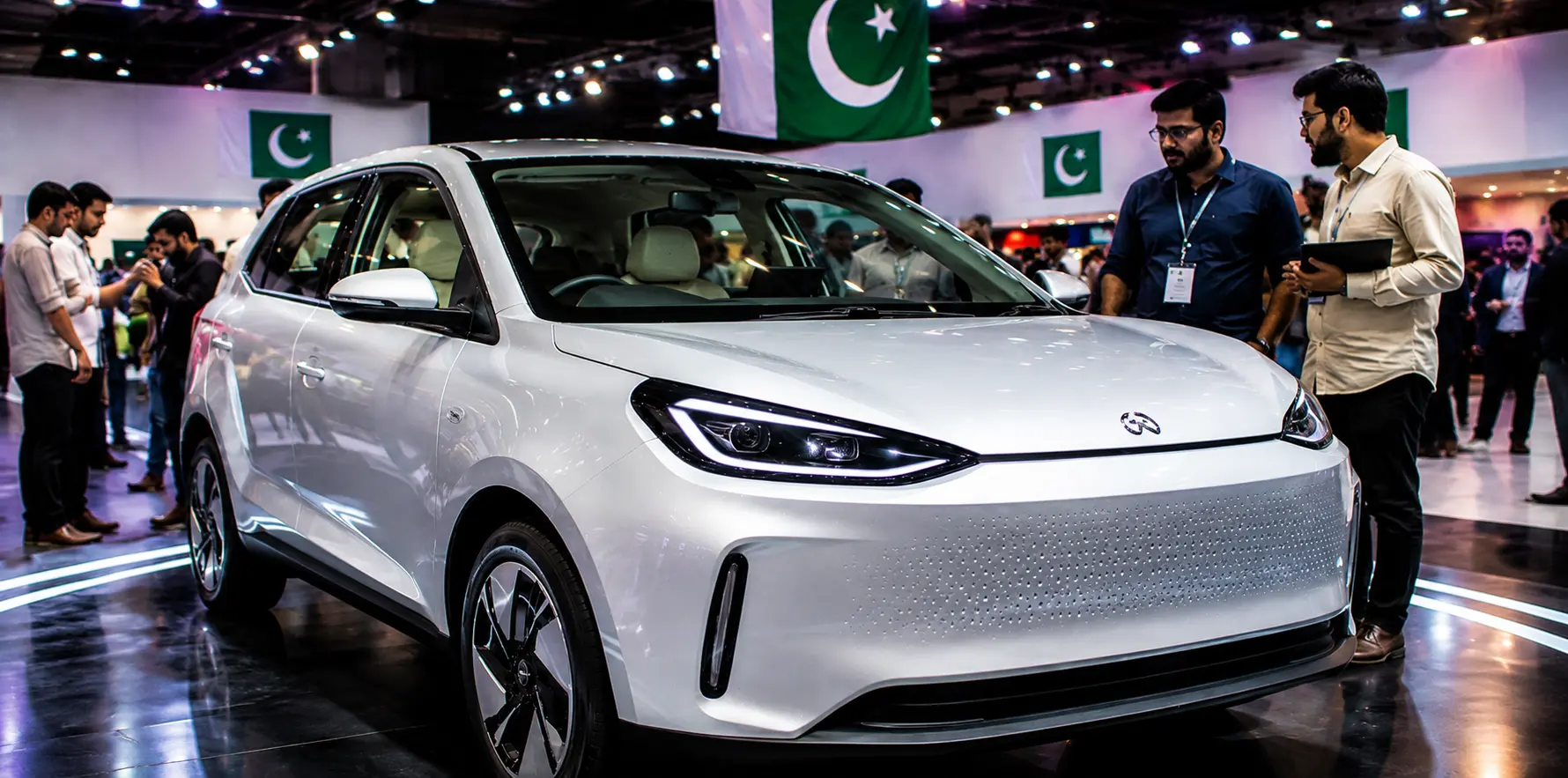
That perception began to change in August 2022 when the NUR-E 75 was unveiled in Karachi. Developed by the DICE Foundation in collaboration with Pakistani universities and industry partners, the prototype became widely recognized as Pakistan’s first locally developed electric hatchback. More importantly, it represented something the country had rarely attempted before: designing and engineering an electric vehicle instead of simply assembling one.
The unveiling was significant not because Pakistan had suddenly become an electric vehicle powerhouse, but because it demonstrated that local engineers, designers and researchers were capable of contributing to one of the world’s fastest-growing industries. It introduced a new possibility—that Pakistan could eventually become a creator of automotive technology rather than only a consumer of it.
The timing could hardly have been better. Around the world, governments and automakers are investing billions of dollars in electric mobility as countries work to reduce carbon emissions and dependence on fossil fuels. Electric vehicles are no longer viewed as a niche technology; they are becoming an essential part of the future of transportation.
Pakistan faces many of the same challenges driving this global transition. Rising fuel prices, increasing urban air pollution and dependence on imported petroleum products have all intensified interest in cleaner alternatives. The country’s National Electric Vehicle Policy also aims to encourage EV adoption while supporting local manufacturing and reducing emissions, creating an environment where projects like the NUR-E 75 carry greater importance than ever before.
Unlike established global manufacturers, the team behind the NUR-E 75 did not attempt to compete immediately with international brands such as Tesla or BYD. Instead, the project’s primary objective was to demonstrate local engineering capability. The prototype showcased modern styling, practical urban dimensions and an electric powertrain developed with contributions from Pakistani universities, researchers and engineers. Reports at the time noted that the vehicle featured a 35-kWh battery pack and an estimated driving range of more than 200 kilometres under planned specifications, although the prototype still required further testing and regulatory approvals.
Its unveiling attracted attention far beyond the automotive sector. Engineers saw it as proof that local expertise could move beyond manufacturing into product development. University students viewed it as inspiration, while entrepreneurs and investors saw another sign that Pakistan’s innovation ecosystem was gradually expanding into industries once considered out of reach.
Still, building a successful automotive company involves far more than developing a prototype.
Turning an electric vehicle into a commercially viable product requires substantial investment, large-scale manufacturing facilities, reliable supplier networks, rigorous quality testing, after-sales service and widespread charging infrastructure. Consumer confidence also plays a crucial role, particularly in a market where conventional petrol-powered vehicles have dominated for decades.
Pakistan’s EV ecosystem is still in its early stages. Public charging infrastructure remains limited, financing options for electric vehicles are still developing and awareness among consumers continues to grow slowly. These challenges mean that producing a successful locally built EV will require patience, long-term planning and consistent public and private investment.
History, however, shows that every successful automotive nation started somewhere.
Countries such as Japan, South Korea and China spent decades building domestic engineering expertise before becoming global manufacturing leaders. Their progress was driven by sustained investment, research and industrial partnerships rather than overnight success. Pakistan’s journey, if it continues in the same direction, is likely to follow a similar long-term path.
The NUR-E 75 therefore represents more than a new vehicle. It reflects a change in mindset.
Instead of asking whether advanced automotive technology can be imported, it encourages Pakistan to ask whether it can be designed, engineered and eventually manufactured at home. That shift has implications far beyond the automobile industry. It has the potential to inspire universities, startups, technology companies and manufacturers to pursue products built on local talent and innovation.
Pakistan already possesses many of the ingredients needed for that future. The country has a young population, an expanding technology sector, growing engineering talent and increasing interest in renewable energy. Electric motorcycles are gradually entering the market, clean-energy investments continue to expand and awareness of sustainable transportation is steadily increasing.
Whether the NUR-E 75 itself reaches mass production remains uncertain. That uncertainty does not diminish its importance.
Some innovations are remembered not because they dominated the market, but because they changed the direction of an industry. The NUR-E 75 demonstrated that Pakistan has the technical capability to participate in the global transition toward electric mobility. It challenged long-held assumptions about what local engineers and manufacturers could achieve and opened the door to future projects that may build on its foundation.
Years from now, Pakistan’s electric vehicle industry may include companies and technologies that do not yet exist. If that future becomes reality, the unveiling of the NUR-E 75 is likely to be remembered as one of the moments when the country’s journey toward locally developed electric mobility truly began.