






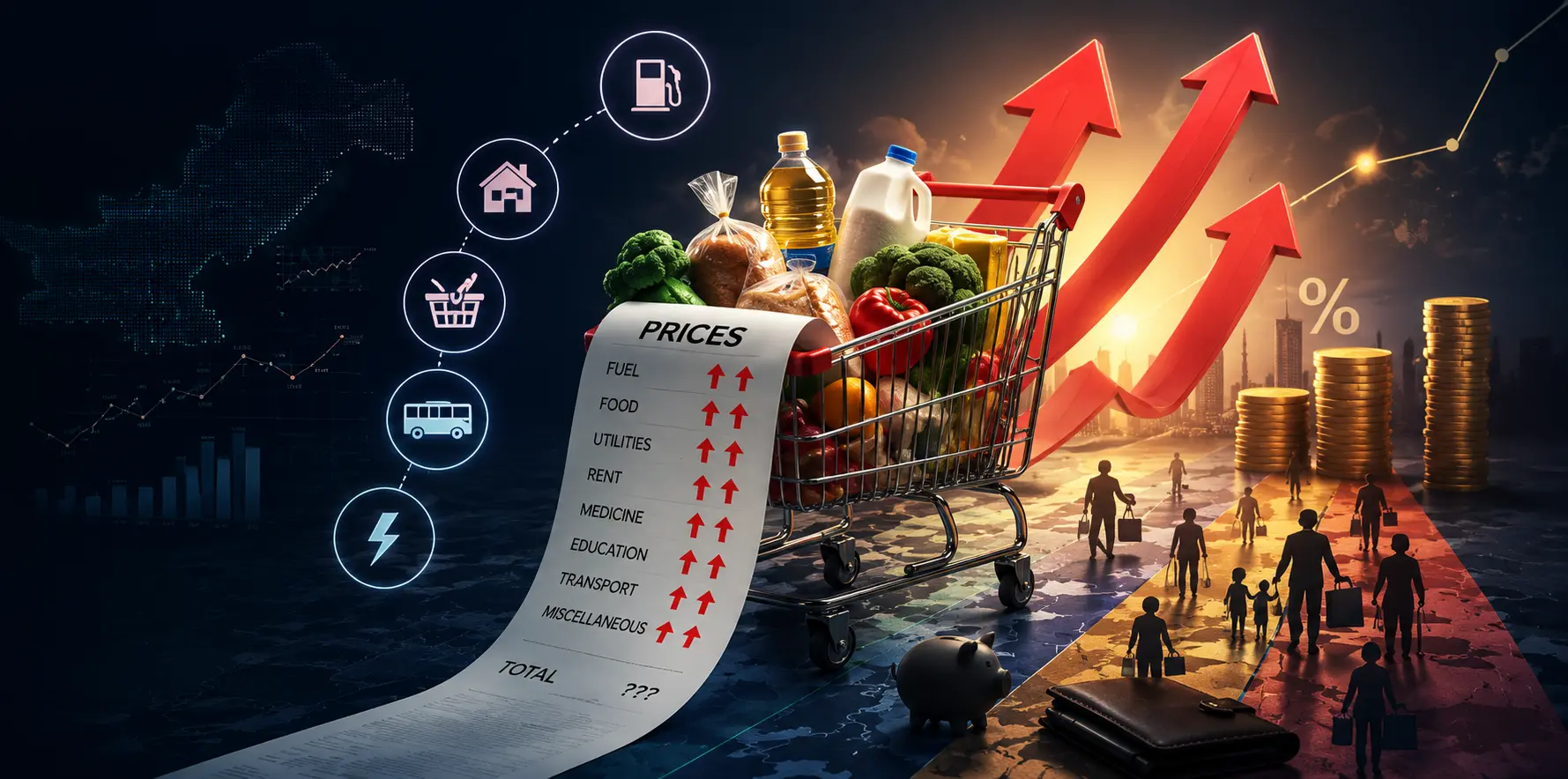

Almost everyone has experienced the effects of inflation, even if they don’t always recognize the term. A trip to the supermarket costs more than it did a year ago. Fuel prices fluctuate, school fees increase, utility bills become harder to manage and everyday expenses gradually consume a larger share of household income. These changes are all signs of inflation at work.
In simple terms, inflation is the gradual rise in the prices of goods and services over time. As prices increase, the purchasing power of money declines. This means the same amount of money buys fewer products and services than it did before. Inflation does not make money disappear from your wallet, but it quietly reduces what that money can actually buy.
Imagine taking the same amount of cash to a supermarket today that you carried five years ago. Instead of returning home with a trolley full of groceries, you may only be able to purchase a few bags of essentials. That difference illustrates how inflation affects everyday life. Families often respond by cutting unnecessary spending, delaying major purchases or searching for cheaper alternatives to stay within their budgets.
There is no single cause of inflation. Prices can rise for many reasons, and they often occur together. One common reason is when demand for products grows faster than businesses can produce them. Another is when production costs increase. Rising fuel prices, higher transportation expenses, poor harvests, currency depreciation and disruptions to global trade can all make goods more expensive to produce and deliver. Businesses facing these higher costs frequently pass some of those increases on to consumers.
Supply chains also play a significant role. Consider a simple loaf of bread. Before it reaches a supermarket shelf, wheat must be grown, harvested, transported to a mill, processed into flour, delivered to a bakery and finally distributed to retailers. If costs rise at any stage—whether due to fuel prices, labour expenses or transportation—the final price paid by consumers usually increases. The same principle applies to electronics, clothing, medicines and countless other everyday products.
Not all inflation is necessarily harmful. Economists generally consider a low and stable rate of inflation to be a normal feature of a healthy economy. Moderate inflation often reflects growing consumer demand, expanding businesses and rising wages. Problems begin when inflation becomes unusually high or remains elevated for an extended period. In those situations, wages often struggle to keep pace with rising prices, reducing people’s purchasing power and placing increasing pressure on household finances.
The COVID-19 pandemic demonstrated how quickly inflation can spread across the global economy. Factory shutdowns, shipping delays and shortages of raw materials disrupted supply chains around the world just as consumer demand began recovering. The imbalance between supply and demand caused prices to rise in many countries simultaneously, affecting everything from food and fuel to vehicles and household appliances.
Inflation does not affect everyone equally. Families whose incomes increase alongside rising prices may find it easier to cope than pensioners, retirees or workers with fixed salaries. Savings can also lose value if they earn lower returns than the rate of inflation. For example, if your savings account earns 5% interest while prices increase by 10%, your money is effectively losing purchasing power even though the balance in your account continues to grow.
Businesses face their own challenges during periods of inflation. Small restaurants, retailers and independent shops often operate with limited profit margins, making it difficult to absorb higher costs for rent, electricity, raw materials and wages. Many respond by increasing prices, reducing product sizes, delaying expansion plans or finding more efficient ways to operate.
Housing provides another clear example of inflation’s impact. Rising land prices, construction materials, labour costs and financing expenses all contribute to higher property prices and rental costs. For many families, home ownership becomes increasingly difficult, while renters face steadily rising monthly payments that consume a larger share of household income.
Governments and central banks have several tools to manage inflation, but none offer an immediate solution. One of the most important is adjusting interest rates. When interest rates rise, borrowing becomes more expensive for households and businesses. As spending slows, demand often eases, reducing pressure on prices over time. While higher interest rates can help control inflation, they may also slow economic growth, making it important for policymakers to strike the right balance.
Although individuals cannot control national inflation, they can take practical steps to reduce its impact. Creating a realistic budget, building an emergency fund, reducing unnecessary debt, investing for the long term and continuously improving professional skills can strengthen financial resilience. Developing additional sources of income, particularly through digital work or entrepreneurship, can also help households adapt during periods of rising living costs.
Inflation is far more than an economic term discussed by policymakers or financial experts. It influences nearly every aspect of daily life, from grocery shopping and transport costs to business decisions, education expenses and retirement planning. Understanding why inflation occurs allows people to make more informed financial choices instead of reacting to rising prices with uncertainty.
No economy can eliminate inflation entirely, and periods of higher inflation are often followed by greater stability as markets adjust. Strong economic policies, productive businesses and informed consumers all contribute to keeping inflation under control. The better people understand how inflation works, the better prepared they are to protect their finances and make confident decisions in an ever-changing economy.