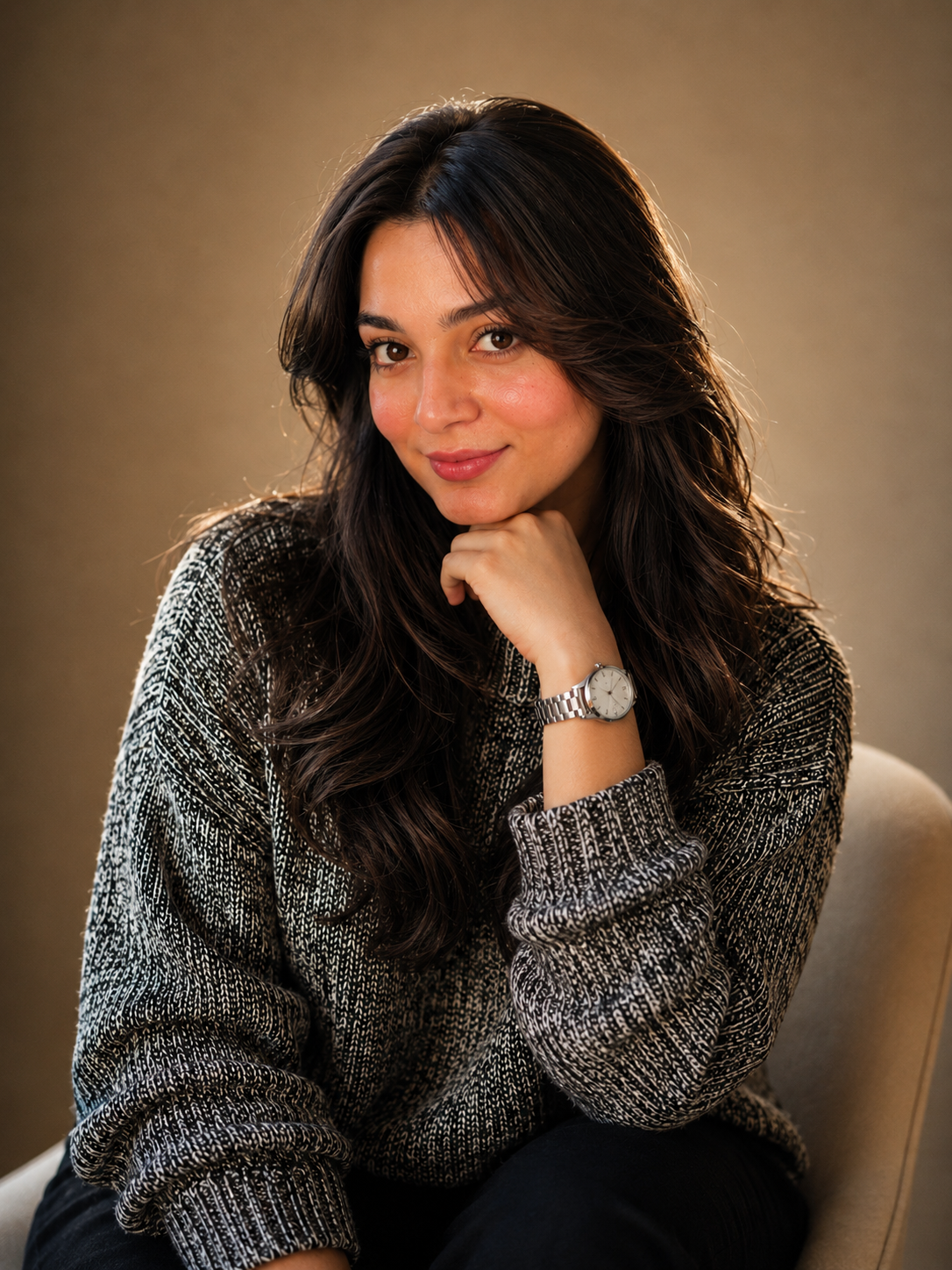



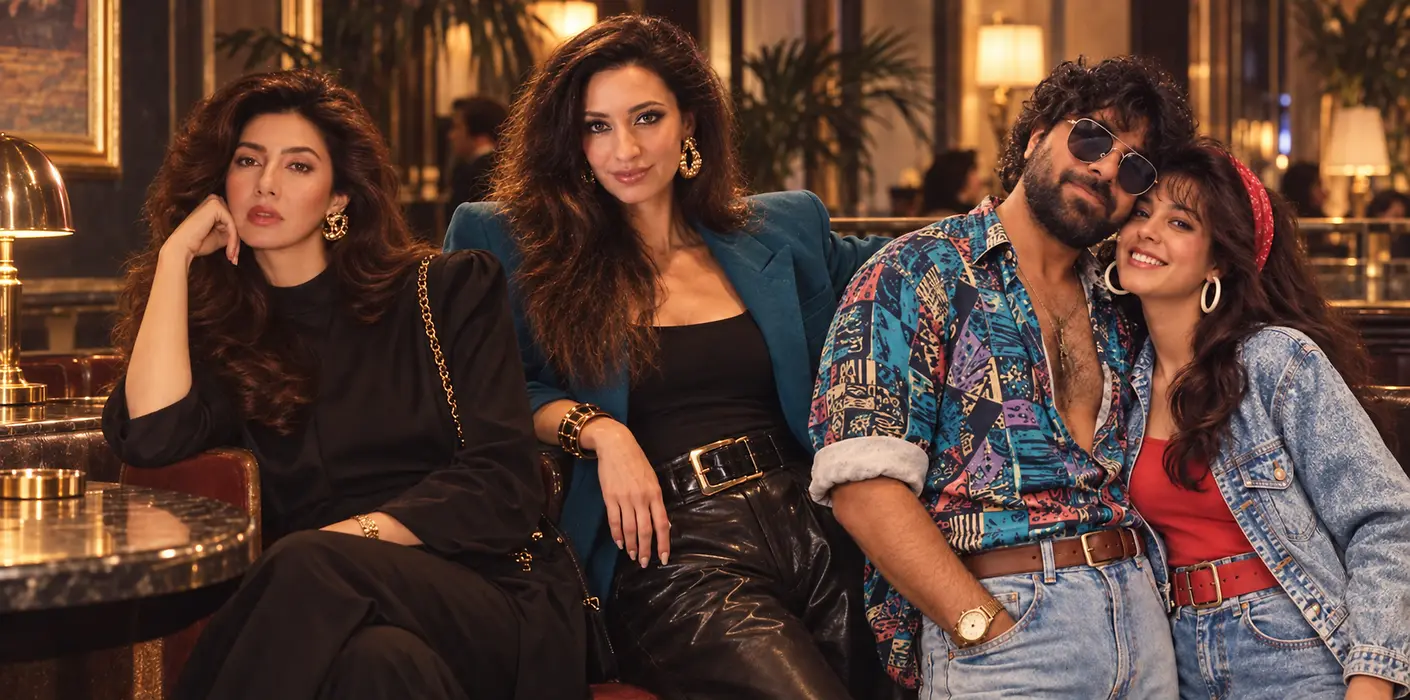
Pakistani celebrities are embracing a viral artificial intelligence trend that transports their photographs back to the 1980s, filling social media with retro hairstyles, vintage fashion and nostalgic portraits. But alongside the entertainment, the trend is generating a more serious conversation about consent, privacy and the growing power of AI-generated imagery.
The trend uses generative AI tools to transform contemporary photographs into stylised portraits inspired by the 1980s. Pakistani actors and other entertainment personalities have joined thousands of social media users experimenting with the aesthetic.
Saboor Aly and Yasir Hussain are among the celebrities who have shared AI-generated transformations. Entertainment platform Mashion also posted retro interpretations featuring several prominent actors, including Mahira Khan, Mawra Hocane, Ayeza Khan, Anmol Baloch, Sanam Saeed, Aina Asif and Zara Noor Abbas.
Yasir shared AI-generated images featuring himself and Iqra Aziz, while Saboor posted an image alongside Ali Ansari. Shahroz Sabzwari, Mariyam Nafees, Anoushey Ashraf, Zhalay Sarhadi, Noor Hassan, Nimra Khan and Armeena Khan were also among the personalities highlighted as participating in the trend.
On the surface, the appeal is straightforward. AI allows users to recreate an era they may never have experienced, producing highly polished versions of themselves with the styling and visual character associated with decades-old photographs.
The conversation, however, changed as social media users began questioning the implications of using real faces to create synthetic images, particularly when photographs of other people are involved.
Digital rights activist Usama Khilji raised concerns about people casually sharing facial images with generative AI systems. His warning brought attention to the wider risks associated with digital likenesses as AI-generated content becomes increasingly realistic.
The issue is broader than the ’80s trend itself. Generative AI can now create highly convincing images of real people, making consent increasingly important. A harmless-looking retro portrait and a malicious deepfake are very different uses of the technology, but both demonstrate how easily a person’s likeness can be digitally recreated.
That distinction matters. Uploading a photograph to an AI service does not automatically mean it will be used to create a deepfake. Data handling varies between platforms and depends on their privacy policies, settings and terms. Users should therefore understand how a particular service handles uploaded photographs rather than assuming all AI platforms operate in the same way.
Consent becomes even more important when someone generates or publishes AI images of another person. Celebrities may already have thousands of publicly accessible photographs online, but public visibility does not eliminate questions about how their likenesses should be used in synthetic content.
Amid the wave of artificial nostalgia, musician Bilal Maqsood offered a humorous contrast. Instead of asking AI to imagine him in the 1980s, he shared a genuine photograph from his earlier Strings days, reminding followers that some celebrities do not need artificial intelligence to revisit the era.
That response captured both sides of the trend: the playful appeal of generative AI and the strange new relationship between authentic memories and synthetic ones.
For Pakistan’s entertainment industry, the viral portraits are another example of how quickly AI is becoming embedded in mainstream digital culture. Actors, musicians and influencers can experiment with entirely different visual identities in seconds, while audiences increasingly encounter images whose authenticity may not immediately be obvious.
The ’80s aesthetic will eventually be replaced by another social media trend. The questions surrounding it are likely to remain.
As generative AI becomes better at reproducing human faces, the challenge will be ensuring that creativity does not outrun conversations about consent, privacy and ownership of a person’s digital identity.