








Syria has rejected Israel’s justification for striking the Abu al-Duhur airbase in the country’s north, denying Israeli claims that the facility was being prepared for a Turkish military buildup.
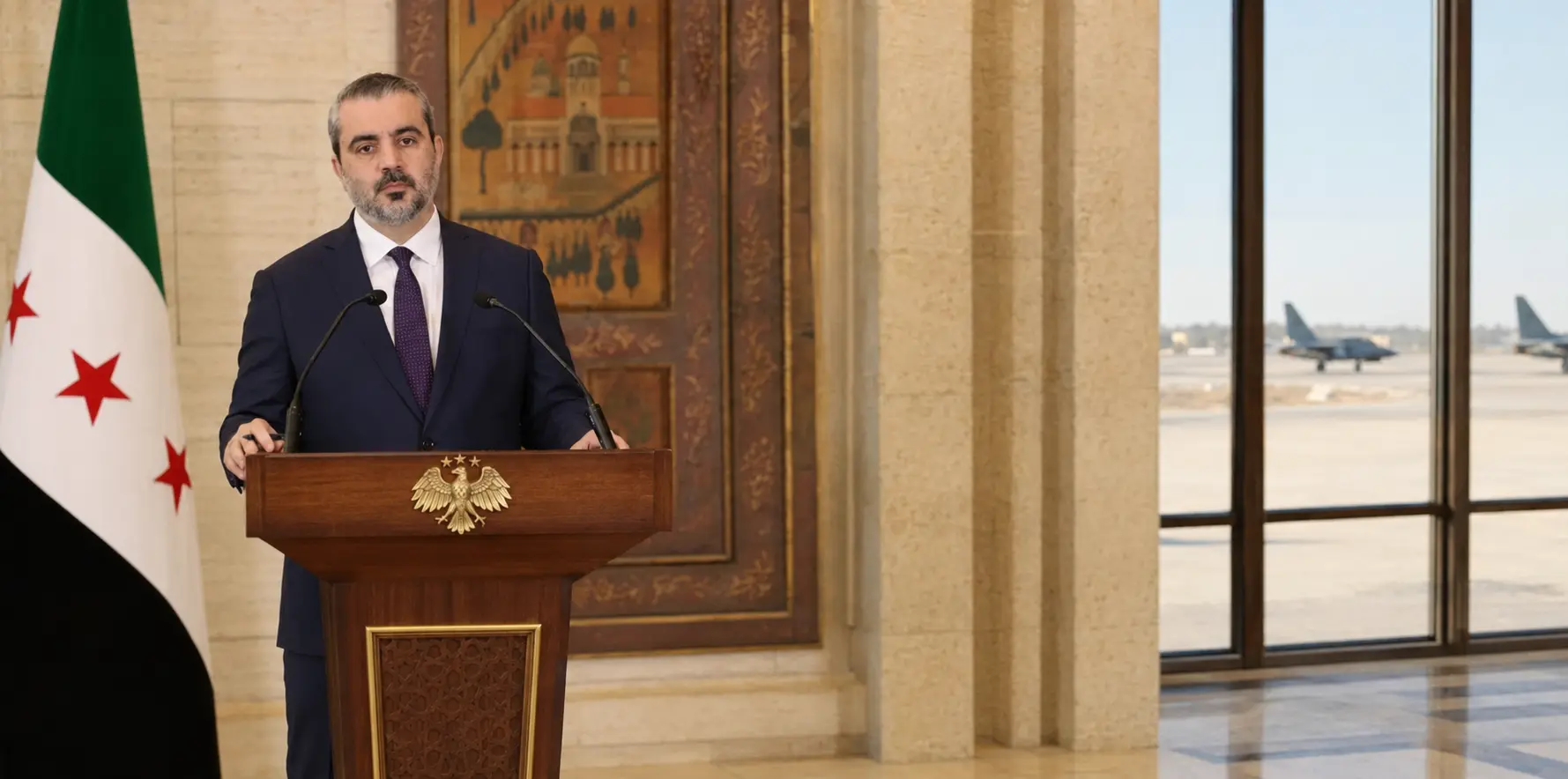
Syrian Foreign Minister Asaad al-Shaibani said Damascus had informed Israel before the attack that rehabilitation work at the airbase was intended for Syria’s own air force and that there were no plans to establish a Turkish base or permanent Turkish military presence there.According to reporting cited by Express Tribune, Israel dropped at least eight bombs on the facility early Tuesday, targeting runways and hangars and damaging recently reconstructed sections of the airfield. No casualties were reported.
US and Israeli officials told Axios that Israel had informed the Trump administration that the strike was intended to prevent a Turkish military buildup at the base, which lies approximately 72 kilometres from the Turkish border. Israeli Prime Minister Benjamin Netanyahu also said Syria had been warned against allowing a Turkish presence at the facility.Damascus disputes that account.
Al-Shaibani acknowledged that Turkish military officers had visited Abu al-Duhur several days before the attack but said their presence was connected to existing military cooperation, including training and exchanges of expertise.
He argued that such cooperation did not amount to establishing a Turkish military base. Syria maintains similar forms of cooperation with several other countries as it works to rebuild institutions damaged during years of civil war.
The Syrian foreign minister also revealed that Syrian and Israeli officials had been in contact before the strike. According to his account, Damascus explicitly explained the nature of the rehabilitation work and told Israeli officials that the facility would remain under Syrian sovereignty and control.The disagreement therefore centres not only on the strike itself but on competing interpretations of activity at the airbase. Israel says it acted to prevent a Turkish military buildup, while Syria maintains that no such permanent deployment was planned.The episode risks adding another layer of tension to an already fragile regional environment, particularly because of Türkiye’s close relationship with Syria.
Ankara responded strongly to the Israeli action. Turkish officials accused Netanyahu’s government of pursuing destabilising policies and said Türkiye would continue supporting Syria and other regional countries seeking stability.Despite the attack, Damascus says it remains open to negotiations with Israel.Al-Shaibani said Syria continues to favour political and security arrangements capable of reducing tensions along the border. He said the two sides had previously made significant progress during US-mediated negotiations but accused Israel of subsequently backing away from commitments.
The latest strike illustrates the difficulty of achieving that de-escalation. It also raises broader questions about Syrian sovereignty, Türkiye’s growing security relationship with Damascus and Israel’s willingness to use military force when it perceives changes in the regional security balance.For now, one point remains disputed: Israel says the strike was aimed at preventing a Turkish military buildup, while Syria says there was no plan for a Turkish base or permanent deployment at Abu al-Duhur.
What is confirmed is that the airbase was struck, infrastructure was damaged and the incident has intensified tensions among Syria, Israel and Türkiye.