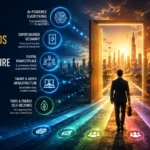










Not long ago, visiting a government office in Pakistan often meant spending hours in queues, carrying folders full of documents and making multiple trips to complete a single task. Paper forms, handwritten records and lengthy approval processes were part of everyday life for millions of citizens. While bureaucracy has not disappeared, the way Pakistan delivers public services is gradually changing.
Across the country, government institutions are embracing digital technologies to improve efficiency, transparency and accessibility. From filing taxes online and renewing passports to accessing digital land records and using biometric identity verification, many services that once required repeated visits to government offices can now be completed with just a few clicks. The shift represents more than a technological upgrade—it signals a broader transformation in how the state interacts with citizens and businesses.
A paperless government is often misunderstood as simply replacing paper forms with digital documents. In reality, true digital governance is much more comprehensive. It connects government departments through secure digital systems, allowing information to move electronically rather than through physical files. Instead of repeatedly submitting photocopies of identification cards, utility bills or certificates, citizens can rely on verified digital records that are securely shared between authorized institutions.
The foundation of this transformation has been built over several years. Pakistan’s digital identity system, led by the National Database and Registration Authority (NADRA), has become one of the country’s most significant technological achievements, enabling secure identity verification for millions of citizens. At the same time, the Federal Board of Revenue has expanded online tax filing, provincial governments have digitized parts of their land record systems, and government agencies have introduced online portals for passports, driving licences and public complaints. These developments have steadily reduced paperwork while improving convenience for citizens.
The rapid growth of smartphones and internet access has accelerated this transition. Mobile banking, digital payments and expanding broadband coverage have made it easier for Pakistanis to access public services without visiting government offices. In many cases, information that once required standing in line can now be obtained through official websites or mobile applications. While progress varies between institutions and provinces, the overall direction is clear: Pakistan is moving toward a more connected and digitally enabled public sector.
Artificial intelligence is expected to become the next major driver of this transformation. Around the world, governments are using AI to automate routine administrative work, detect fraud, analyse large datasets and improve public service delivery. Pakistan is beginning to explore similar opportunities.
Rather than replacing public servants, AI has the potential to handle repetitive tasks such as document verification, responding to citizen inquiries, processing applications and identifying irregularities in government records. It could also assist authorities in areas such as tax compliance, healthcare planning, disaster response, traffic management and infrastructure development by analysing data more quickly than traditional systems.
However, adopting digital technologies alone will not guarantee better governance.
One of Pakistan’s biggest challenges is ensuring that digital transformation benefits everyone, not only those living in major cities. Millions of people still face limited internet access, lower levels of digital literacy and fewer opportunities to use online public services. Bridging this digital divide will be essential if paperless governance is to become truly inclusive.
Cybersecurity presents another critical challenge. As more government records move online, protecting sensitive citizen data becomes increasingly important. Digital systems must be supported by strong cybersecurity frameworks, secure authentication methods and effective data protection policies to maintain public trust.
Institutional reform is equally important. Many government departments continue to operate separate databases that do not communicate effectively with one another. Without better integration, citizens may still be required to provide the same information repeatedly, even if the records already exist elsewhere in the system. True digital government depends on seamless coordination between institutions rather than simply digitising existing paperwork.
International experience shows that successful digital governments share several common characteristics. Countries such as Estonia, Singapore, South Korea and the United Arab Emirates have invested heavily in unified digital identities, cloud-based public services, secure online authentication and interconnected government databases. These systems reduce administrative costs while making public services faster and more accessible. Pakistan’s circumstances are different, but these examples demonstrate that sustained investment and long-term planning can produce significant improvements in governance.
The next decade is likely to determine how far Pakistan’s digital transformation can go. Future initiatives may include nationwide digital document systems, secure electronic signatures, AI-assisted public administration, blockchain-based record management, integrated citizen portals and digital health records. If implemented effectively, these technologies could significantly reduce bureaucracy while improving transparency and service delivery.
Pakistan’s journey toward paperless governance is still a work in progress, but the foundations have already been established. Digital identity systems, expanding online public services, stronger internet connectivity and growing technological expertise have created momentum that would have been difficult to imagine just a decade ago.
The real measure of success, however, will not be the number of paper forms eliminated. It will be whether citizens experience faster services, greater transparency and easier access to government. If Pakistan continues investing in digital infrastructure, cybersecurity, institutional coordination and digital inclusion, paperless governance could become one of the country’s most significant public-sector achievements in the years ahead.