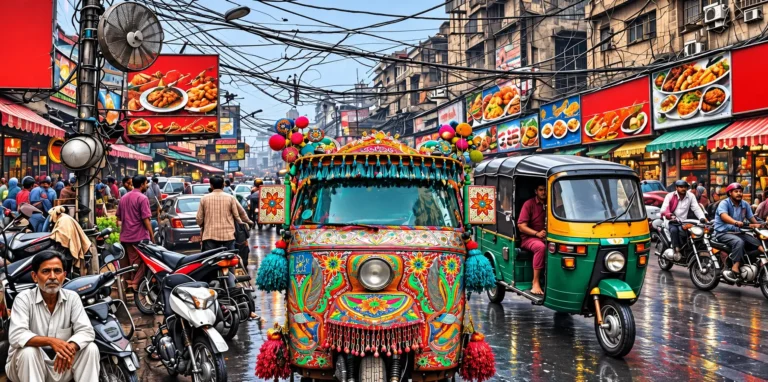






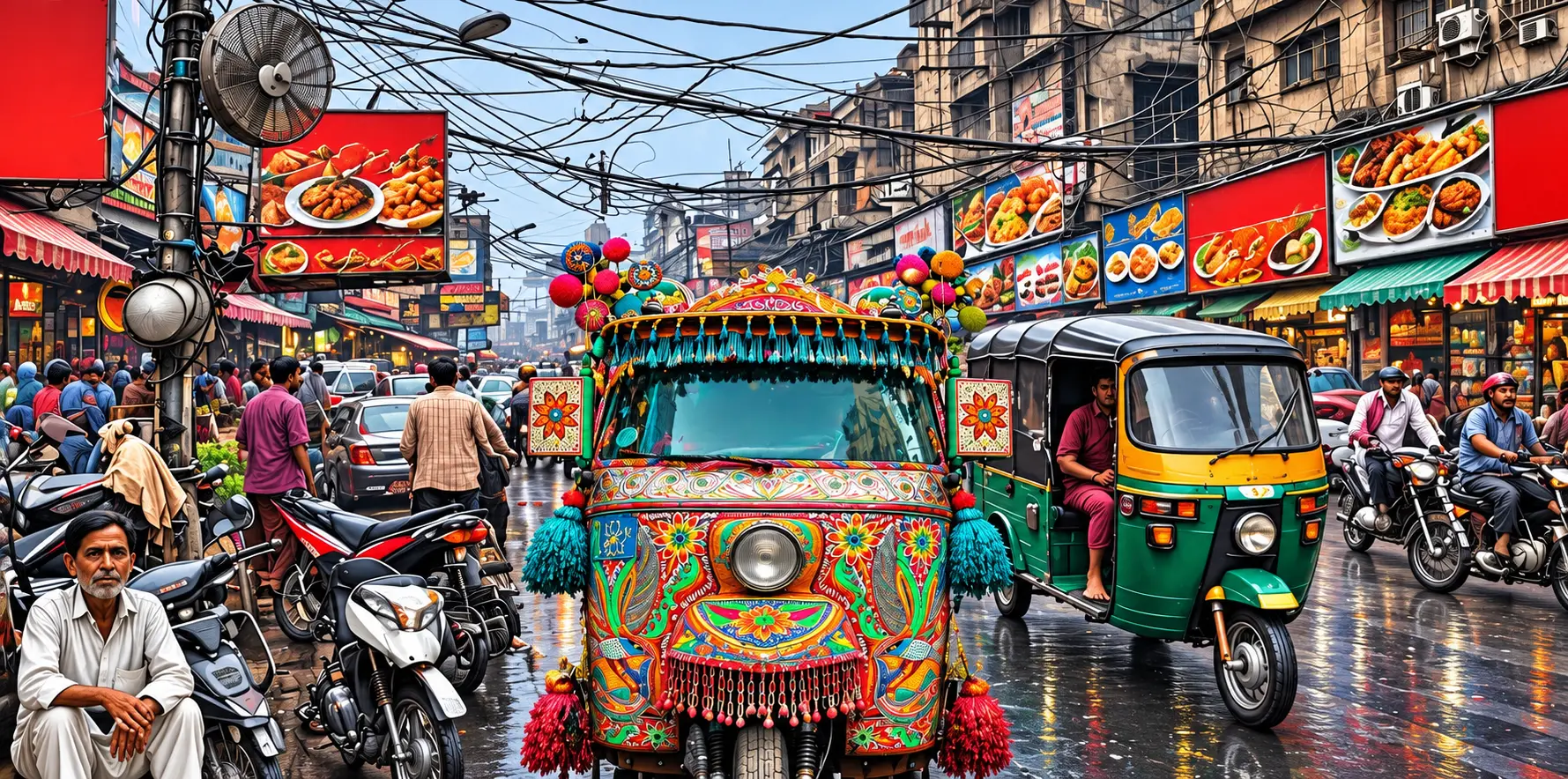

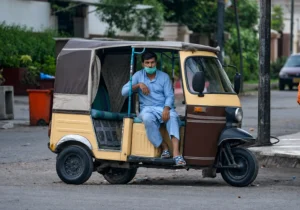
A rickshaw driver can spend 12 hours navigating Pakistan’s crowded streets and still return home without enough money for his family’s basic needs. He has worked, earned fares and carried passengers across the city. Yet after paying for fuel, vehicle maintenance and other expenses, his remaining income may barely cover groceries. For some drivers, rising LPG prices have made the situation so difficult that they are reducing their own meals to keep their vehicles running.
This is no longer simply a story about expensive fuel. It exposes a deeper problem in Pakistan’s economy: the growing distance between earning an income and being able to live on it. The Pakistan cost of living crisis is affecting workers whose earnings depend on daily activity rather than fixed salaries. They may work longer hours, but that does not guarantee greater financial security.
The Rising Cost of Simply Going to Work
For most salaried employees, commuting is an expense deducted from their income. For a rickshaw driver, fuel is the expense that makes earning possible. Before carrying the first passenger, the driver must invest money in LPG or another fuel. That cost is unavoidable, regardless of how many passengers appear during the day.
As LPG prices rise, drivers face a difficult calculation. They can increase fares, work longer hours or accept lower take-home earnings. However, each option has limitations. Passengers are already managing their own household budgets and may resist higher fares. Longer hours increase fatigue and vehicle wear, while lower earnings leave less money for food, education and healthcare.
The result is a working life where greater effort does not necessarily produce greater financial stability. A driver may complete more trips than before but retain less income after expenses. This is the economic pressure hidden behind the daily movement of Pakistan’s informal transport sector.
Pakistan’s Cost of Living Crisis Is Changing Household Priorities
The consequences of rising operating costs extend into workers’ homes. When income falls, families rarely eliminate all expenses equally. They make difficult choices about what can wait and what cannot. Food portions may become smaller. Medical appointments may be postponed. School-related expenses may be delayed until another day’s earnings arrive.
For households living close to their financial limits, even a relatively small increase in daily spending can create lasting pressure. There may be no emergency savings to absorb the difference. Borrowing from relatives or shopkeepers can provide temporary relief, but it also creates obligations that future earnings must cover.
This is how economic insecurity develops even when someone remains employed. The worker has not necessarily lost his job or stopped earning. Instead, the income available after essential expenses has become insufficient.
The situation also reveals a limitation in how economic conditions are often discussed. Employment figures alone cannot explain whether workers can afford an adequate standard of living. The quality and purchasing power of earnings matter just as much.
Working Longer Is Not Always a Solution
When daily income becomes insufficient, the most immediate response is often to work additional hours. Rickshaw drivers may start earlier, finish later or reduce breaks in the hope of carrying more passengers.
However, working longer does not guarantee more customers. Passenger demand changes throughout the day. During quieter periods, a driver may spend additional hours waiting without earning enough to justify the extra time.
Longer shifts also carry physical consequences. Driving through traffic requires concentration, particularly on congested roads where motorcycles, buses, pedestrians and other vehicles compete for limited space. Fatigue can increase safety risks, while inadequate meals may make demanding working conditions harder to manage.
The problem becomes especially serious when workers sacrifice rest and nutrition without significantly improving their income. At that point, extending the working day is no longer a reliable solution to financial pressure.
A functioning economy should not require people to continually increase their working hours simply to maintain the same basic standard of living.
A Family Budget That No Longer Adds Up
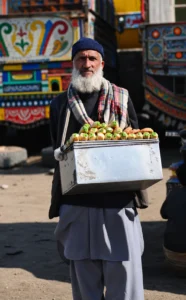
The pressure becomes clearer when viewed through an actual household budget. Rashid Ali, a 33-year-old Lahore rickshaw driver, has spent 13 years transporting passengers. His working day can begin at 6am and continue until midnight. Previously, he earned around Rs1,700 a day. Following the LPG price surge, his reported daily earnings have fallen to roughly Rs700–800.He also pays Rs600 daily to rent his vehicle and Rs11,000 monthly for his home. His family includes two young children. With income under pressure, the household has reduced its meals to twice a day. His experience shows how quickly a fuel supply disruption can become a family welfare problem.
For workers in similar circumstances, there is little room to adjust. Rent remains due, children still need food, and medical expenses cannot always wait. A reduction in daily earnings can therefore affect several parts of family life at once.
A Fuel Supply Shock Exposes a Deeper Weakness
The latest LPG crisis is not driven by household demand alone. Traders have linked the sharp increase to disruptions in imports from Iran after two border crossings closed in October. One crossing later reopened, but the interruption had already affected supplies.
Before the closures, Pakistan imported approximately 7,000 metric tonnes of LPG daily from Iran, according to industry estimates. Traders reported that the price of a 12-kilogram cylinder climbed by 56% within days, reaching around Rs7,000 in the open market.
The disruption exposes the risks of relying on supply routes that can be interrupted by geopolitical tensions, border restrictions and transport problems. When alternatives are limited, traders and consumers face greater uncertainty.
For rickshaw drivers, this uncertainty becomes an immediate operating cost. They cannot easily store large quantities of fuel or wait for prices to decline. Their businesses depend on daily purchases at whatever rates local sellers charge.
The New LPG Policy Must Be Judged by Affordability
The federal government has approved a new LPG policy intended to improve supply and introduce greater competition. Four state-owned enterprises will return to the import market, using government-to-government and commercial arrangements to procure fuel.
The government also plans subsidised LPG for consumers who meet Benazir Income Support Programme eligibility criteria. Petroleum Minister Ali Pervaiz Malik has indicated a proposed price of Rs300–350 per kilogram for eligible households.
However, the policy presents an immediate affordability challenge. The November notified maximum price was approximately Rs295 per kilogram, while some markets were reportedly charging Rs700–800 because of shortages. The minister also indicated that imported LPG could cost Rs450–500 per kilogram under prevailing international conditions.
These figures reveal the gap between regulated prices, expected import costs and actual retail charges. Simply announcing a subsidy will not guarantee relief unless eligible consumers can obtain fuel at the promised price.
The government must also clarify how commercial users, including rickshaw drivers, will be treated. A programme designed around household eligibility may not adequately address the needs of workers whose income depends on fuel.
Electricity Costs Add Another Layer of Uncertainty
The pressure on household budgets may not end with LPG. Pakistan’s power sector has also presented projections showing higher electricity purchase costs for 2027.
Under one base-case scenario, the power purchase price would increase from Rs25.32 to Rs27.31 per unit. Other scenarios suggest larger increases. However, these are projections rather than approved consumer tariff changes, and the regulator has yet to issue its determination.
The distinction matters, but so does the broader warning. Families already spending more on transport and cooking fuel may face additional financial pressure if electricity tariffs rise.
For low-income households, multiple increases in essential expenses can be more damaging than a single price shock. Even when individual increases appear manageable, their combined effect can reduce the money available for food, education and healthcare.
Economic Recovery Must Reach the Working Household
Pakistan recorded inflation of 9.6% in October, while the State Bank raised its policy rate to 12% amid concerns about energy and food prices. These developments illustrate the difficult economic environment facing households and businesses.
Yet macroeconomic policy cannot be judged only through inflation rates, interest rates or government revenue. It must also consider whether people can maintain a reasonable standard of living through their work.
A rickshaw driver who spends most of the day on the road should not have to choose between operating his vehicle and feeding his family. That is not simply an individual budgeting problem. It reflects the vulnerability of workers who lack predictable incomes, financial protection and affordable alternatives.
A credible response should combine reliable LPG supplies, effective retail-market oversight and targeted support for vulnerable consumers. Over time, affordable public transport, safer vehicle technology and accessible financing could reduce dependence on volatile fuel markets.
The government must also measure whether relief reaches its intended recipients. Announced prices mean little when consumers cannot find fuel at those rates.
The Real Measure of Economic Stability
Pakistan’s fuel crisis reveals a contradiction at the heart of its working economy. People can remain employed, work longer hours and continue providing essential services while becoming less financially secure.
The country depends on rickshaw drivers, delivery workers, street vendors and other informal workers to keep everyday economic activity moving. Yet many of these workers absorb price shocks without the protections available to formal employees.
The latest LPG policy may improve supply conditions, but its success should be measured beyond import volumes and market competition. The more meaningful test is whether families can afford essential fuel without sacrificing other necessities.
When a person works from morning until midnight and still struggles to provide dinner, the problem extends far beyond inflation. It raises a more fundamental question about whether Pakistan’s economy adequately rewards the people who keep it running.