








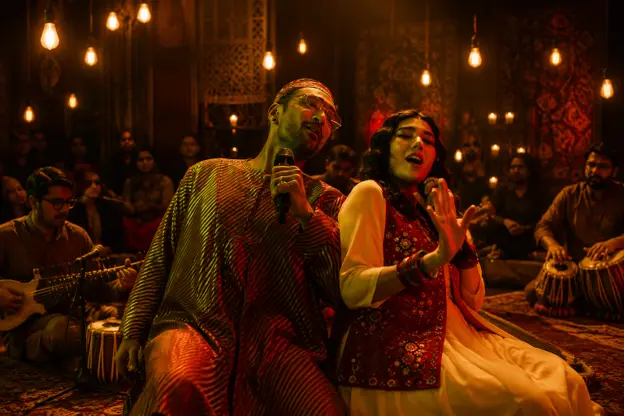

In February 2022, Pakistan gave the world something few expected—a song that would transcend borders, languages and cultures. Released as part of Coke Studio Pakistan’s fourteenth season, Pasoori quickly evolved from a local music release into a global phenomenon. Within weeks, it was appearing on international playlists, dominating social media feeds and introducing millions of listeners to Pakistani music for the very first time.
For a country whose global image is often shaped by political and economic headlines, Pasoori offered something entirely different. It showcased Pakistan through music, poetry and creativity, proving that cultural influence can sometimes travel farther than diplomacy.
By the time Coke Studio Season 14 premiered, the platform had already established itself as one of Pakistan’s greatest cultural success stories. Since its launch in 2008, Coke Studio had built a reputation for bringing together legendary musicians and emerging artists while blending classical traditions with contemporary sounds. Every season introduced audiences to fresh collaborations, but few expected one performance to redefine how the world viewed Pakistani music.
Written by Ali Sethi and Fazal Abbas, with music composed by Ali Sethi alongside producer Zulfiqar Jabbar Khan, better known as Xulfi, Pasoori combined Punjabi folk poetry with modern pop production, electronic music and traditional South Asian instruments. The result felt both timeless and contemporary. Ali Sethi’s expressive vocals complemented Shae Gill’s calm, understated delivery, creating a musical partnership that resonated with listeners regardless of language or nationality.
What made Pasoori extraordinary wasn’t simply its melody—it was its authenticity. Rather than trying to imitate Western pop trends, the song embraced its South Asian identity. Its Punjabi lyrics explored themes of love, separation and emotional conflict, emotions that require no translation to be understood.
The timing also played a crucial role in its success. Streaming platforms have fundamentally changed the way people discover music. Audiences today regularly listen to Korean pop, Latin music, Afrobeats and Japanese soundtracks without necessarily understanding the lyrics. Emotion has become more important than language, and Pasoori arrived at exactly the right moment to benefit from that global shift.
Social media accelerated its popularity even further. Thousands of creators used the song in Instagram Reels, TikTok videos and YouTube Shorts, while musicians around the world produced their own covers and remixes. Without a major international marketing campaign, Pasoori found audiences across India, the Middle East, Europe, North America and beyond, becoming one of the most recognizable Pakistani songs ever released.
The numbers reflected that remarkable success. Pasoori became the most-streamed Pakistani song on Spotify, accumulated hundreds of millions of views on YouTube and consistently appeared on international music charts. It was also featured in Marvel Studios’ Ms. Marvel, introducing Pakistani music to millions of viewers through one of the world’s biggest entertainment franchises. For many international listeners, it became their first meaningful exposure to Pakistan’s contemporary music scene.
For Pakistanis, however, the song represented something much larger than commercial success.
For years, local musicians had believed that Pakistan possessed world-class artistic talent capable of competing internationally. Pasoori validated that belief. It demonstrated that artists didn’t need to abandon their cultural identity or imitate foreign trends to achieve global recognition. In fact, authenticity became the very reason audiences embraced the song.
Its success also renewed global interest in Pakistan’s music industry. Listeners who discovered Pasoori often explored older Coke Studio performances, independent Pakistani musicians and traditional folk music, giving renewed international exposure to artists who had spent years building the country’s musical reputation. What began as one successful song gradually became a gateway to Pakistan’s wider cultural landscape.
Perhaps the greatest lesson from Pasoori is that local stories often become universal precisely because they remain true to their origins. The song never attempted to sound international. Instead, it proudly celebrated Punjabi poetry, South Asian rhythms and Pakistani creativity. Ironically, that unwavering confidence in its own identity is exactly what made it resonate across cultures.
Today, Pasoori stands as one of Pakistan’s strongest examples of cultural soft power. Unlike politics or advertising campaigns, music crosses borders naturally. It travels through playlists, recommendations and shared experiences, connecting people who may never share the same language but understand the same emotions.
Years from now, Pasoori will likely be remembered as more than just a hit song. It marked a turning point for Pakistan’s creative industries, proving that the country’s artists can capture global attention without compromising their identity. It reminded the world that Pakistan is not only a nation of history and resilience but also one of remarkable creativity, storytelling and musical excellence.
Some songs dominate charts for a few months before fading away. Others become part of cultural history. Pasoori has already earned that distinction, carrying a piece of Pakistan into headphones, homes and playlists around the world while inspiring a new generation of musicians to believe that authentic local stories can achieve global success.