






Every nation experiences defining decades that reshape its future. For Pakistan, the years leading to 2035 could become one of the most transformative periods in its history. While daily headlines often revolve around politics, inflation or short-term economic challenges, deeper structural changes are quietly unfolding beneath the surface. These long-term shifts will influence how Pakistan works, lives, invests and competes in the global economy for years to come.
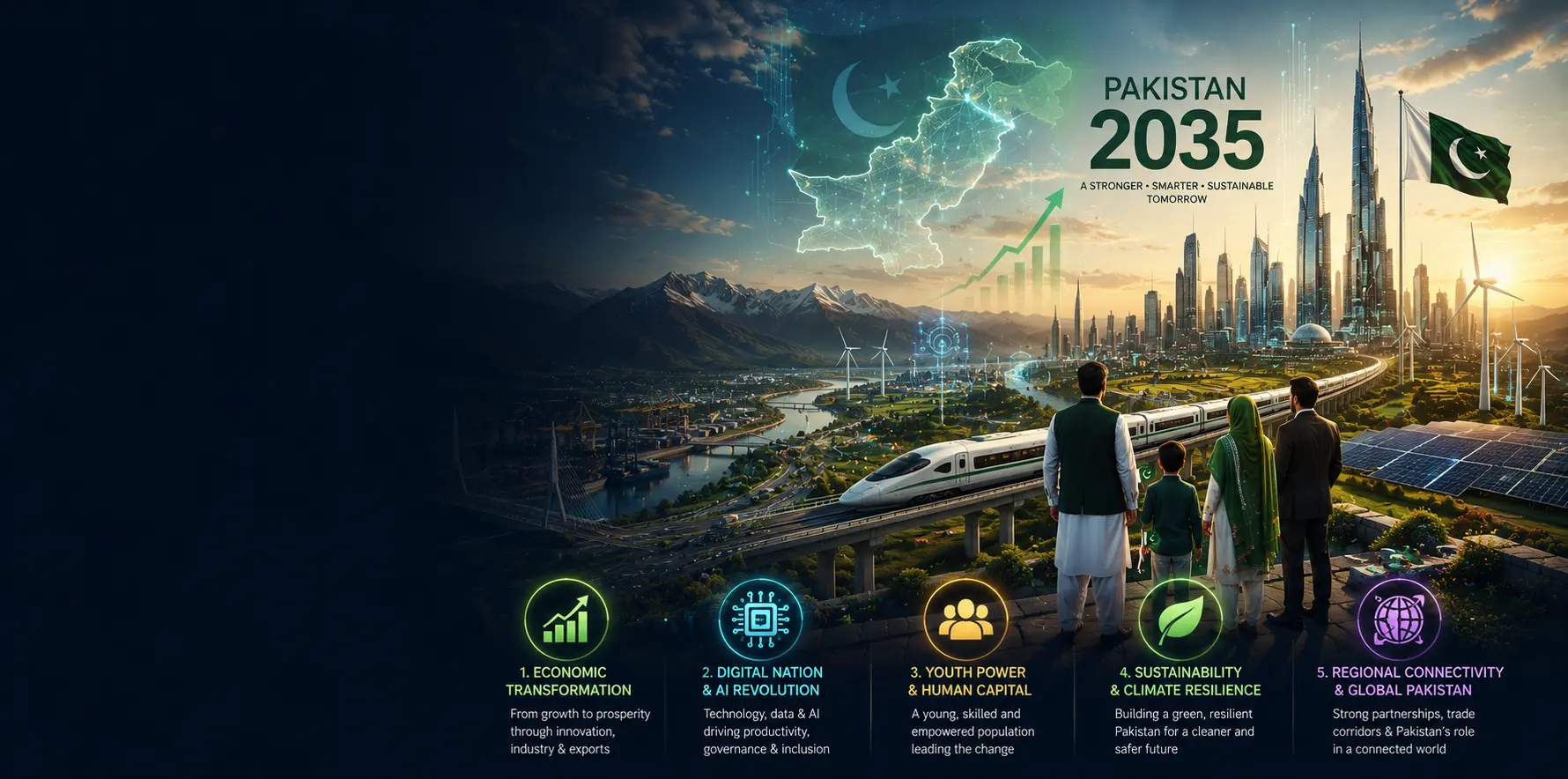
A rapidly growing young population, expanding cities, advances in artificial intelligence, the urgency of climate change and a gradually diversifying economy are all converging at the same time. Together, they have the potential to redefine Pakistan’s future. Whether these developments become opportunities or obstacles will depend largely on the decisions made today by governments, businesses and individuals.
One of Pakistan’s greatest strengths is its population. With one of the youngest populations in the world, millions of Pakistanis are expected to enter the workforce over the next decade. Economists often describe this as a demographic dividend—a period when a large working-age population can significantly boost economic growth.
However, a young population alone does not guarantee prosperity. Turning this demographic advantage into economic success requires sustained investment in education, vocational training, healthcare and employment opportunities. Countries such as South Korea, Singapore and Vietnam successfully transformed youthful populations into economic powerhouses through long-term planning and investment in human capital. Pakistan has the opportunity to follow a similar path while developing solutions suited to its own economic and social realities.
At the same time, Pakistan is becoming increasingly urban. Cities such as Karachi, Lahore, Islamabad, Faisalabad and Peshawar continue to expand as people move in search of employment, education and better services. Urban centres are already driving much of the country’s economic activity, and their importance will only increase during the coming decade.
Urbanization creates enormous opportunities by encouraging innovation, entrepreneurship and improved access to healthcare and education. Yet it also brings major challenges, including traffic congestion, affordable housing shortages, water management, pollution and pressure on public infrastructure. The cities that invest successfully in public transport, digital governance and sustainable planning are likely to become Pakistan’s primary engines of economic growth.
Technology is expected to become another defining force. Artificial intelligence is no longer an emerging concept—it is already changing industries across the world. Businesses are adopting AI to improve customer service, automate routine tasks, strengthen financial services and increase efficiency across logistics, healthcare and manufacturing.
Pakistan’s digital economy has grown rapidly over the past decade, supported by expanding internet access, mobile connectivity, fintech innovation and a vibrant startup ecosystem. Freelancers, software developers and technology entrepreneurs are increasingly contributing to the country’s economy while serving clients around the world.
The next challenge will be ensuring that Pakistan develops the digital infrastructure, regulatory environment and skilled workforce needed to compete internationally. Countries that invest early in artificial intelligence, cybersecurity and digital education are likely to capture a significant share of future economic growth, making technological readiness one of Pakistan’s most important long-term priorities.
Alongside technological transformation, climate change is becoming one of the country’s most pressing national concerns. Although Pakistan contributes only a small percentage of global greenhouse gas emissions, it remains among the countries most vulnerable to climate-related risks. Extreme heatwaves, devastating floods, glacier melt, droughts and changing rainfall patterns are already affecting agriculture, infrastructure and public health.
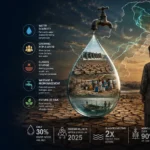
Water security is emerging as an equally critical issue. With population growth increasing demand for freshwater while climate change places additional pressure on water resources, sustainable water management will become essential for long-term stability. Investments in renewable energy, climate adaptation, flood protection and resilient infrastructure are no longer simply environmental priorities—they are increasingly economic necessities.
Economic diversification will also play a central role in determining Pakistan’s future. For decades, agriculture and textiles have remained the backbone of the country’s economy. While both sectors will continue to be important, future growth is expected to come from a much broader range of industries.
Information technology, software exports, renewable energy, digital finance, healthcare innovation, advanced manufacturing, logistics, tourism and creative industries all present significant opportunities. Pakistan’s startup ecosystem has already demonstrated that local entrepreneurs can build globally competitive businesses when supported by investment and digital connectivity.
A diversified economy is generally more resilient during periods of global uncertainty because it reduces dependence on any single sector. Encouraging innovation across multiple industries will not only strengthen economic stability but also create new employment opportunities for Pakistan’s growing workforce.
The future will not be shaped by a single breakthrough or one major event. Instead, it will emerge from the interaction of these powerful long-term trends. A young population will influence labour markets, cities will continue expanding, artificial intelligence will reshape industries, climate change will demand new solutions and economic diversification will determine how competitive Pakistan becomes in an increasingly digital world.
The coming decade presents both significant opportunities and complex challenges. Countries that prepare early tend to benefit the most from periods of transformation, while those that delay often struggle to keep pace. For Pakistan, success will depend on investing in people, embracing innovation and building institutions capable of supporting sustainable long-term growth.
By 2035, Pakistan may look very different from the country it is today. The choices made over the next few years will help determine whether that future is defined by resilience, innovation and opportunity—or by missed potential. Understanding these structural trends is no longer simply useful for policymakers and economists. It is becoming essential for businesses, investors and every citizen seeking to prepare for the future.