



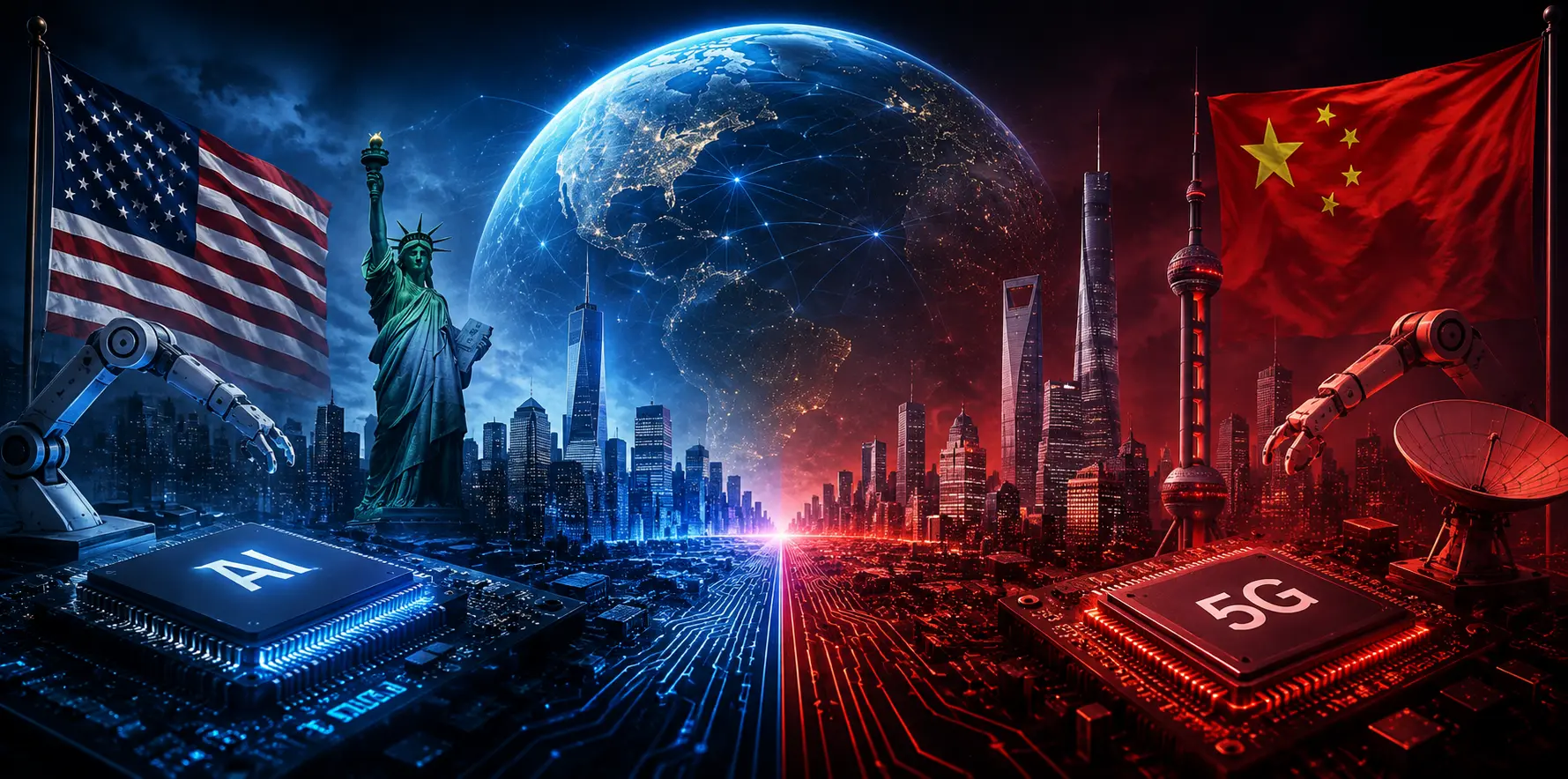

For much of modern history, geopolitical power was measured by the size of an army, the strength of a navy or control over valuable natural resources. Today, those traditional indicators still matter, but a new form of competition is reshaping the global balance of power. Nations are increasingly competing not only for territory or military influence but also for leadership in artificial intelligence, semiconductor manufacturing, cybersecurity, cloud computing and advanced digital infrastructure .This shift has led many analysts to describe the current era as a new technological Cold War. Unlike the geopolitical rivalry of the twentieth century, however, today’s competition is deeply interconnected. The same semiconductor chips that power smartphones also enable artificial intelligence, advanced medical equipment, electric vehicles and modern defence systems. The cloud platforms supporting businesses also store sensitive government information, while satellites that provide navigation services have become essential to finance, communications and national security.
Technology is no longer simply another industry. It has become one of the most important foundations of economic strength, national resilience and international influence. One of the clearest examples of this transformation is the growing importance of semiconductors. Every advanced electronic device depends on highly sophisticated computer chips. Smartphones, data centres, autonomous vehicles, renewable energy systems, industrial robots and military equipment all rely on semiconductors capable of performing billions of calculations every second.
Because of their strategic importance, governments around the world are investing heavily in expanding domestic chip manufacturing and reducing dependence on fragile global supply chains. Recent disruptions caused by the COVID-19 pandemic highlighted how semiconductor shortages could slow automobile production, delay consumer electronics and affect industries across the global economy. Today, semiconductor production is viewed not only as an economic priority but also as a matter of national security .Artificial intelligence is accelerating this technological competition even further. What was once considered a specialised research field has rapidly become a strategic technology influencing nearly every major industry. Governments are investing billions of dollars into AI research because its applications extend far beyond consumer software. Artificial intelligence is improving healthcare diagnostics, scientific research, manufacturing, agriculture, financial services, logistics, education and public administration while also supporting defence planning and cybersecurity.
Countries that successfully develop advanced AI capabilities are likely to enjoy significant economic advantages through higher productivity, faster innovation and more competitive industries. At the same time, AI is raising important questions about regulation, ethics and responsible governance, making international cooperation just as important as technological leadership. Alongside artificial intelligence, data has emerged as one of the world’s most valuable strategic resources. The twentieth century was often defined by competition for oil and energy supplies. The twenty-first century is increasingly shaped by access to information. Governments and businesses now compete over digital infrastructure, cloud computing, cybersecurity, cross-border data flows and digital identity systems because these assets influence everything from economic growth to national security.
High-quality data has become especially valuable in the age of artificial intelligence. Modern AI systems depend on vast quantities of reliable information to train models, improve decision-making and develop new applications. As a result, protecting data has become just as important as generating it. Cybersecurity has therefore moved from an IT concern to a national priority.Critical infrastructure such as energy networks, financial institutions, healthcare systems and transportation increasingly depend on secure digital systems. A successful cyberattack can disrupt essential public services, affect economic activity and undermine public confidence without a single shot being fired. Governments worldwide are responding by strengthening cyber defences, investing in digital resilience and expanding cooperation between public institutions and private technology companies. Another competition receiving growing attention involves resources that many people rarely think about: critical minerals.
Lithium, cobalt, nickel, copper and rare earth elements form the foundation of modern technology. These materials are essential for manufacturing electric vehicle batteries, renewable energy systems, semiconductors, advanced electronics and defence equipment. As countries accelerate the transition toward cleaner energy and more advanced technologies, securing reliable supplies of these minerals has become a major strategic objective. This race demonstrates that technological leadership depends not only on software and innovation but also on resilient global supply chains capable of supporting future industries. Unlike previous geopolitical rivalries, however, the technology race is unlikely to produce only one winner.
Innovation today depends on a combination of world-class universities, skilled talent, research institutions, venture capital, start ups, international collaboration and supportive public policy. Countries capable of attracting global talent, investing in education and encouraging entrepreneurship are likely to remain competitive regardless of their size. Many of the world’s most important technological breakthroughs already emerge through international partnerships between researchers, companies and universities. Although strategic competition will continue, cooperation in areas such as climate technology, healthcare, scientific research and cybersecurity remains essential for addressing global challenges that no country can solve alone.
The defining geopolitical contest of the twenty-first century is unfolding quietly inside semiconductor factories, AI laboratories, research centres and data infrastructure rather than on conventional battlefields. The nations leading these technologies will shape future industries, influence international standards and strengthen their economic resilience. Yet technology itself is only a tool. Its long-term impact will depend on how governments, businesses and societies choose to develop, regulate and share it. Responsible innovation, strong institutions and continued investment in education will matter just as much as technological breakthroughs. The future will belong not simply to the countries with the fastest computers or the largest technology companies, but to those capable of combining innovation with trust, resilience and global cooperation.