

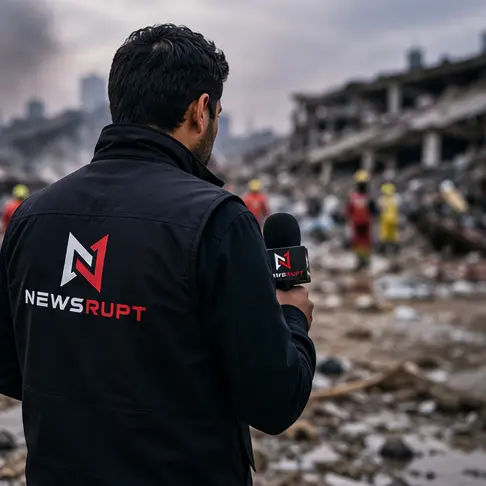





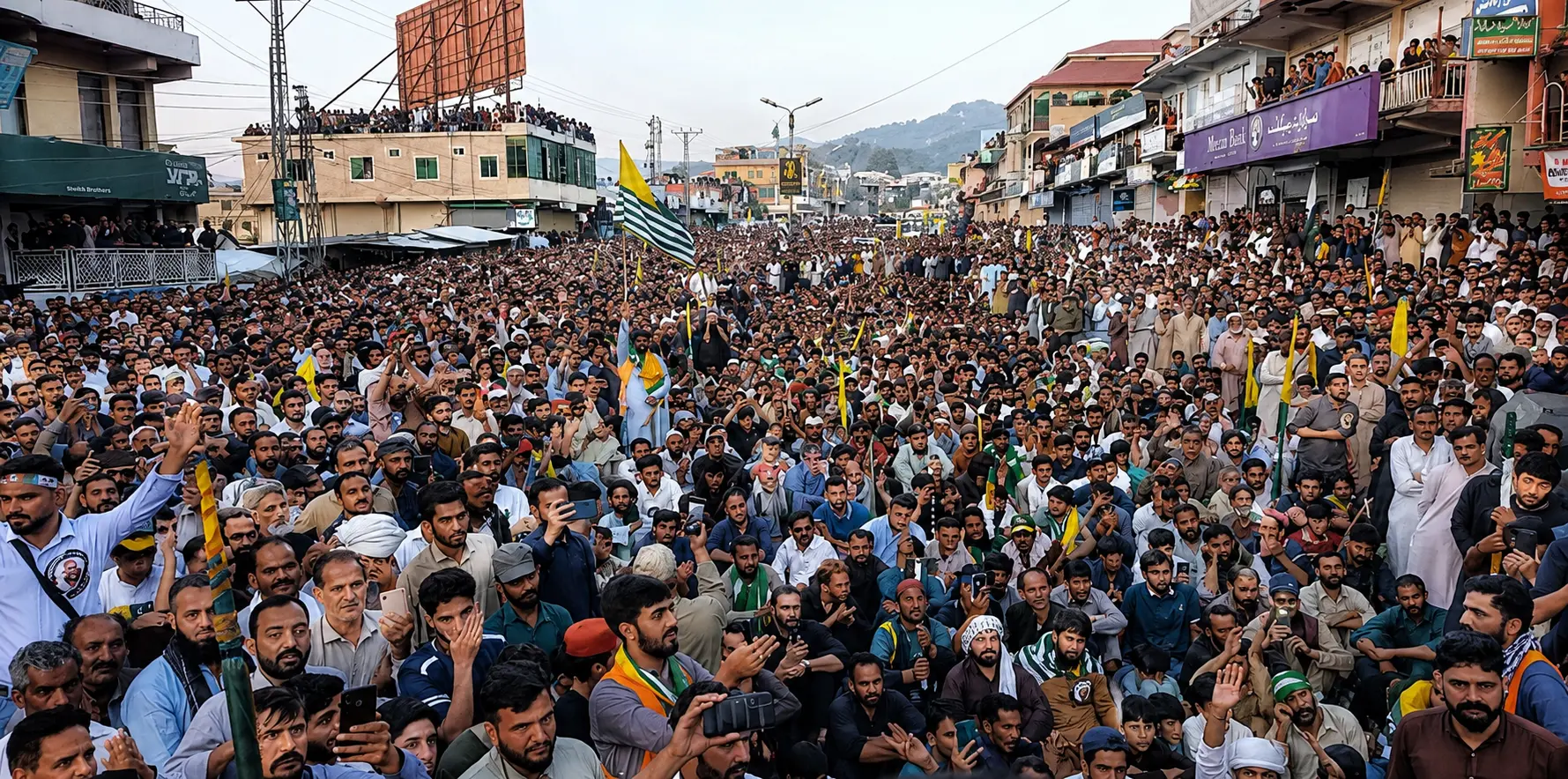

The security situation in Rawalakot has escalated further, with Azad Jammu and Kashmir (AJK) Police launching operations against what they describe as armed militants linked to the banned Joint Awami Action Committee (JAAC). The development comes days after violent clashes coincided with the first phase of the AJK Legislative Assembly elections, prompting fresh political debate and calls for an independent investigation.
Police officials say the campaign has shifted from crowd management to countering armed resistance in parts of the city. According to AJK Police spokesperson SSP Khawar Ali Shaukat, authorities have evidence that armed individuals affiliated with the banned JAAC have occupied buildings and opened fire on law enforcement personnel using automatic weapons. Security forces have since launched targeted operations to clear these locations and restore order.
The federal government has expressed support for the operation. Minister of State for Interior Talal Chaudhry said Islamabad would fully back the AJK administration’s efforts to maintain law and order, alleging that the banned organisation was attempting to disrupt democratic processes under the guise of public rights.
Meanwhile, the political process continues despite the unrest. The first phase of the AJK elections concluded in the Mirpur Division, where unofficial results indicate that the Pakistan Muslim League-Nawaz (PML-N) secured a majority of seats contested in that phase. Polling in the remaining divisions is scheduled to continue through August 10 under heightened security, while JAAC has maintained its boycott of the electoral process.
Human rights organisations have voiced concern over the violence. The Human Rights Commission of Pakistan (HRCP) and Amnesty International have called for an impartial investigation into the clashes, urging authorities to establish accountability and restore communication services disrupted during the unrest. Several opposition leaders have also criticised the use of force against protesters, demanding transparency regarding the events that unfolded in Rawalakot.
Casualty figures remain disputed. JAAC has claimed that around 30 people have lost their lives since the unrest began, while police have confirmed injuries among security personnel and reported separate casualties during recent clashes. Independent verification of the competing claims remains difficult due to restricted access to affected areas.
The unrest stems from a constitutional dispute over 12 reserved legislative seats for Kashmiri refugees residing in Pakistan. JAAC has long demanded the abolition of these seats, arguing they distort local representation. Following months of demonstrations, the group was declared a banned organisation under anti-terrorism laws in June, after which confrontations intensified across several districts, including Rawalakot, Muzaffarabad, Mirpur, Kotli and Bagh.
With police operations ongoing and additional election phases approaching, Rawalakot remains at the centre of one of AJK’s most significant political and security crises in recent years. Authorities continue to monitor the situation closely as political tensions and security concerns show little sign of easing.