







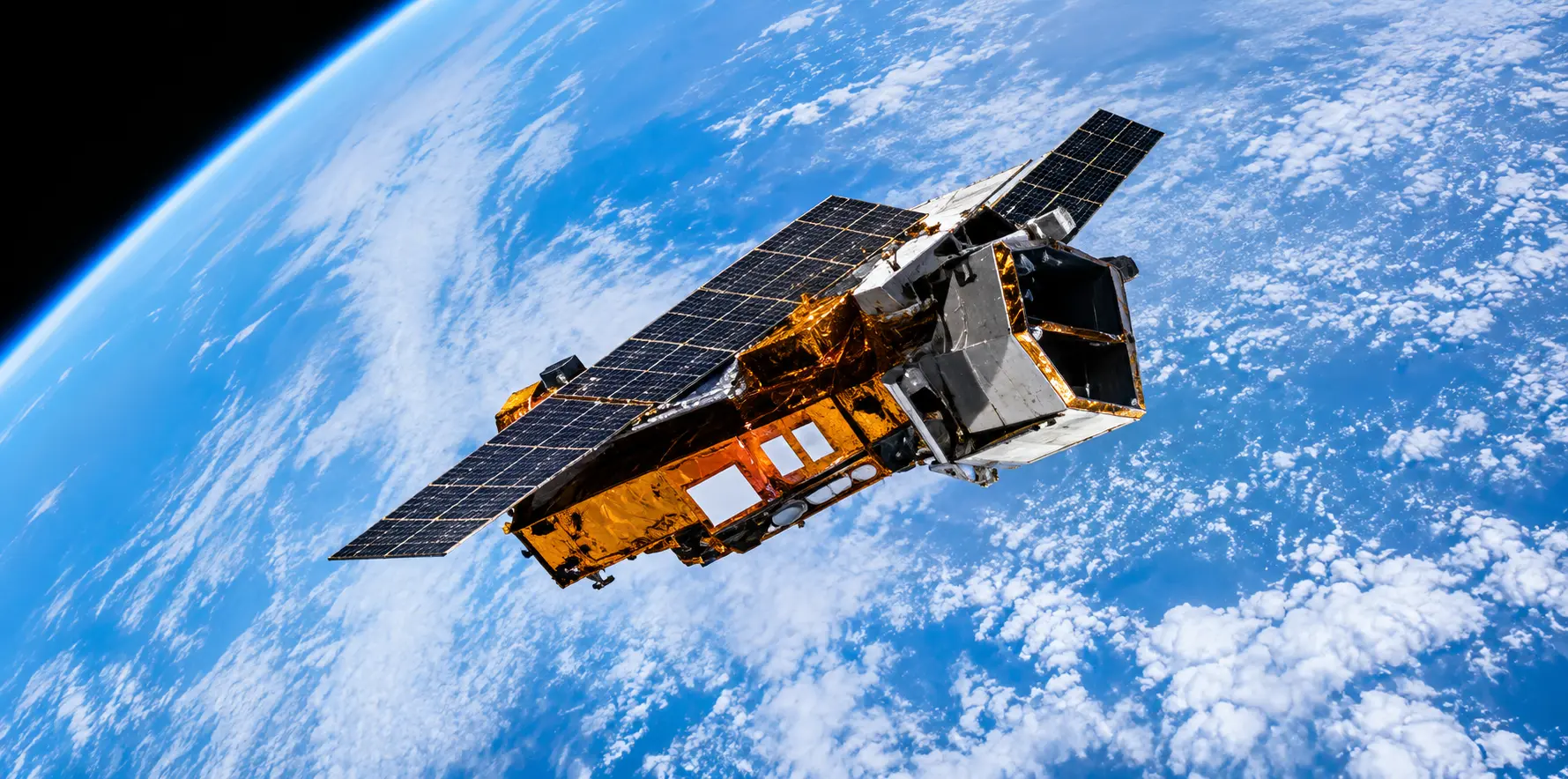

NASA’s Neil Gehrels Swift Observatory is expected to re-enter Earth’s atmosphere on Wednesday, November 4, nearly 22 years after its launch. The 3,200-pound (1,452-kilogram) satellite has spent more than 2 decades studying powerful cosmic explosions and distant galaxies. Most of the spacecraft is expected to burn up during re-entry, although some fragments could survive.
NASA Tracks Swift Observatory’s Final Descent
NASA initially projected re-entry at approximately 3:30 a.m. Eastern Standard Time, with an uncertainty of 11 hours. Other tracking organisations issued different estimates as the satellite continued losing altitude. The Aerospace Corporation predicted approximately 5:19 a.m., while revised U.S. Space Force data suggested around 7:45 a.m. The exact time and location remain uncertain. The U.S. Space Force estimated the probability of anyone being harmed by falling debris at one in 2,100. Any surviving fragments are expected to fall within tropical latitudes.
Swift Studied Powerful Cosmic Explosions
Launched in 2004, the $500 million observatory was originally designed for a 2-year mission. Instead, it operated for nearly 22 years, studying gamma-ray bursts, black holes, distant galaxies, comets and asteroids. Its 3 NASA Swift Observatorytelescopes observed the universe through gamma-ray, X-ray, ultraviolet and visible light. Swift travelled around Earth at approximately 27,359 kilometres per hour. However, it had no propulsion system to maintain its altitude. Increased solar activity expanded Earth’s upper atmosphere, creating additional drag that gradually pulled the satellite towards re-entry.
NASA’s Rescue Mission Failed
NASA attempted to extend Swift’s operational life through a rescue mission involving Arizona-based startup Katalyst Space. In July 2026, the company launched LINK, a robotic spacecraft designed to approach Swift, capture it and move it into a higher orbit. However, LINK experienced reaction-wheel failures that affected its stability. Although the spacecraft conducted proximity operations, it could not complete the planned orbital boost. NASA abandoned the rescue attempt in August. The mission was developed under a $30 million contract and demonstrated technology intended for future satellite servicing.
Observatory Completes Final Science Mission
Swift made its final scientific observation on October 20 before entering safe mode at an altitude of approximately 171 miles (275 kilometres). NASA subsequently ended operations and prepared for its uncontrolled re-entry. The observatory leaves behind decades of scientific observations that researchers can continue studying. Its expected return marks the end of one of NASA’s longest-running missions dedicated to investigating powerful events across the universe.