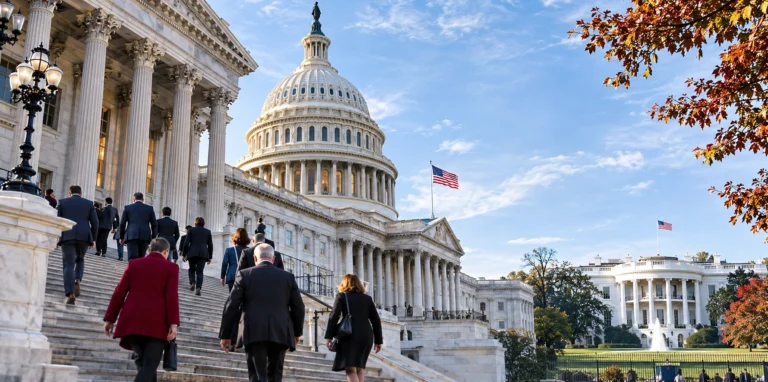








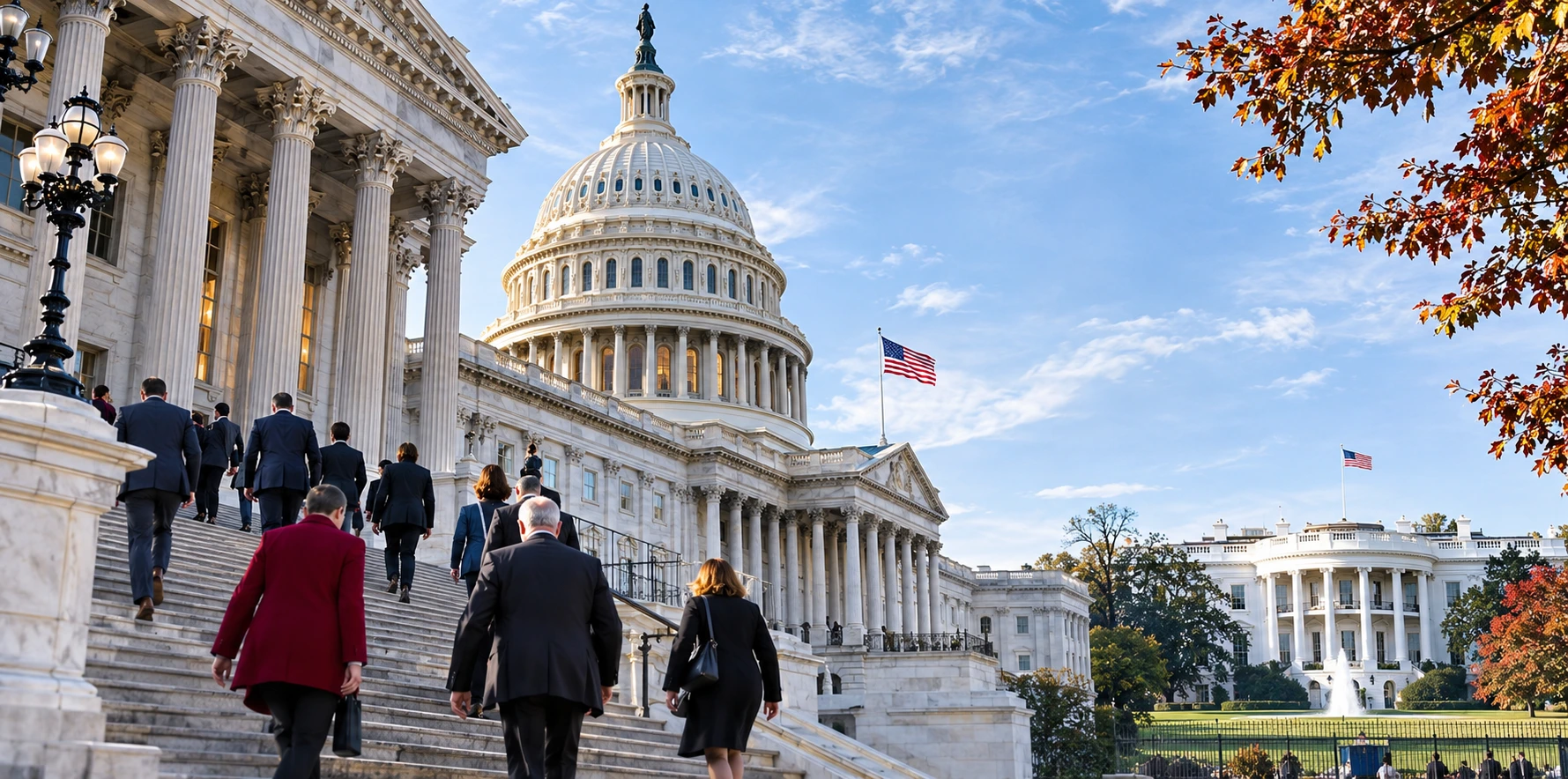

The 2026 US midterm elections have changed the political balance in Washington, creating new challenges for President Donald Trump during the remaining two years of his second term. Democrats have secured a projected majority in the House of Representatives, giving them greater influence over legislation, federal spending and government oversight. The result marks an important shift after Republicans entered the elections controlling both chambers of Congress.
However, winning congressional seats is only the beginning. Democrats must now decide how to use their new authority, while Trump faces the prospect of negotiating with political opponents. The outcome could affect economic policy, immigration, foreign affairs and the administration’s ability to advance its legislative agenda.
Democratic Congress Takeover Changes Washington’s Power Balance
The Democratic gains represent a major change in the relationship between the White House and Congress. During the first half of Trump’s second term, Republican control of both chambers provided his administration with a more favourable legislative environment.
A Democratic House majority changes that arrangement. The opposition can influence which bills reach the floor, lead committees and examine the administration’s decisions.
However, the extent of Democratic power depends on the final composition of the Senate. Control of the House alone does not give Democrats complete authority over Congress.
Even so, the shift could require greater cooperation between the parties. Legislation that previously moved through Republican-controlled committees may now face additional scrutiny and negotiations.
Congressional Investigations Could Increase
One of the most immediate consequences of a Democratic House majority is stronger congressional oversight.
House committees can investigate government programmes, request documents and question administration officials. Democratic lawmakers could use these powers to examine federal spending, immigration enforcement, executive decisions and other government activities.
Congressional investigations can influence public debate and place pressure on officials to explain their decisions. However, oversight authority is not unlimited. Requests for information may face legal challenges, while disputes over executive privilege can reach federal courts.
The effectiveness of investigations will depend on committee priorities, available evidence and the cooperation of government agencies.
For Trump, the change means facing closer scrutiny from lawmakers who disagree with several of his policies.
Trump’s Economic Agenda Faces Legislative Obstacles
Economic policy could become one of the main areas of disagreement between the White House and the new House majority.
The midterm campaign took place amid concerns about inflation, living costs, tariffs and energy prices. Democrats criticised the administration’s economic policies, while Republicans defended their approach to taxation, investment and trade.
With control of the House, Democrats could challenge new tax proposals and seek changes to federal spending priorities. They may also demand greater scrutiny of policies affecting consumer prices.
However, Congress cannot independently reverse every presidential economic decision. Some policies fall within executive authority, while others depend on existing legislation.
The administration could therefore continue pursuing parts of its agenda through executive actions. Nevertheless, major legislative proposals would face a more complicated path.
Government Spending Could Become a Major Battleground
Congress controls federal appropriations, making government spending one of its most important responsibilities.
A Democratic House could seek changes to funding for healthcare, education, infrastructure and federal agencies. Republicans may resist proposals that conflict with the president’s priorities.
Both parties would need to negotiate spending legislation to keep government operations funded.
If negotiations fail, funding disputes could create the risk of a federal government shutdown. However, divided government does not automatically produce such an outcome.
The practical challenge will be reaching agreements that maintain essential services while addressing competing political demands.
Immigration and Border Policies Face Greater Scrutiny
Immigration remains a central part of Trump’s political agenda. His administration has prioritised border enforcement, deportations and restrictions on certain immigration pathways.
Democrats have criticised aspects of these policies, particularly their humanitarian and legal consequences.
A Democratic-controlled House could investigate immigration enforcement practices and examine the funding provided to relevant federal agencies.
Lawmakers may also propose changes to immigration legislation. However, passing major reforms would require sufficient support in both chambers and presidential approval, unless Congress could assemble the votes needed to override a veto.
As a result, immigration policy could remain an area of intense political disagreement without immediate legislative changes.
Foreign Policy Could Face More Congressional Oversight
The change in congressional leadership could also affect debates surrounding the wars in Ukraine and the Middle East.
Congress has responsibilities involving military funding, sanctions legislation and oversight of executive foreign policy decisions. Democratic lawmakers could use committee hearings to question the administration’s diplomatic and military strategies.
The Iran conflict has already raised concerns about energy security, military spending and international stability. Meanwhile, negotiations over Ukraine continue to involve difficult questions about security guarantees and territorial disputes.
However, the president retains substantial authority over diplomacy and military operations. Congressional oversight can influence policy, but it does not automatically transfer foreign policy leadership to the opposition.
The relationship between Congress and the White House will therefore remain important in determining how the United States approaches international conflicts.
Senate Control Will Determine the Extent of Democratic Influence
The Senate plays a different role from the House, particularly in confirming presidential appointments and federal judges.
If Republicans retain Senate control, Trump would continue to have a more favourable environment for nominations, subject to Senate rules and individual lawmakers’ positions.
If Democrats secure a Senate majority, they would gain greater control over committee leadership and the confirmation process.
However, neither outcome would eliminate the president’s constitutional powers.
The final Senate results are therefore essential to understanding the full consequences of the midterm elections. A House majority and control of both chambers would create different political conditions.
Divided Government Could Encourage Negotiations
Although divided government often produces political confrontation, it can also create opportunities for bipartisan agreements.
Both parties may find common ground on infrastructure, economic competitiveness, public safety or other issues where their priorities overlap.
However, cooperation requires political willingness. Lawmakers must balance party positions with the practical need to pass legislation.
For Democrats, controlling the House creates an opportunity to influence policy rather than simply oppose the administration.
For Republicans, the challenge is maintaining support for the president’s priorities while negotiating with a stronger opposition.
The results could therefore change not only which policies advance but also how decisions are made in Washington.
Democrats Face Their Own Test of Leadership
Winning congressional power creates expectations among voters. Democrats will need to demonstrate how their new authority can address concerns raised during the election campaign.
Affordability, healthcare, government accountability and economic security remain important issues.
However, legislative progress may be difficult when the White House and Congress disagree. Democrats will also face decisions about whether to prioritise investigations, policy proposals or negotiations.
Their performance will be judged through committee work, legislative decisions and the practical consequences of their actions.
A congressional majority provides political influence, but it does not guarantee that campaign commitments will become law.
The Next Two Years Could Redefine Trump’s Presidency
The Democratic gains in the 2026 midterms have introduced a new phase in American politics. Trump remains president, but a Democratic House majority changes the environment in which his administration operates.
The White House will face stronger oversight and greater difficulty advancing legislation without opposition support. Meanwhile, Democrats must determine how to exercise their authority and respond to public expectations.
The final Senate balance will establish how far the shift extends across Congress.
For Americans, the consequences will become clearer through decisions on spending, economic policy, immigration and international affairs.
The central question is no longer simply which party gained seats in the midterms. It is whether Washington’s new political balance will produce meaningful policy decisions or another period of legislative confrontation.