







Pakistan’s government has introduced new guidelines regulating foreign media operations and the Pakistani journalists and production staff who work with international news organisations, prompting objections from press-freedom and human-rights groups.
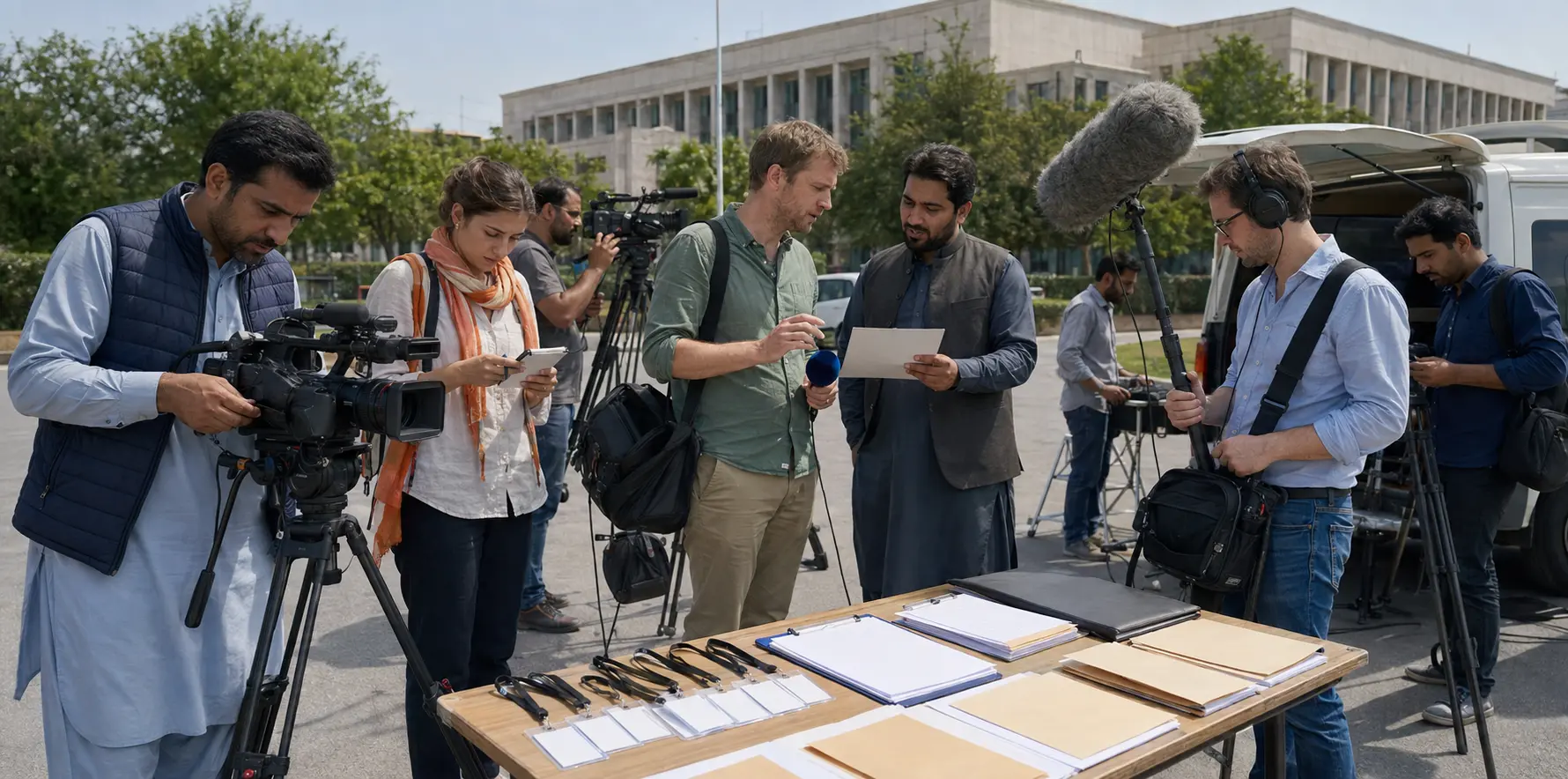
The Foreign Media Facilitation Guidelines require Pakistan-based journalists working for foreign outlets to register with the Ministry of Information and Broadcasting’s External Publicity Wing. The framework also extends registration requirements to other people involved in foreign media operations, including freelancers, fixers and production personnel.
One of the most significant provisions concerns reporting outside Islamabad, Lahore and Karachi. Under the new framework, foreign media personnel and their local associates require prior government clearance for official reporting assignments beyond the three major cities. The requirement could have particular implications for coverage from rural, conflict-affected and politically sensitive regions, where international organisations frequently rely on Pakistani journalists and fixers for access and local expertise.
The Information Ministry has defended the guidelines, presenting them as a transparent mechanism designed to facilitate foreign media operations rather than restrict journalism. Officials maintain that the system establishes clearer procedures for registration, accreditation and reporting assignments.
Critics see the measures differently. The Human Rights Commission of Pakistan and the Pakistan Federal Union of Journalists are among organisations that have raised concerns about the rules, arguing that additional approval requirements could create bureaucratic barriers to independent newsgathering. Reuters has separately reported criticism from Human Rights Watch and international media organisations.
The practical consequences could extend beyond press freedom. International newsrooms may have to factor additional clearance procedures into travel schedules, breaking-news deployments and production costs. Reporting from locations outside Pakistan’s three largest cities could also become more difficult when events require rapid deployment.
The controversy comes amid heightened scrutiny of reporting from politically and security-sensitive parts of Pakistan. However, the longer-term impact of the rules will depend heavily on how authorities enforce them in practice, including how quickly permissions are processed and under what circumstances applications may be refused.
For now, the registration and accreditation framework is confirmed, while claims about its eventual effect on independent journalism remain assessments rather than established outcomes. The central debate is therefore not whether the rules exist, but whether their implementation will facilitate reporting as the government argues or constrain newsgathering as critics fear.