







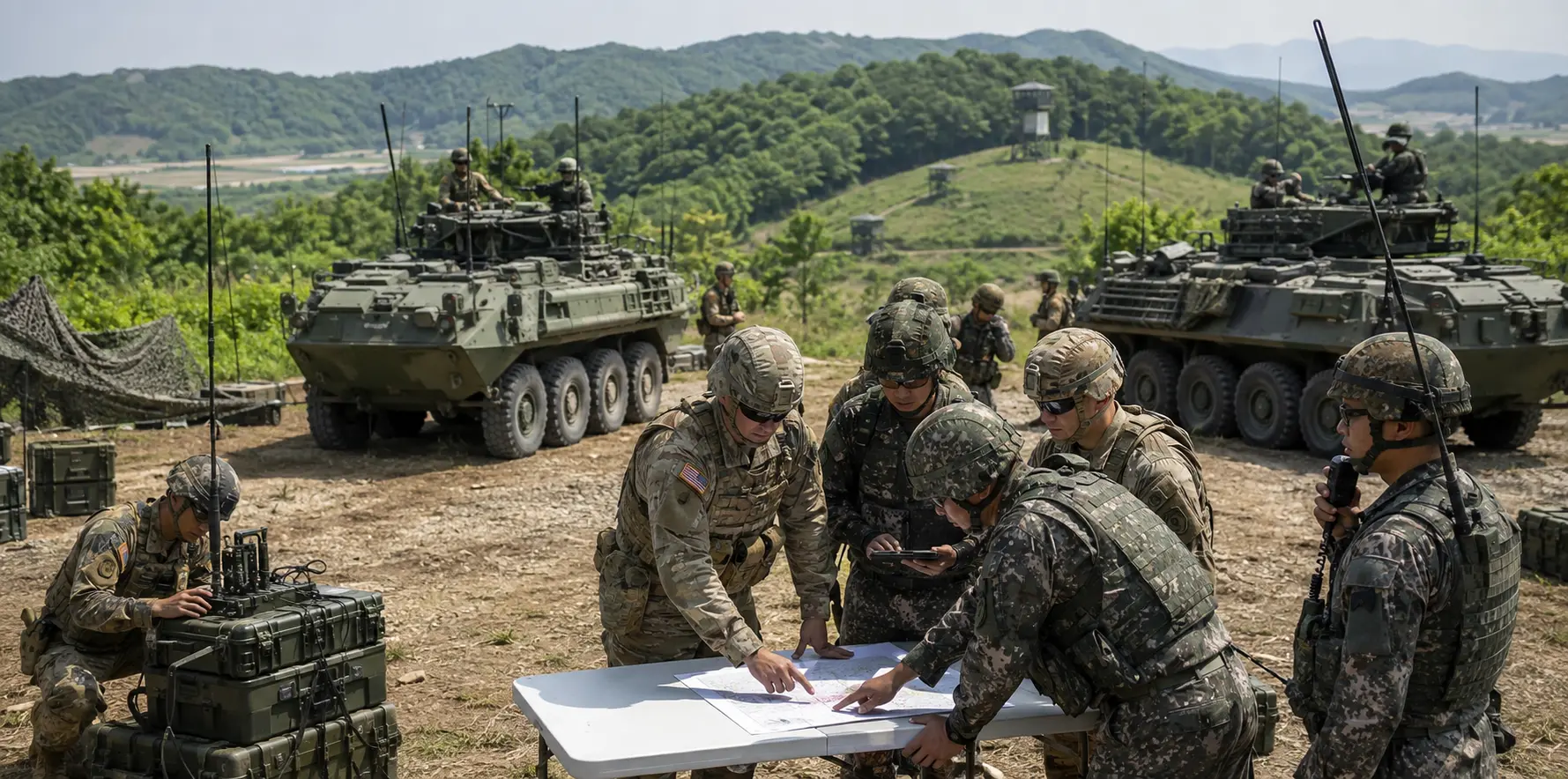

The United States and South Korea have agreed to shorten and scale back their annual joint military exercises following President Donald Trump’s order to substantially reduce American participation, marking a significant adjustment to one of the allies’ most important readiness programmes.
The Ulchi Freedom Shield exercise, which began on August 17, will now conclude on August 21 instead of August 27. That reduces the exercise from 11 days to five, according to South Korea’s Joint Chiefs of Staff and a US defence official.
The allies are also reducing parts of the field-training programme. South Korean Defence Minister Ahn Gyu-back said they were moving toward cancelling the second phase of the exercises, which had been expected to include counterattack operations following an initial defensive phase.
The adjustments were made at Washington’s suggestion. Some combined field manoeuvres will be scaled back, while the US Department of Defence said certain live-training events had either been cancelled or converted into simulations. Officials maintained that essential readiness requirements and US training objectives would still be preserved.
The changes follow Trump’s instruction on Sunday to “substantially reduce” the American role in the exercises. The president has highlighted his relationship with North Korean leader Kim Jong Un while signalling interest in reviving diplomacy with Pyongyang.
North Korea has consistently condemned the joint exercises, describing them as preparations for an invasion. Washington and Seoul maintain that the drills are defensive and necessary to ensure military readiness.
Pyongyang again criticised the exercises on Wednesday, accusing Washington and Seoul of increasing tensions on the Korean Peninsula. However, its commentary did not directly mention Trump’s reduction order. Some analysts interpreted the relatively restrained response as potentially leaving room for renewed diplomatic engagement.
Trump has reportedly been interested in arranging another face-to-face meeting with Kim, potentially during a future visit to Asia. Trump said earlier this week that Kim had responded to his outreach, although he did not disclose details of the contact.
The decision also caught officials in Seoul and Washington by surprise. South Korean Foreign Minister Cho Hyun told lawmakers that officials from neither government had known about Trump’s order in advance.
For the US-South Korea alliance, the immediate change is substantial but does not amount to a suspension of joint training. Ulchi Freedom Shield is continuing, but for fewer days and with a narrower field-training component.
The longer-term question is whether the reduction remains limited to this year’s exercise or develops into a broader shift in Washington’s military posture toward the Korean Peninsula, particularly if Trump succeeds in reopening direct diplomacy with North Korea.