








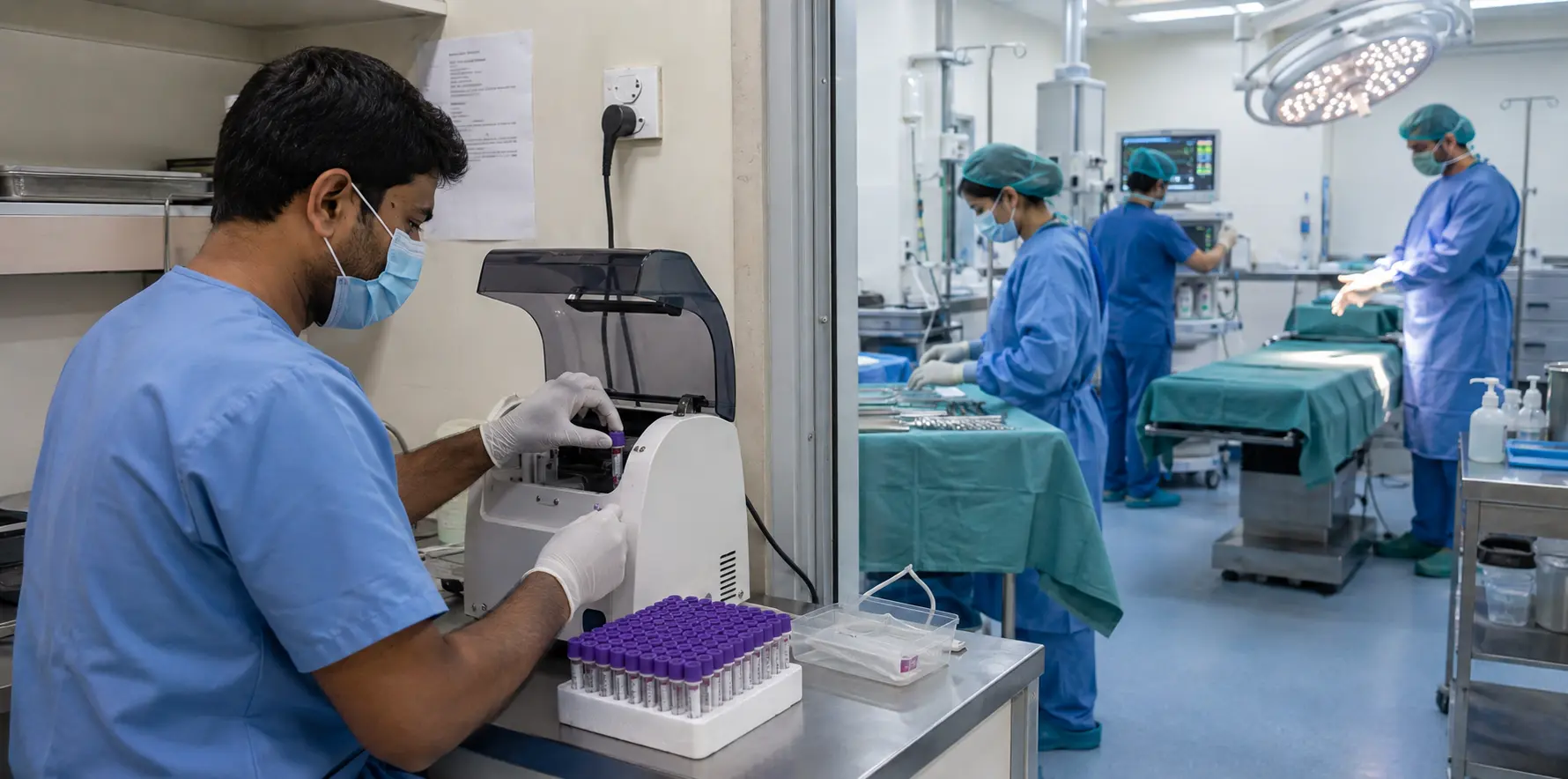

Pakistan has moved to make HIV screening mandatory before surgical procedures involving skin piercing or incisions, as health authorities seek to reduce the risk of healthcare-associated transmission and strengthen infection-control standards across the country.
Federal Health Minister Mustafa Kamal issued the directive while chairing a meeting of the Joint Working Group on HIV/AIDS, calling for a uniform pre-surgical screening standard across Pakistan.
Sindh, Punjab and the Islamabad Capital Territory have already implemented HIV screening before relevant surgical procedures. Kamal directed health authorities in Balochistan, Khyber Pakhtunkhwa and Gilgit-Baltistan to formalise the requirement by issuing the necessary notifications.
The decision is intended to address concerns surrounding HIV transmission within healthcare settings. The government is particularly focusing on procedures involving skin piercing and surgical incisions, where effective infection prevention, sterilisation and blood-safety protocols are critical.
However, screening represents only one part of the wider public-health challenge. During the meeting, Kamal also called for stronger attention to unsafe injections, weaknesses in infection-control practices and gaps in blood safety. Provincial healthcare commissions are expected to participate in a future meeting to assess Infection Prevention and Control practices.
The minister also highlighted the needs of children living with HIV, arguing that treatment should extend beyond clinical care. He called for nutritional, psychosocial and welfare support to be incorporated into their care to improve treatment outcomes and quality of life.
The nationwide screening directive could have significant implications for hospitals and surgical facilities. Healthcare institutions in regions where the requirement has not yet been formalised will need to incorporate screening into pre-operative procedures while ensuring appropriate testing systems, confidentiality and follow-up care.
The policy also places renewed attention on Pakistan’s broader infection-control infrastructure. Mandatory screening can help identify infections, but preventing healthcare-associated HIV transmission ultimately depends on safe injections, properly sterilised medical equipment, reliable blood screening and consistent adherence to infection-control standards.
With Punjab, Sindh and Islamabad already applying the requirement, the federal government’s latest directive is aimed at closing regional gaps and establishing a consistent national approach.
The next stage will depend on implementation, particularly the formal notifications required in Balochistan, Khyber Pakhtunkhwa and Gilgit-Baltistan and the ability of healthcare facilities to apply the policy consistently.