







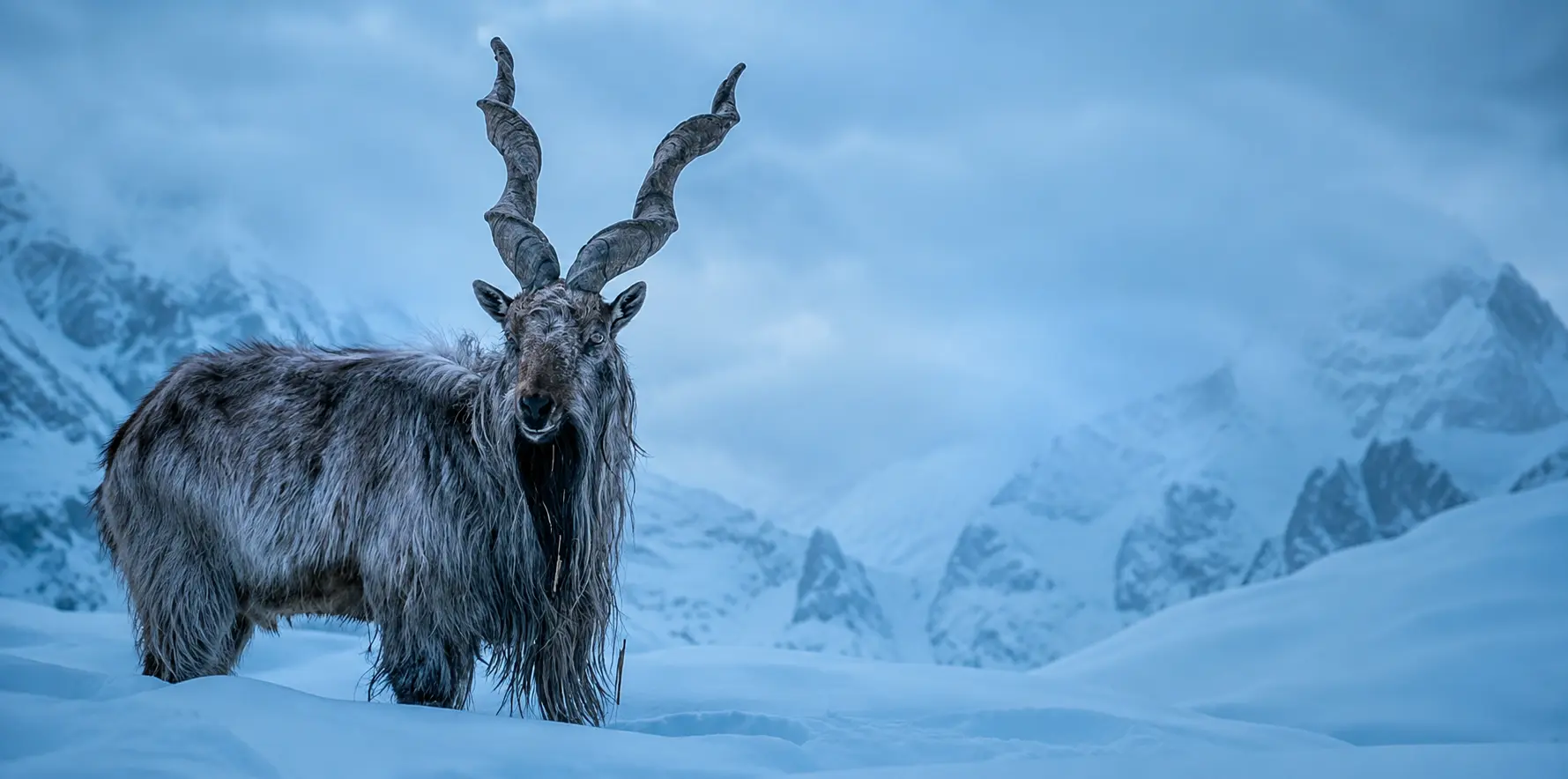

Gilgit-Baltistan’s Parks and Wildlife Department will auction hunting permits for the 2026-27 trophy hunting season on September 10 at the Forest Complex in Jutial, Gilgit. The auction will offer three Astore markhor permits, 14 blue sheep permits, and 100 Himalayan ibex permits under the GB Trophy Hunting Program. Bidding opens at $200,000 for markhor, $25,000 for blue sheep, and $11,000 for ibex. The export quota actually allows four markhor permits this year, but officials carried one over from last season, leaving three new permits for auction. Hunters can pursue their trophies between October 15, 2026, and April 10, 2027, under the GB Trophy Hunting Guidelines 2019, and only within designated conservation areas set annually by wildlife survey data.
Zakir Hussain, GB’s Chief Conservator for Parks and Wildlife, said last year’s auction raised Rs350 million, far short of the Rs550 million target. Buyers left permits unused for two markhors, five blue sheep, and 10 exportable ibexes, costing the programme an estimated Rs200 million. Hussain blamed cancellations by American and other foreign hunters on law-and-order concerns following violent protests in Gilgit and Skardu, which erupted after the assassination of Iran’s Supreme Leader, Ayatollah Ali Khamenei, in US-Israeli strikes in early 2026.
Despite the shortfall, last year’s top bids showed strong demand. The department auctioned 118 permits in 2025-26, and Raja Farhad Maqpoon of Shikar Safaris paid a record $370,000 for a markhor permit in the Nanga Parbat Conservancy. Three other markhor permits sold for $286,000, $270,000, and $240,000, while blue sheep and ibex topped out at $40,000 and $13,000. Base prices that year were $150,000, $30,000, and $10,000 respectively, making this year’s $200,000 markhor floor a sharp increase. The highest markhor permit fetched only $186,000 in 2023 and between $110,000 and $136,000 in 2021-22.
Launched in 1990 with the Bar Valley community, the programme has helped push Pakistan’s markhor population past 5,000, prompting the IUCN to upgrade its status from “endangered” to “near threatened” in 2015. Roughly 80 percent of permit revenue funds local healthcare, education, scholarships, and business loans, with the rest going to the government. Gilgit-Baltistan now manages 47 Community Managed Conservation Areas and Community Controlled Hunting Areas.