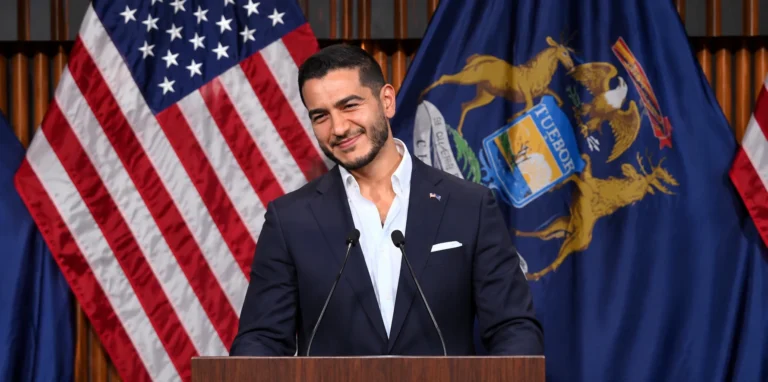








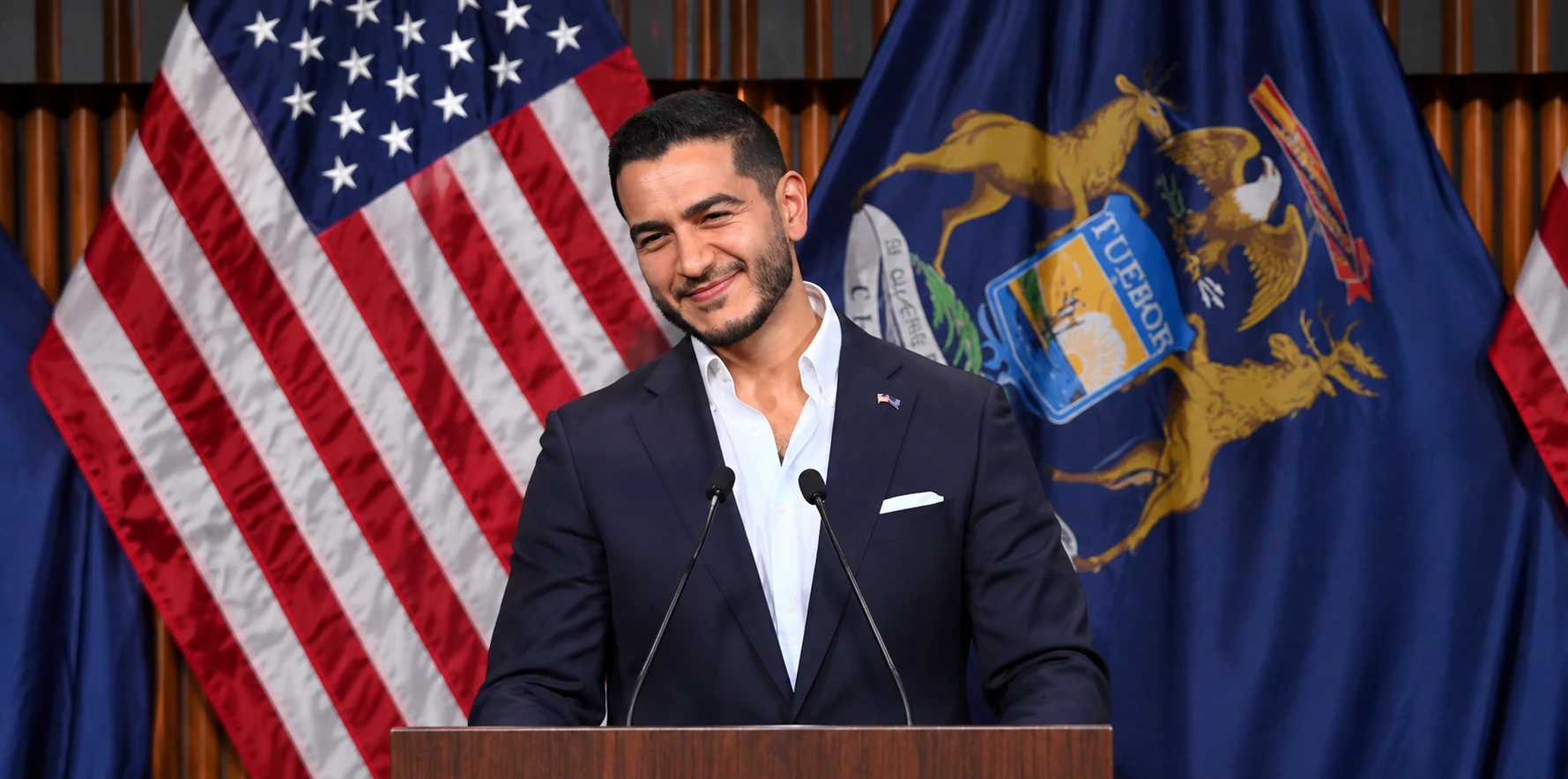

Democrat Abdul El-Sayed has made history by winning Michigan’s US Senate election, becoming the first Muslim elected to the upper chamber of Congress. The 42-year-old physician and former public health administrator defeated Republican Mike Rogers in the November 3, 2026, midterm elections. His victory marks a milestone for Muslim representation in American politics and gives Democrats an important Senate seat during a closely contested election cycle.
El-Sayed celebrated with supporters in Detroit early Wednesday, November 4, declaring victory after election projections showed him leading Rogers by nearly six percentage points. His campaign focused on healthcare affordability, economic inequality and reducing the influence of money in politics.
Abdul El-Sayed Wins Michigan Senate Race
El-Sayed secured the Senate seat being vacated by retiring Democratic Senator Gary Peters. His victory allows Democrats to retain representation in Michigan while introducing a new voice to the chamber.
The contest attracted national attention because Michigan remains an important political battleground. Both parties invested considerable resources in the race, recognising its significance for the balance of power in Washington.
El-Sayed faced an additional challenge when Democratic Congresswoman Haley Stevens, whom he defeated in the party’s primary, endorsed Republican Mike Rogers shortly before Election Day.
Despite that development, El-Sayed maintained support among progressive voters, labour organisations and community groups. His campaign also attracted large audiences in traditionally Republican areas, demonstrating an effort to reach voters beyond the Democratic Party’s established base.
Healthcare Reform Shapes El-Sayed’s Political Campaign
Healthcare affordability was central to El-Sayed’s campaign. As a physician and former health administrator, he argued that Americans should have access to medical treatment without facing overwhelming financial burdens.
He supported universal healthcare and criticised the high costs associated with the country’s largely private healthcare system.
His campaign also addressed household expenses, economic inequality and the influence of wealthy donors on political decisions.
These positions helped distinguish him from more traditional Democratic candidates. However, implementing major healthcare reforms will require congressional support and negotiations with lawmakers holding different policy positions.
El-Sayed’s victory makes him the first Democratic physician elected to the Senate since 1969.
Religious Representation Becomes a Historic Milestone
El-Sayed’s election represents a significant moment for Muslim Americans, who have historically had limited representation in the highest levels of the federal government.
Although Muslim politicians have previously served in the House of Representatives, none had been elected to the US Senate before his victory.
His campaign also faced criticism directed at his religious identity and Arabic name. President Donald Trump and Vice President JD Vance made remarks about El-Sayed during the election campaign, while Republican messaging included allegations questioning his political positions and national security credentials.
El-Sayed rejected attempts to define his candidacy through his religion. Instead, he emphasised healthcare, economic concerns and the needs of Michigan residents.
His victory demonstrates that religious identity can be part of a candidate’s public story without defining the entirety of their political platform.
Grassroots Support Helps Deliver Victory
El-Sayed’s campaign relied heavily on grassroots organising, labour activists and community engagement.
Supporters organised events across Michigan, including areas where Democrats have traditionally struggled to attract large crowds.
The campaign also received support from progressive organisations and union networks that helped mobilise voters.
At his election-night gathering in Detroit, supporters celebrated the result as confirmation that their organising efforts had delivered an important victory.
The participation of younger voters and community activists was particularly visible throughout the campaign.
However, the available election reporting does not establish the precise contribution of individual demographic groups to the final result.
Michigan Victory Adds to Democratic Midterm Gains
El-Sayed’s election came as Democrats made gains during the 2026 midterms, including securing a projected majority in the House of Representatives.
The Michigan result helped the party retain a Senate seat during an election cycle shaped by economic dissatisfaction and disagreements over the Trump administration’s policies.
Although individual Senate races have different local issues, healthcare costs, household finances and government accountability featured prominently across the national campaign.
The broader election results will influence congressional oversight and legislative negotiations during the remaining two years of Trump’s presidency.
El-Sayed Faces the Challenge of Turning Promises Into Policy
Winning a Senate election marks the beginning of a new stage in El-Sayed’s political career. His next challenge will involve translating campaign commitments into legislation.
Healthcare reform, economic affordability and campaign finance remain complicated policy areas that require cooperation across congressional committees and political parties.
As a senator, El-Sayed will also represent Michigan residents with different political views and priorities.
His effectiveness will depend on his legislative work, committee responsibilities and ability to build support for proposed reforms.
The historic nature of his election does not remove those practical responsibilities.
A New Chapter in American Political Representation
Abdul El-Sayed’s victory has introduced a new milestone in the history of Muslim political representation in the United States.
His election also reflects the role of community organising, policy-focused campaigning and voter participation in shaping congressional representation.
For Muslim Americans, the result carries symbolic importance because it expands representation in an institution where the community had previously never held an elected seat.
For Michigan voters, the longer-term significance will depend on how El-Sayed addresses healthcare affordability, economic concerns and other issues raised during his campaign.
El-Sayed’s election has already made history. His next responsibility is to demonstrate what that representation can achieve through public policy and legislative action.