







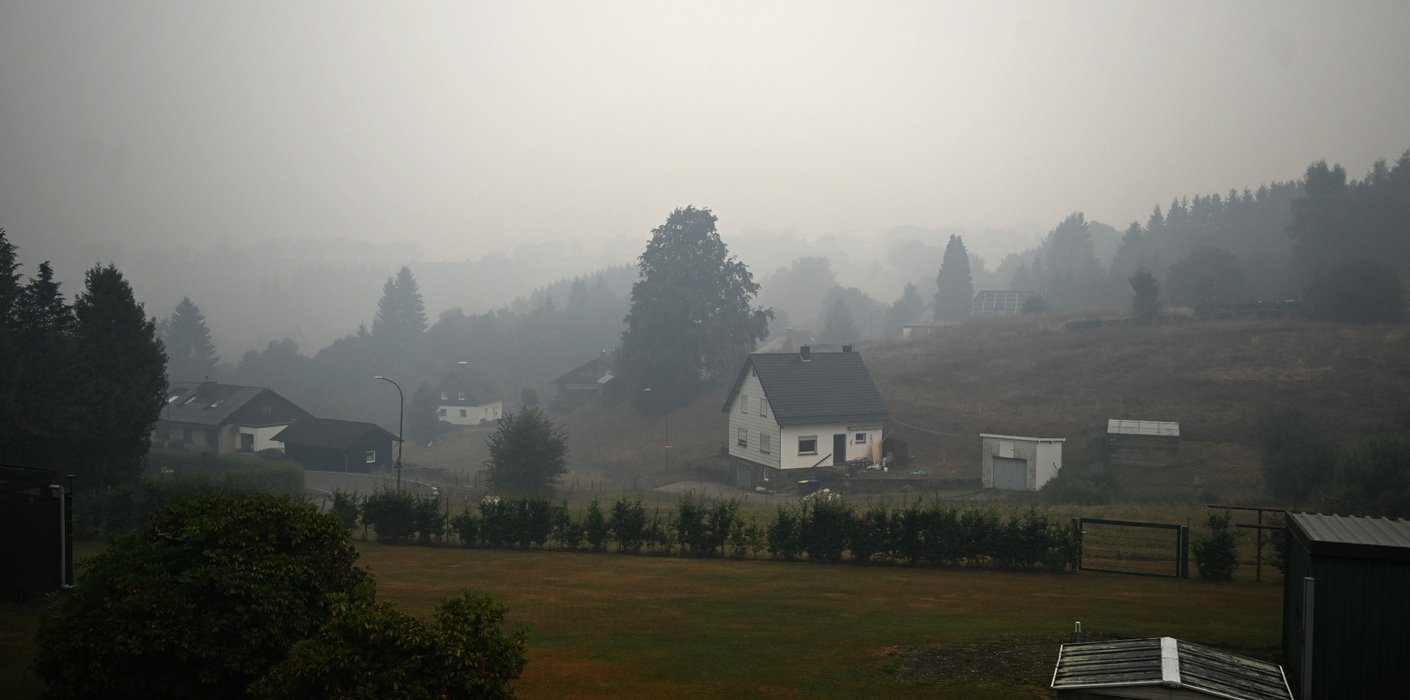

Rain and cooler temperatures are giving firefighters a crucial advantage against Belgium’s largest wildfire on record after the blaze burned roughly 3,000 hectares of the High Fens nature reserve near the German border.
Rain began falling across eastern Belgium on Monday, helping emergency crews contain a fire that had threatened to advance toward Germany. Belgian officials said the blaze was no longer spreading in that direction and had been partly contained, although evacuated residents had not yet been cleared to return home.
The wildfire has burned through around 3,000 hectares, or 7,400 acres, of moorland, peat and woodland in the High Fens. Its scale far exceeds Belgium’s previous record wildfire in 2011, which burned close to 1,400 hectares.
Around 500 firefighters from Belgium, Germany and Luxembourg, alongside military personnel, farmers and other emergency responders, have been involved in the operation. Belgium also requested international assistance through the European Union, which deployed three helicopters and two water-bombing aircraft to support firefighting efforts.
Approximately 600 people were evacuated from communities in the affected region as flames and smoke approached populated areas. Despite improving weather conditions, authorities have not yet allowed displaced residents to return, reflecting the continued danger from hotspots and changing fire conditions.
Belgium’s weather agency forecast between five and nine millimetres of rainfall in the High Fens on Monday, while temperatures were expected to fall to around 20°C after exceeding 30°C during last week’s heatwave. Higher humidity accompanying the rainfall is also expected to make vegetation less vulnerable to rapid ignition.
The record blaze comes during another severe European wildfire season. Around 576,000 hectares have already burned across Europe this year, according to European Forest Fire Information System data cited by Reuters. Successive heatwaves have intensified drought and left vegetation exceptionally dry across large parts of the continent.
Belgium’s experience is particularly significant because major wildfires have historically been more closely associated with southern European countries. Scientists have warned that hotter and drier conditions linked to climate change are increasing wildfire risks across a much wider area of Europe. Other factors, including accumulated dry vegetation and changes in rural land management, can further increase the danger.
The High Fens fire could therefore intensify debate over Belgium’s preparedness for larger and more frequent wildfires, including cross-border firefighting resources, drought monitoring and protection of vulnerable peatlands and nature reserves.
Rain has improved the immediate outlook, but the emergency is not over. The fire remains only partly contained, and authorities have not declared it fully extinguished or cleared evacuated residents to return.
For now, the improving weather offers firefighters their strongest opportunity yet to bring Belgium’s unprecedented wildfire under control.