







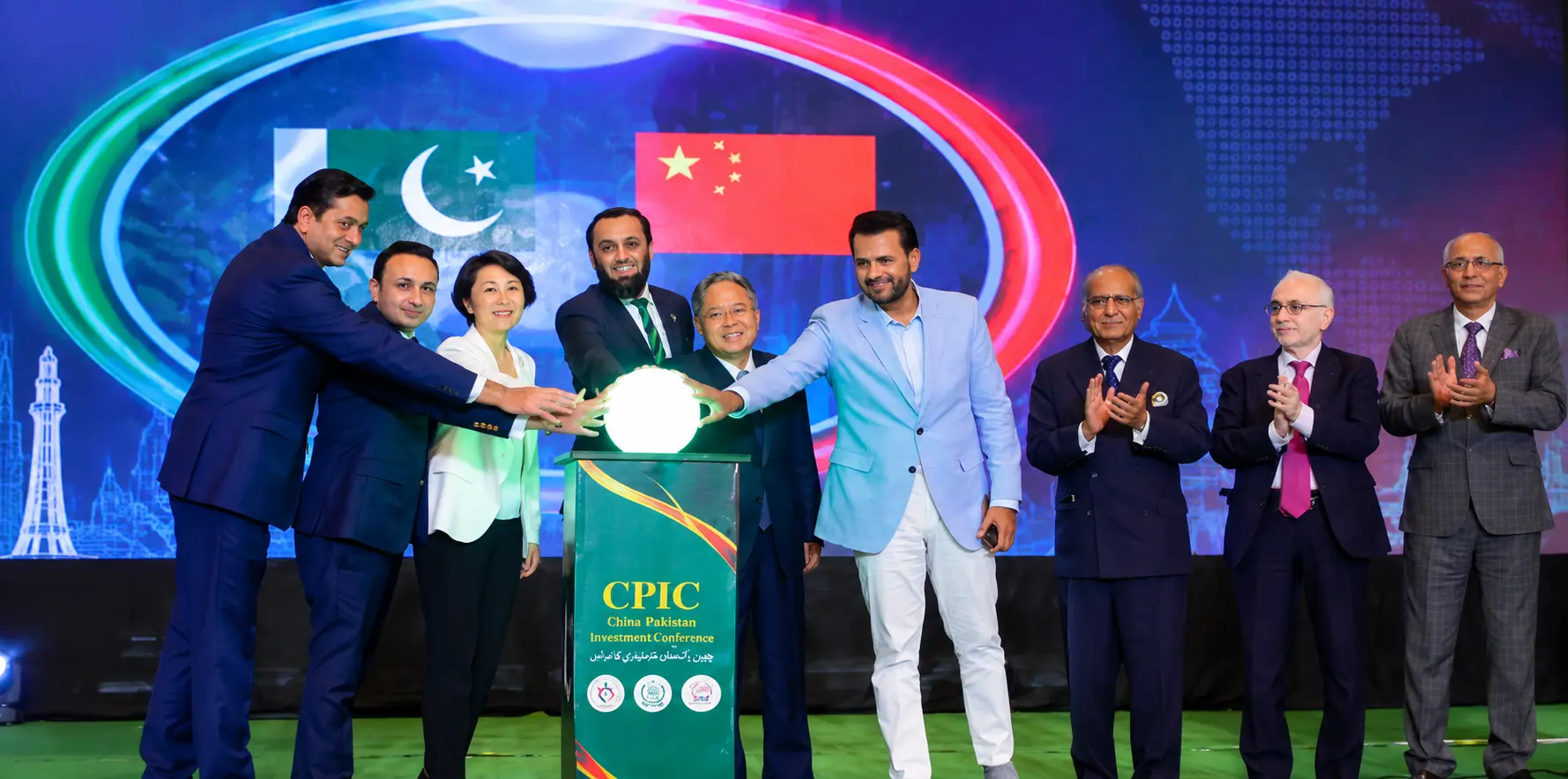

Pakistan and China have launched the China-Pakistan Information Corridor (CPIC), a new initiative designed to strengthen media cooperation, counter misleading information and expand cultural and business exchanges. The corridor was inaugurated in Islamabad on October 27, 2026, with Information Minister Attaullah Tarar describing it as a new chapter in the countries’ longstanding strategic partnership.
The initiative brings together media organisations, businesses, research institutions and cultural groups from both countries. While the China-Pakistan Economic Corridor (CPEC) focuses on infrastructure and economic connectivity, CPIC aims to build stronger connections through information sharing, digital platforms and public engagement.
Pakistan-China Information Corridor Launches in Islamabad
The launch ceremony was attended by Chinese Foreign Ministry spokesperson Mao Ning and Chinese Ambassador to Pakistan Jiang Zaidong. Speaking at the event, Tarar said Pakistan had long sought deeper cooperation with China in journalism, information exchange and digital communication.
He described CPIC as an extension of the relationship developed through CPEC. According to the minister, infrastructure projects have strengthened physical connectivity, while the new information corridor will focus on improving communication and understanding between the two countries.
The initiative is organised around four areas: media cooperation, business and enterprise, think tank collaboration, and culture and tourism. Each component is intended to create opportunities for institutions and individuals to work together.
Eighteen Media Organisations Join News Exchange Network
Media cooperation forms a central part of CPIC. According to Tarar, a working group involving 18 Pakistani and Chinese media organisations will facilitate the exchange of news and information about bilateral cooperation.
Participating organisations include Pakistani state broadcasters and private media outlets, alongside Chinese institutions such as Xinhua, China Media Group and People’s Daily.
The initiative also includes a dedicated fact-checking mechanism intended to identify misleading narratives and respond with verified information. Officials from both countries have expressed concern about misinformation affecting public perceptions of their relationship.
However, the effectiveness of the mechanism will depend on transparent verification standards and the ability to distinguish factual corrections from disagreements over political interpretation. Independent editorial judgement and access to reliable evidence will remain important considerations.
Karachi Office to Support Business and Investment Cooperation
The business component of CPIC aims to improve communication between Pakistani and Chinese enterprises. Tarar announced that the initiative had opened its first regional office in Karachi, creating a platform for commercial engagement.
A digital trade portal is also being developed to track trade, investment and foreign direct investment between the two countries. The platform could help businesses access information about economic opportunities and ongoing cooperation.
Additionally, CPIC plans to introduce a podcast series featuring Chinese entrepreneurs working in Pakistan and Pakistani entrepreneurs conducting business with China. These discussions are intended to share experiences and encourage greater understanding of cross-border commercial activity.
The announcement did not specify when the trade portal would become operational or which services businesses would initially be able to access.
Think Tanks to Expand Joint Research and Dialogue
Research collaboration is another major component of the Pakistan-China Information Corridor. The Pakistan-China Institute will help coordinate engagement between research organisations in both countries.
The proposed activities include joint studies, policy discussions, publications and institutional exchanges. These efforts aim to improve the quality of information available about Pakistan-China relations and encourage research-based dialogue.
Think tank cooperation could support discussions on economic development, regional connectivity, technology and other areas of shared interest.
However, the announcement did not identify specific research projects, funding arrangements or publication schedules. These details will become important as the initiative develops.
Tourism Corridor to Connect Xinjiang and Gilgit-Baltistan
Tourism and cultural exchange form the fourth component of CPIC. Tarar said work was already underway on a tourism corridor connecting China’s Xinjiang region with Gilgit-Baltistan.
The initiative aims to encourage Chinese tourists to explore northern Pakistan and create additional opportunities for cultural interaction.
Gilgit-Baltistan’s mountainous landscapes and established tourism destinations could attract visitors interested in nature, adventure and regional heritage. Improved tourism cooperation could also support hotels, transport providers and local businesses.
However, tourism growth will depend on practical arrangements involving travel facilities, transport connectivity and visitor services.
The proposed corridor remains under development, and no confirmed launch date or visitor targets were announced.
Youth Ambassadors to Promote Cultural Exchange
CPIC also includes a youth engagement programme intended to strengthen connections between younger generations.
Tarar announced that the first group of CPEC Youth Ambassadors had been nominated from 13 universities across Pakistan. The programme aims to encourage students to participate in activities connected to bilateral cooperation.
Young participants could contribute to cultural discussions, educational exchanges and digital communication initiatives.
The minister also emphasised the role of technology in creating economic opportunities for Pakistan’s younger population. He described digital platforms as important tools for entrepreneurship, communication and international engagement.
However, the announcement did not provide detailed information about the ambassadors’ responsibilities, selection criteria or programme duration.
CPIC Builds on Pakistan-China Economic Relations
The launch comes as Pakistan and China continue discussions about expanding cooperation under CPEC and other bilateral initiatives.
A day before the ceremony, Deputy Prime Minister and Foreign Minister Ishaq Dar met Chinese Ambassador Jiang Zaidong in Islamabad to review progress on economic cooperation.
Their discussions covered trade, investment, regional connectivity, agricultural modernisation and people-to-people exchanges.
CPIC adds an information and communication component to these existing areas of cooperation. Its focus extends beyond infrastructure development to the institutions, businesses and communities involved in maintaining bilateral relations.
Digital Cooperation Creates Opportunities and Responsibilities
The Pakistan-China Information Corridor represents an effort to expand bilateral cooperation into journalism, research, tourism and digital communication.
For media organisations, it could create opportunities for information exchange and collaborative reporting. Businesses may benefit from improved access to commercial information, while universities and research institutions could develop new partnerships.
At the same time, initiatives intended to counter misinformation require clear standards of accuracy and transparency. The credibility of CPIC’s fact-checking activities will depend on whether its findings are supported by verifiable evidence and open to appropriate scrutiny.
The initiative’s success will also depend on implementation. Several components, including the trade portal and tourism arrangements, remain under development.
For Pakistan and China, CPIC offers another channel for strengthening bilateral relations. Its long-term value will depend on whether the proposed partnerships deliver useful information, meaningful exchanges and practical opportunities for businesses, researchers and citizens.