








Pakistan is preparing for another active spell of monsoon weather after the Pakistan Meteorological Department (PMD) forecast widespread rain, windstorms and thunderstorms across much of the country from July 18 to July 25. The weather system is expected to bring heavy to very heavy rainfall in several regions, increasing the risk of urban flooding, flash floods and landslides, particularly in northern and central Pakistan.
According to the PMD, moisture-laden monsoon currents from the Arabian Sea are continuously moving into the upper and central parts of the country and are expected to strengthen over the weekend. A western disturbance is also forecast to reach northern Pakistan on July 20, combining with the monsoon system to intensify rainfall across many districts.
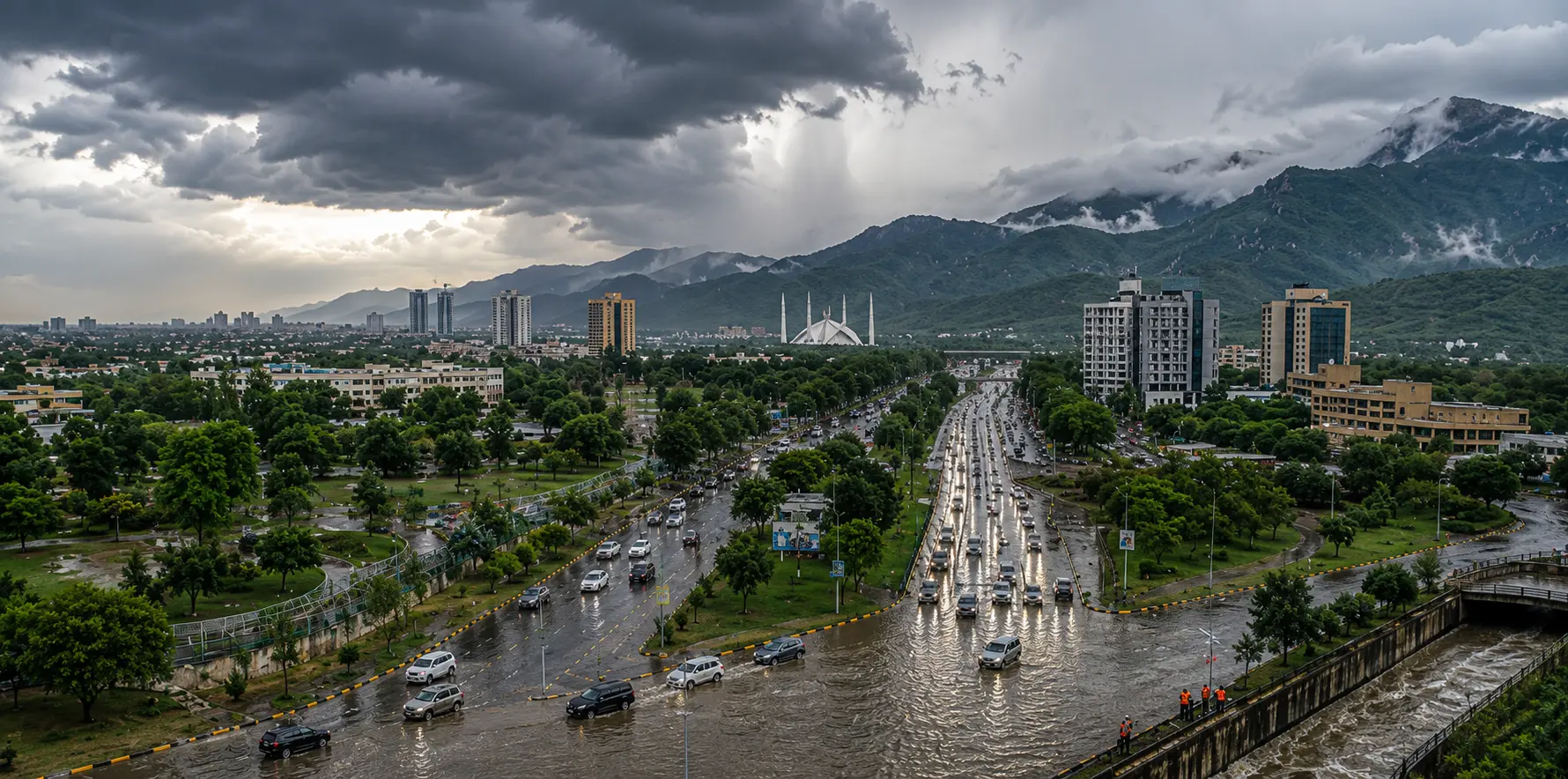
The department has warned that heavy rainfall may trigger urban flooding in Islamabad, Rawalpindi, Lahore, Gujranwala, Faisalabad, Sialkot, Multan and Peshawar between July 20 and July 23. These cities are particularly vulnerable when intense rainfall overwhelms drainage systems, leading to waterlogged roads, traffic disruptions and flooding in low-lying neighbourhoods.
Mountainous regions face an even greater threat. The PMD has warned that upper Khyber Pakhtunkhwa, Gilgit-Baltistan, Murree, Galliyat and Azad Jammu and Kashmir could experience landslides and flash floods as persistent rainfall saturates slopes and swells local streams. Hill torrents in northeastern Balochistan and Dera Ghazi Khan may also see sudden increases in water flow, posing risks to nearby communities and infrastructure.
Kashmir is expected to receive widespread rain from July 18 to July 25, with scattered heavy to very heavy downpours. In Balochistan, rainfall is forecast between July 19 and July 23 in districts including Zhob, Sherani, Loralai, Kohlu, Sibi, Naseerabad, Barkhan and Khuzdar. Parts of Sindh are also likely to receive isolated showers later in the week, although much of the province is expected to remain hot and humid.
The PMD has cautioned that strong winds and lightning accompanying thunderstorms could damage vulnerable infrastructure such as electric poles, solar panels, trees and roadside billboards. Farmers have been advised to plan agricultural activities around the forecast, while tourists are urged to avoid unnecessary travel to northern areas where rapidly changing weather could make roads hazardous.
The National Disaster Management Authority (NDMA) has also highlighted the heightened risk that intense monsoon rainfall poses to urban infrastructure. Its latest advisory warns that metropolitan drainage systems may become overwhelmed during periods of exceptionally heavy rain and urges provincial authorities to improve drainage management, strengthen emergency preparedness and monitor vulnerable infrastructure throughout the monsoon season.
The warning comes as Pakistan remains one of the countries most exposed to climate-related extreme weather. Scientists say a warming atmosphere can hold more moisture, increasing the likelihood of short-duration but high-intensity rainfall events that overwhelm urban drainage systems and trigger flash flooding. Recent monsoon-related incidents, including deadly landslides and structural collapses, have underscored the need for stronger disaster preparedness and resilient infrastructure.
Authorities are advising residents to stay updated through official PMD forecasts, avoid driving through flooded roads, secure loose outdoor objects before storms arrive and follow evacuation instructions if local authorities issue flood or landslide warnings. With the wet spell expected to continue through July 25, emergency agencies remain on alert as Pakistan enters one of the most active phases of its annual monsoon season.