








Pakistan and seven other Muslim-majority countries have accused Israel of obstructing efforts to end the Gaza conflict by rejecting a US-backed roadmap and opposing the establishment of a Palestinian state.
The foreign ministers of Pakistan, Egypt, Türkiye, Indonesia, Jordan, Qatar, Saudi Arabia and the United Arab Emirates issued a joint statement on Sunday, arguing that Israel’s position threatens implementation of US President Donald Trump’s broader Gaza plan. They said continued rejection or delays could further deteriorate conditions on the ground.
The dispute centres on a 15-point roadmap developed through mediation involving the United States, Egypt, Qatar and Türkiye, alongside the High Representative for Gaza and the Board of Peace. The framework is designed to advance a broader plan previously endorsed by the UN Security Council.
Under the roadmap, Hamas and other armed Palestinian factions would relinquish their weapons, while an International Stabilisation Force would be deployed in Gaza. Israeli forces would withdraw in stages as disarmament is independently verified, and civilian administration would eventually transfer to a Palestinian technocratic body known as the National Committee for the Administration of Gaza.
However, Israel and the roadmap’s backers remain divided over the sequence of those steps.
Prime Minister Benjamin Netanyahu has insisted that Hamas must be completely disarmed before Israeli troops withdraw. The roadmap instead envisages disarmament and Israeli withdrawal progressing in phases alongside international stabilisation measures. This sequencing dispute has emerged as one of the main obstacles to implementation.
The eight countries said Palestinian factions had accepted the roadmap and called for sustained US engagement to prevent the diplomatic process from collapsing. They also urged the Board of Peace to take concrete steps within its mandate to advance implementation.
The joint statement went beyond the immediate Gaza negotiations by rejecting opposition to Palestinian statehood. The eight governments reiterated support for an independent Palestinian state based on the 1967 lines, with East Jerusalem as its capital.
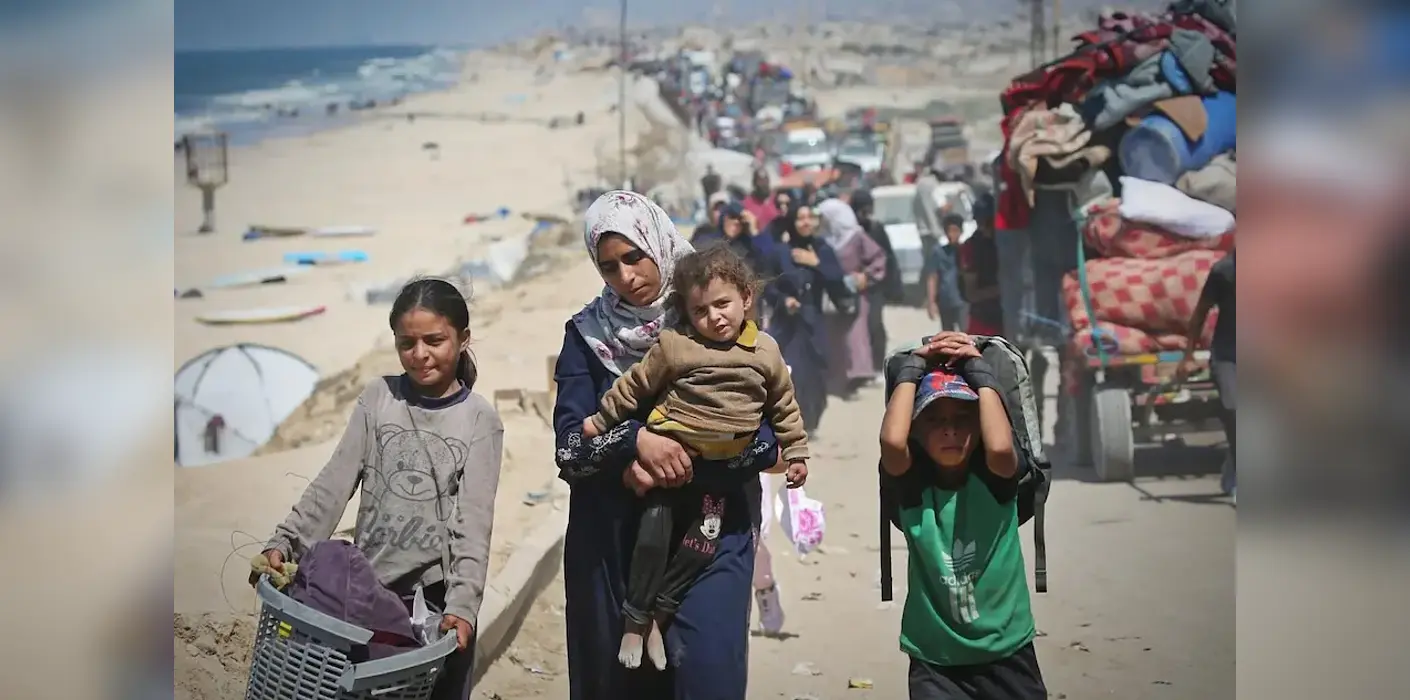
The deadlock carries significant humanitarian and economic consequences. Failure to advance the framework could delay reconstruction, humanitarian relief and the establishment of a more stable administrative structure in Gaza while prolonging regional uncertainty.
Despite intensified diplomatic activity, no agreed timetable for Hamas’s disarmament or an Israeli withdrawal has been announced. The roadmap therefore remains a proposed mechanism for advancing the Gaza process rather than a fully implemented settlement.
The critical issue now is whether mediators can bridge the sequencing dispute: Israel wants complete disarmament first, while the roadmap links verified disarmament with phased Israeli withdrawal.