








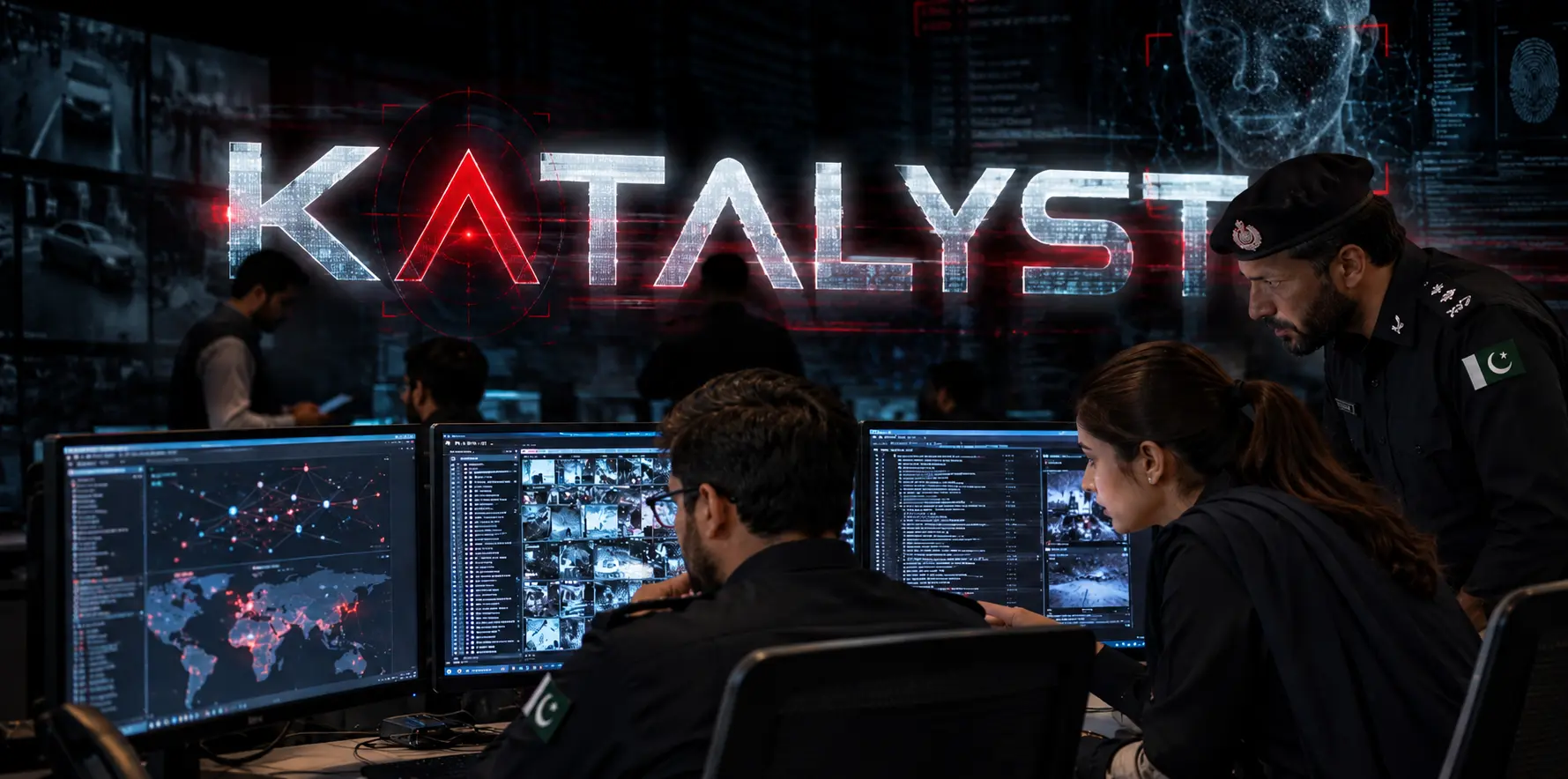

Pakistan has introduced an artificial intelligence-powered investigative tool designed to help authorities identify and investigate online child sexual exploitation and abuse, as the country faces an enormous volume of digital reports involving potential harm to children. The National Cyber Crime Investigation Agency (NCCIA) formally launched the system, named Katalyst, in Islamabad on January 31, 2026. Developed through cooperation between Pakistan and the United Kingdom, the technology aims to improve how investigators process digital evidence, identify urgent cases and respond to online threats against children.
The initiative comes as Pakistani authorities receive nearly one million referrals related to suspected online child exploitation and abuse each year, creating a substantial challenge for investigators attempting to identify victims and pursue offenders.
Katalyst Could Transform How Cybercrime Cases Are Reviewed
One of the most significant aspects of Katalyst is its ability to expand the NCCIA’s capacity to review referrals from the National Center for Missing and Exploited Children (NCMEC). Before the system’s introduction, the agency could review approximately 1,200 referrals per month. With AI assistance, officials expect that capacity to increase to more than 100,000 referrals monthly.
That represents a substantial improvement in potential processing capacity, allowing investigators to assess far more reports without relying entirely on manual review. The system is designed to help authorities detect patterns, prioritise high-risk cases and organise information that may require urgent investigative attention. However, the projected capacity does not mean the NCCIA has already processed 100,000 cases in a month or that every referral represents a confirmed criminal offence. The effectiveness of the tool will depend on how accurately it identifies urgent reports and how investigators act on the information it produces.
Pakistan and UK Join Forces on Digital Child Safety
Katalyst was developed through a partnership involving Pakistan’s Ministry of Interior and Narcotics Control and the UK-Pakistan Serious Crime and Law Enforcement Programme, known as UPSCALE. The programme is funded by the British High Commission and supports cooperation between the two countries on serious crime and law-enforcement capabilities.
The launch ceremony was attended by Minister of State for Interior and Narcotics Control Talal Chaudhry, British High Commissioner Jane Marriott and NCCIA Director General Syed Khurram Ali. Speaking at the event, Chaudhry emphasised the government’s commitment to strengthening cybercrime investigations through modern technology. He said protecting children from online exploitation was a national responsibility and described the introduction of AI as part of Pakistan’s efforts to modernise law enforcement.
British High Commissioner Jane Marriott also emphasised that online child exploitation is an international problem requiring cooperation between countries. The partnership reflects the cross-border nature of digital abuse, where offenders, victims, platforms and evidence may be located in different jurisdictions.
Nearly One Million Referrals Create an Investigative Challenge
The scale of online child exploitation reports presents a serious challenge for Pakistan’s cybercrime authorities. With nearly one million referrals received annually, investigators must review large volumes of digital information while determining which cases require immediate intervention. Not every referral necessarily represents a separate victim or a confirmed offence. Nevertheless, the volume illustrates the difficulty of identifying urgent cases through manual investigation alone.
AI-assisted analysis could help reduce delays by organising incoming information and identifying cases that warrant closer examination. This is particularly important when digital evidence may contain information capable of identifying children facing immediate danger. At the same time, automated systems require careful oversight. Incorrect classifications could delay investigations or direct resources towards cases that do not present the greatest risk. Human investigators therefore remain essential to verifying evidence, assessing the circumstances of individual cases and making decisions about legal action.
Child Protection Requires More Than Technology
National Commission on the Rights of the Child Chairperson Ayesha Raza Farooq emphasised the importance of cooperation between government institutions, social media platforms and child protection organisations. She called for a coordinated national approach involving awareness, prevention and stronger policies to address online exploitation.
Her remarks point to an important limitation of technological solutions. Detecting harmful activity is only one part of protecting children online. Effective prevention also requires public awareness, accessible reporting systems, trained investigators and appropriate support for victims. Parents, educators and young internet users need reliable information about online grooming, exploitation, privacy and safe reporting practices. Social media companies also have a role in identifying harmful activity and responding appropriately to lawful requests from investigators.
AI Brings Opportunities and New Responsibilities
The introduction of Katalyst represents an important development in Pakistan’s use of artificial intelligence for law enforcement. AI can assist investigators by processing large amounts of information more efficiently, but its deployment in sensitive criminal investigations also raises questions about data protection, accuracy and accountability.
Information connected to child exploitation cases is particularly sensitive and requires strict safeguards against unauthorised access, unnecessary retention or misuse. Clear procedures for handling digital evidence, restricting access and reviewing automated findings will be essential as the system becomes part of routine investigations. The available announcement does not provide a detailed public assessment of Katalyst’s accuracy, error rates or independent oversight arrangements. Those factors will be important when evaluating the system’s longer-term performance.
A New Step in Pakistan’s Fight Against Online Child Abuse
Since its establishment in April 2025, the NCCIA has handled a substantial volume of cybercrime complaints, making improved investigative capacity a priority. Katalyst offers the agency a way to manage referrals at a scale that would be difficult through manual review alone.
For Pakistan, the initiative also demonstrates how international cooperation and emerging technology can support efforts to address crimes that increasingly cross national borders. But the real measure of success will extend beyond the number of referrals processed. It will depend on whether the system helps investigators identify children at risk sooner, preserve reliable evidence, pursue offenders through lawful procedures and improve protection for victims.
Katalyst may allow Pakistan to examine far more reports of online child exploitation. The greater responsibility is ensuring that those reports lead to timely, accurate and effective action to protect children.