







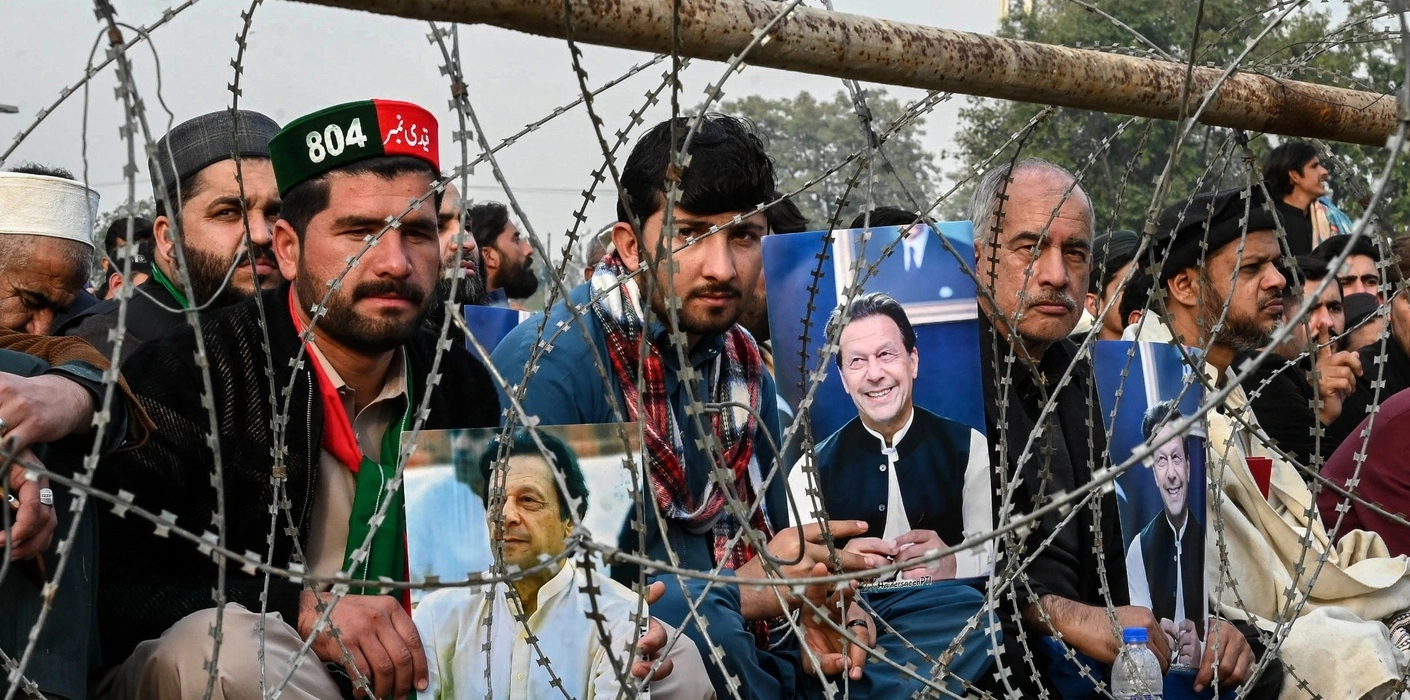

There was something deeply revealing about the celebrations that followed the Supreme Court’s order to move Imran Khan from Adiala Jail to Shifa International Hospital.
His supporters called it a victory. PTI leaders welcomed it as long-awaited relief. Social media filled with messages of gratitude, vindication and emotion. For people who had spent months worrying about the 73-year-old former prime minister’s health and access to his family and doctors, the judgment felt like a rare moment in which someone had finally listened.
But beneath that relief lies a more uncomfortable question.
How did medical treatment become something to celebrate as a political victory?
The Supreme Court on August 18 ordered that Khan be transferred to Shifa International Hospital within 48 hours for examination and treatment. A specialist medical board is to assess him, with his personal physician Dr Faisal Sultan and his sister Dr Uzma Khan allowed to participate. The court also ordered weekly family meetings and twice-weekly telephone calls with his sons.
Read those directions without the names, parties and politics.
A prisoner is to receive specialist medical attention. His doctor can participate in his care. His family can see him. He can speak to his children.
These are remarkably ordinary things to have become extraordinary.
And that is precisely why the reaction has been so emotional.
For Khan’s supporters, the judgment is not being experienced merely as another procedural development in years of litigation. It follows prolonged concerns raised by his family, lawyers and party about his health, medical access and restrictions on meetings. Courts have previously had to intervene over access to lawyers and medical assessment as well. In June, for example, the Islamabad High Court described denial of access to legal counsel as unfortunate and potentially obstructive to justice.
The government and prison authorities have, at different times, offered a very different picture of Khan’s incarceration and the facilities available to him. That matters. An editorial cannot simply convert every allegation made by PTI into established fact.
Nor should it need to.
The principle survives whichever political narrative one accepts.
Imran Khan is a convicted prisoner facing multiple legal proceedings. He is also a former prime minister, former international cricketer and the leader of a political movement that retains enormous public support. None of those facts should either deprive him of ordinary prisoner protections or entitle him to medical privileges unavailable under law.
The appropriate standard is simpler: dignity, adequate healthcare and meaningful legal and family access should not depend upon political popularity.
That is why the government’s reaction deserves attention too.
Law Minister Azam Nazeer Tarar has said the government intends to seek modification of the order, arguing that Khan should be examined at a government tertiary-care hospital rather than a private facility. Other government figures have indicated that the existing order will be implemented unless the court changes it. Rana Sanaullah, notably, described the judgment as merit-based and said the government respected the decision.
The government is entitled to seek legal review.
But Pakistan should be careful about what this debate becomes.
Whether the examination takes place at one hospital or another cannot be allowed to obscure the fundamental issue: a prison sentence is not a sentence to medical neglect, isolation from family or uncertainty about access to care.
This is also why the story has travelled far beyond Pakistan.
Reuters reported the Supreme Court intervention internationally, highlighting concerns surrounding Khan’s deteriorating health and the long-running political and legal conflict around his imprisonment. The Associated Press similarly focused on the court’s directions for hospital examination and restored family contact. France’s Le Monde and Britain’s The Times were among other international publications to report the development.
That international coverage matters.
Imran Khan is not viewed abroad solely through the lens of Pakistan’s current political battles. For millions outside the country, he is still the man who lifted the 1992 Cricket World Cup before eventually becoming prime minister. His imprisonment therefore attracts attention that few Pakistani political cases can command.
And what does the outside world now see?
A former prime minister whose family and lawyers have repeatedly sought greater medical and personal access. A political party celebrating a court order for hospital treatment as a major breakthrough. A government preparing to challenge part of that arrangement. And a Supreme Court having to specify not only medical treatment, but how often a father should be permitted to speak to his sons.
That is not merely an Imran Khan story.
It is a Pakistan story.
There is another danger here too. Politics has become so tribal that even illness risks being processed through party allegiance. One side can exaggerate every development into catastrophe; another can become so determined to reject the opposing narrative that legitimate questions about a prisoner’s welfare are treated almost as political propaganda.
Human dignity cannot work like that.
One does not have to support Imran Khan to believe he should receive appropriate medical treatment. One does not have to accept PTI’s account of every event surrounding his imprisonment to question why access to doctors and relatives has required repeated litigation. And one does not have to believe Khan is innocent of every charge against him to insist that the state remain accountable for his welfare while he is in its custody.
That distinction is essential.
A state demonstrates strength not by how harshly it can treat its most powerful opponents, but by how faithfully it observes their rights when it has complete authority over them.
Perhaps that explains the emotional force of Tuesday’s decision better than any political analysis can.
For many supporters, this was not simply about Shifa International Hospital. It was about finally seeing an institution acknowledge concerns they felt had gone unheard. The relief was therefore personal as much as political.
But a functioning democracy should aspire to something better than making healthcare feel like a courtroom triumph.
If the Supreme Court’s intervention ensures that Imran Khan receives appropriate treatment, regular family contact and transparent medical oversight, that is important.
The larger victory, however, would be a Pakistan in which none of those things needs to be won.
Because when a nation begins celebrating access to a doctor as political justice, the most important question is no longer who won the case.
It is why such a case had to be fought at all.
Editorial note
I would keep the phrase “poor treatment” out of the headline and avoid stating that Khan has definitively been medically mistreated unless we can substantiate the specific treatment being alleged. Reuters and AP confirm the health concerns, court intervention and family-access issue, but competing accounts exist regarding his prison conditions. That actually makes the editorial stronger: we can make a forceful prisoner-rights argument without turning disputed claims into facts.
For the international-media section, Reuters, AP, Le Monde and The Times give us a much stronger foundation than simply saying “international media is covering it.”