







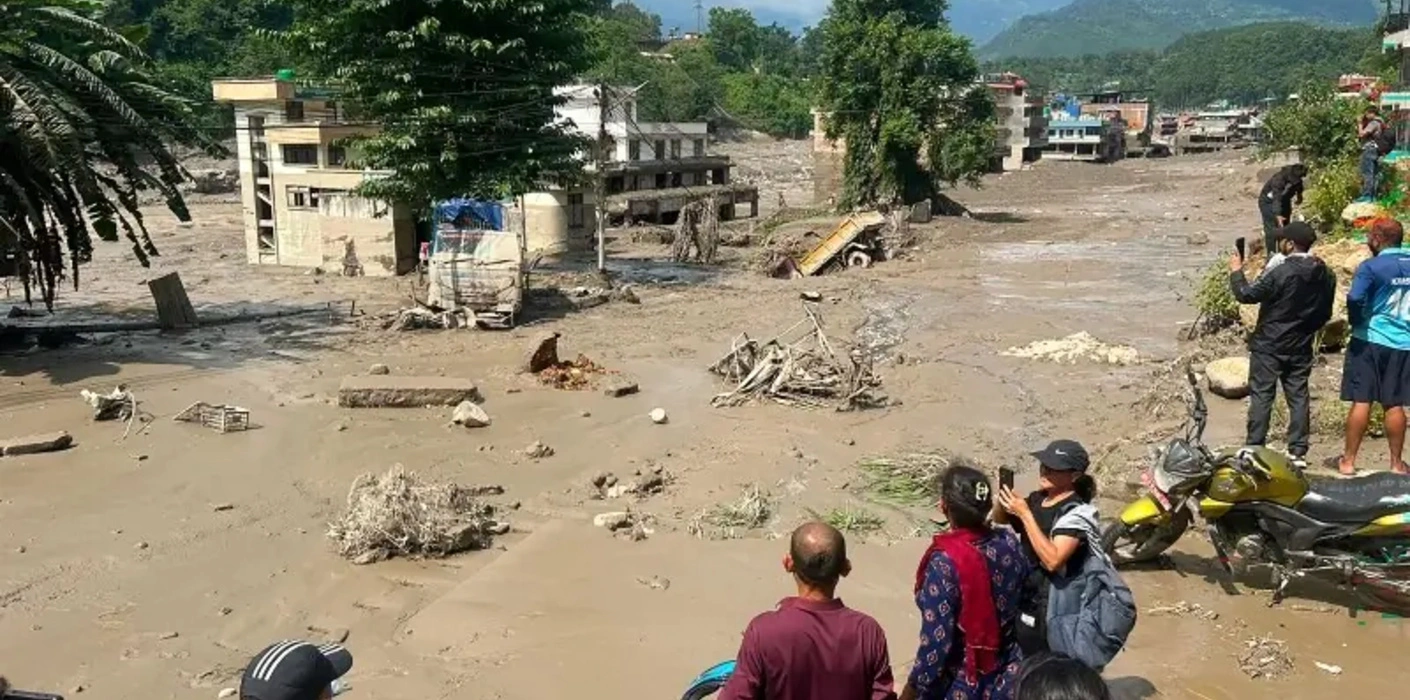

A massive flash flood has devastated Nepal’s Rasuwa district along the border with Tibet, killing dozens of people, destroying riverside communities, and leaving hundreds of travelers unaccounted for as rescue teams race to reach isolated areas.
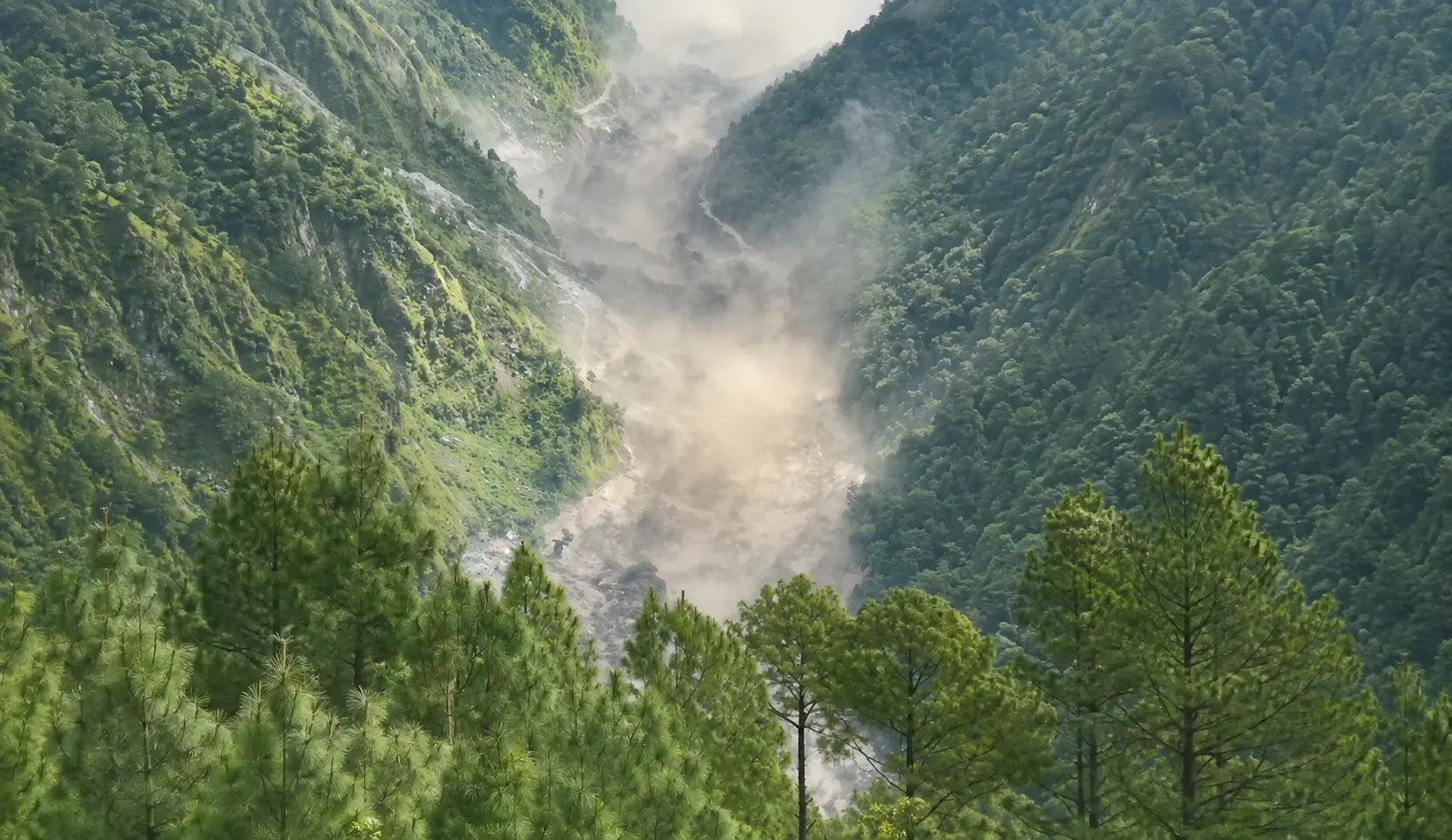
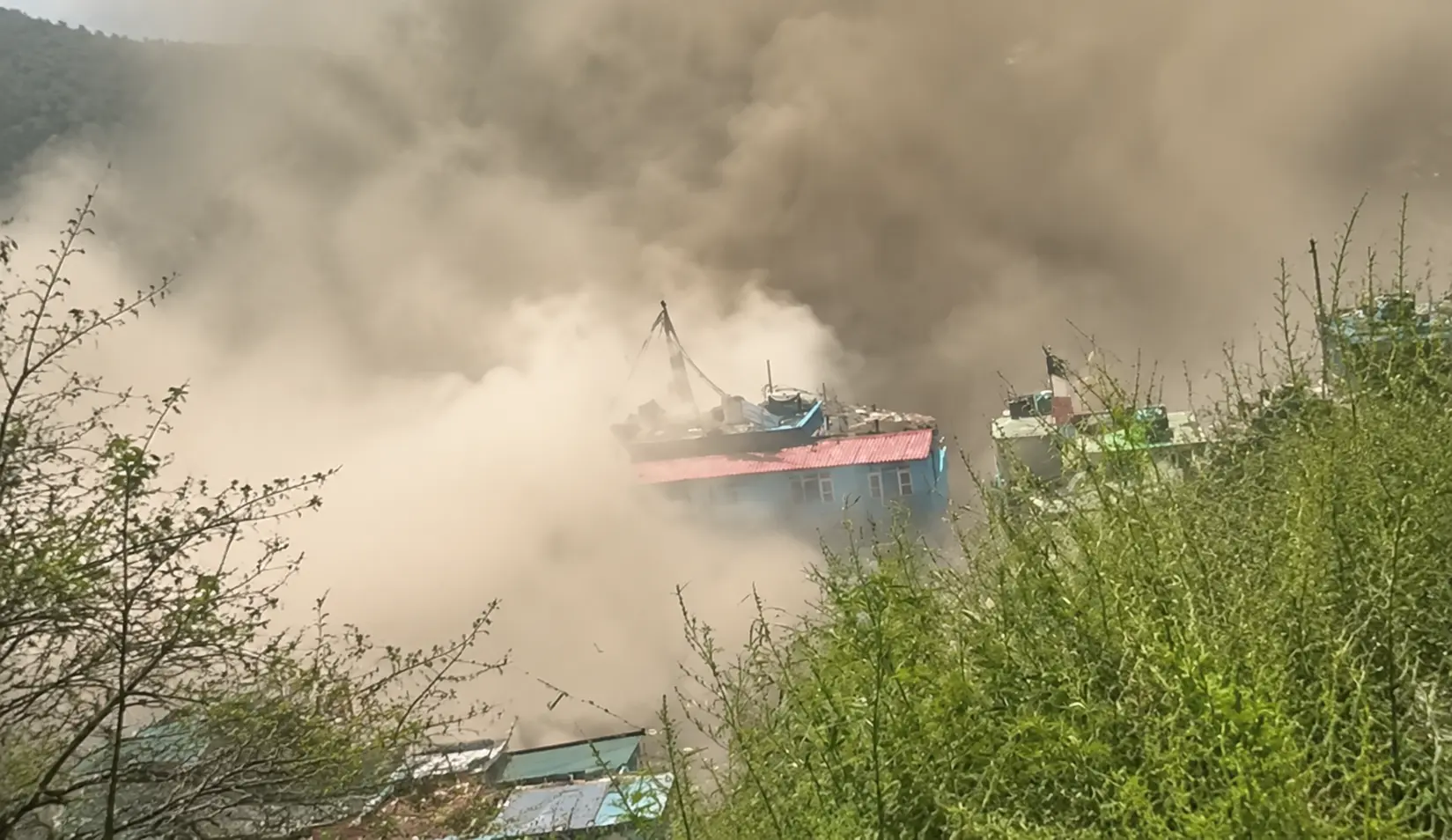
Image shared by Nepali police showed floodwater surging through a river and sweeping away houses in its path
The disaster struck at around 9:00 a.m. local time on Wednesday when a torrent of mud, water, and debris surged through the Bhote Koshi river system. Police spokesman Abi Narayan Kafle initially reported 95 deaths and said around 28 police personnel were missing. However, official figures remained considerably lower as authorities worked to verify casualties. Bagmati Province Police confirmed 31 deaths as of 5:25 p.m. local time, with officials warning that the toll could rise as searches continue.
Nepal’s Tourism Board was also working to establish the safety and whereabouts of 384 travelers. The group includes 291 foreign nationals and 93 Nepalis. Among the foreign travelers are Americans, Indians, an Australian, Malaysians, and Britons, including 105 Indian nationals and 37 non-resident Indians.
Some of the worst destruction was reported around Syapru Besi and Timure in mountainous Rasuwa, a district of roughly 50,000 people. Rescue helicopters struggled to land because of dangerous conditions as the river continued flowing far above its normal level.
Television footage showed collapsed homes, vehicles floating in floodwater, and a metal bridge being swept away. District administrator Narendra Pariyar warned of potentially heavy casualties and property losses and urged communities near the river to immediately move towards higher ground.
Health worker Tula Bahadur BK described widespread destruction, saying settlements beside the river had been completely swept away. Five members of his own family were missing. Another resident, 56-year-old Raju Bhadel, said his brother-in-law called him crying after their house was destroyed. Three relatives were rescued, while his brother remained missing.
Nepal’s Foreign Minister Shishir Khanal said an earthquake caused a major landslide that blocked the Bhote Koshi River before the accumulated water broke through. A magnitude 4.4 earthquake was recorded in Tibetan territory around the same period.
Scientists are examining other possibilities. Sarthak Shrestha, a remote sensing and geo-information analyst at the Kathmandu-based International Centre for Integrated Mountain Development (ICIMOD), said preliminary analysis found “no anomalies” on the Chinese side. Researchers instead suspect a rock-ice avalanche occurred in Nepal, blocking the Lhende River and creating the conditions for a cascading flood.
Kathmandu University climate researcher Rijan Bhakta Kayastha similarly suggested an ice avalanche could have blocked the Lhende River, allowing water to accumulate before suddenly surging downstream. However, researchers stressed that these findings remain preliminary.
The Department of Hydrology and Meteorology is also examining whether a glacial lake outburst contributed to the disaster. Disaster risk reduction specialist Saswata Sanyal noted that Lhende Khola has now experienced flooding twice in just 14 months.
The river system also has implications beyond Nepal. The Bhote Koshi originates in Tibet before flowing into Nepal’s Trishuli River and eventually reaching India as the Gandak River.
Destruction was reported across the Chinese side of the border as well. Chinese state media reported “major casualties” following a mudslide around the Gyirong trade hub. President Xi Jinping ordered an “all-out” rescue effort, directing authorities to prioritize finding missing people, treating the injured, and minimizing casualties.
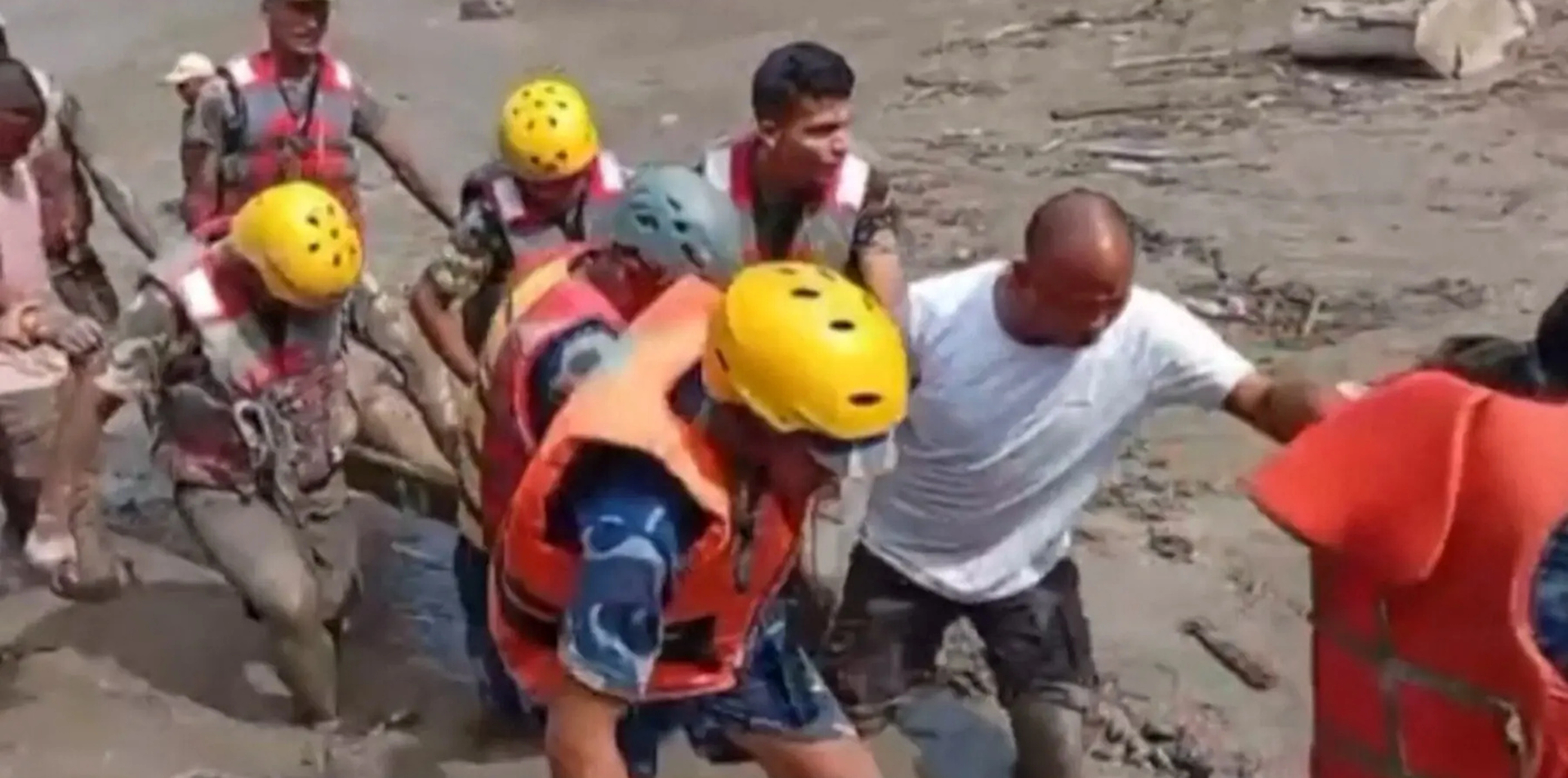
At least 574 rescuers were deployed to the Gyirong land crossing, according to CCTV. However, around 1.5 meters of sediment blocked access routes, with one rescuer estimating teams would require at least four hours to reach the affected location. Xinhua reported that roads, communications, and electricity connections were disrupted across parts of Tibet’s Shigatse region.
Nepal has mobilized its own large-scale emergency response. The Nepal Army deployed helicopters and disaster-response personnel, while the Red Cross activated emergency teams, volunteers, and relief supplies.
The disaster has also damaged critical infrastructure. The Nepal Electricity Authority reported that approximately 430 megawatts of electricity generation capacity, including hydropower and solar facilities, had been affected. Several highways were also closed.
The danger may not be over. Qianggong Zhang, ICIMOD’s head of climate and environmental risks, warned that an upstream blockage remains near the Nepal-China border, raising fears of another sudden flood.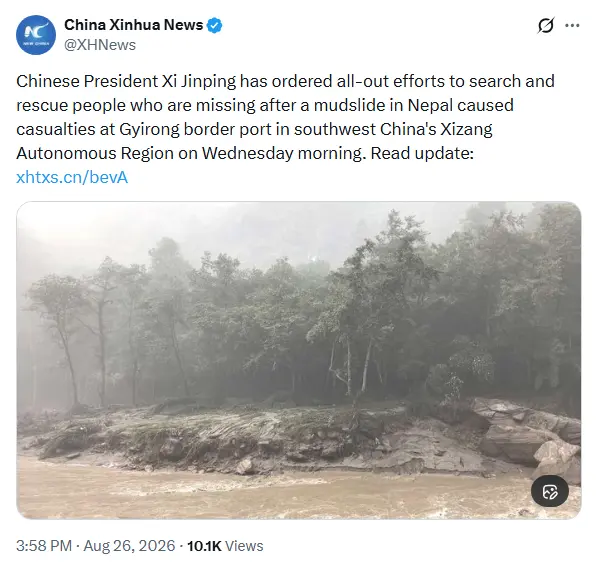 Xi Jinping Orders All-Out Rescue Efforts After Deadly Nepal Mudslide
Rasuwa and surrounding areas have experienced similar disasters before. In July last year, 17 people went missing following a mudslide near Gyirong Port. Another Bhote Koshi flood last year killed nine people and left 24 missing.
Monsoon rains between June and September regularly cause destructive floods and landslides across South Asia. Scientists have increasingly warned that climate change can intensify extreme rainfall and compound risks in fragile Himalayan environments.
With hundreds of travelers still being traced, communities destroyed, and an upstream blockage continuing to pose a threat, the immediate priority remains finding survivors and moving vulnerable residents to safety.