







For an Afghan woman studying medicine in Pakistan, being told to leave university is not simply an interruption to her education. It could mean the end of her ambition to become a doctor.
Under Taliban rule, women in Afghanistan cannot attend universities or receive medical training. For those who secured places in Pakistani medical colleges, education offered something increasingly unavailable at home: the opportunity to build an independent future.
Now, many are caught between deportation orders, changing government instructions and court decisions that have temporarily protected their right to study.
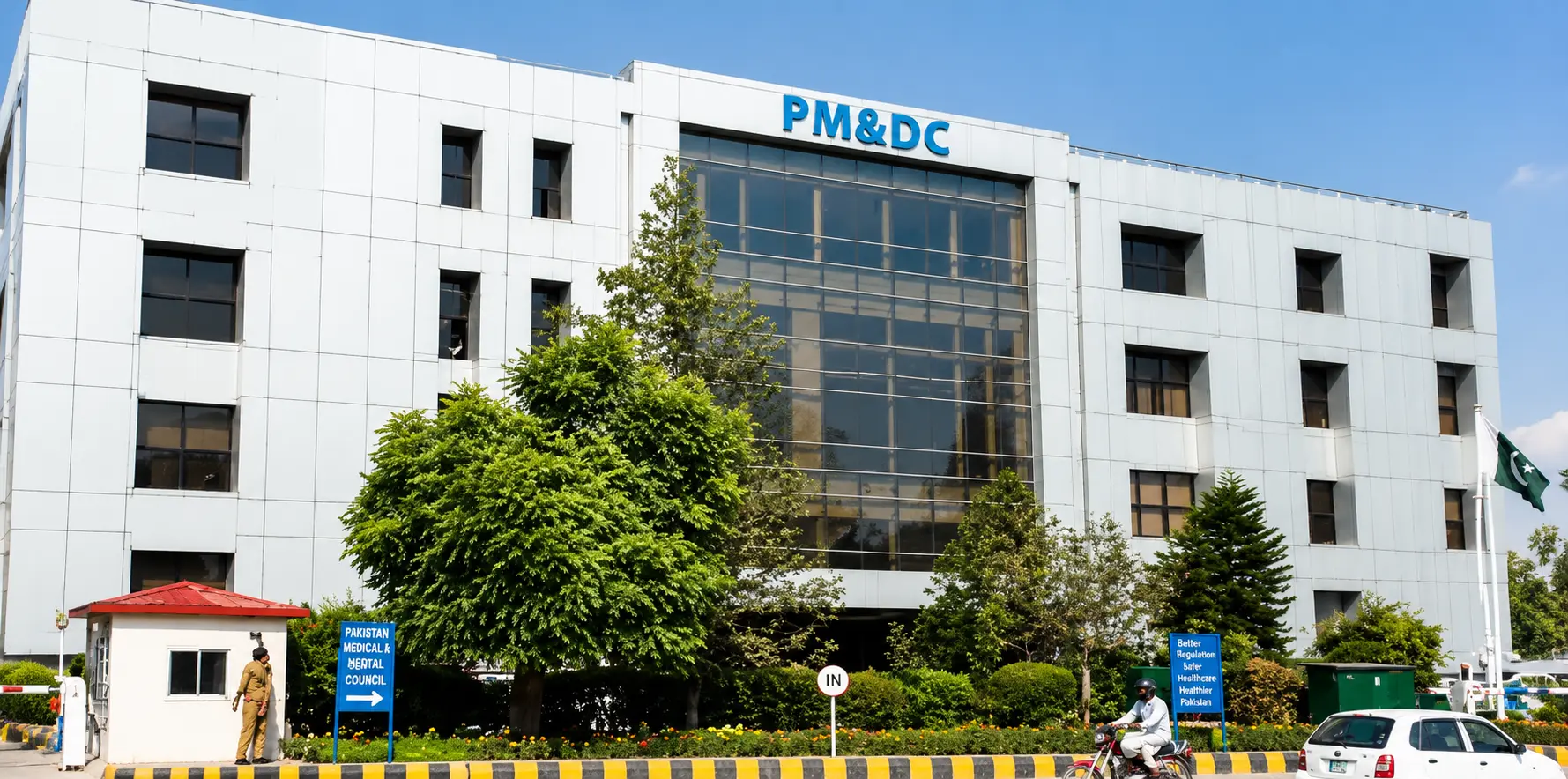
The Pakistan Medical and Dental Council (PMDC) issued notices on July 31 and September 1, directing medical institutions to cancel Afghan students’ admissions and stop accepting new Afghan applicants.
Some universities were instructed to complete discharge formalities within 24 hours.
At King Edward Medical University in Lahore, 20 Afghan students were told to report for departure procedures. Four were women, while seven were already in their final year.
Three final-year students at Dow Medical College, including two women, also challenged the restrictions. They had entered Pakistan’s medical education system through a government scholarship programme.
These were students already working towards degrees, not applicants waiting to enter the country.
Years of Medical Education Put at Risk
Medical education requires years of study, practical training and examinations. Students spend much of that time preparing for careers in which other people’s lives will depend on their knowledge.
Losing access to university after several years means more than losing a semester. It can mean losing qualifications, scholarships, professional opportunities and the financial investment families have made.
The consequences are especially severe for Afghan women.
One female student reportedly secured her place among approximately 20 women selected from 30,000 applicants. Such opportunities are already extremely limited.
Pakistan has helped educate Afghan students through programmes including the Allama Iqbal Scholarship, introduced in 2009.
The Higher Education Commission (HEC) administers the programme in cooperation with Pakistan’s embassy in Kabul. Its third phase was launched at the National University of Technology (NUTECH) in Islamabad in June 2024.
These scholarships were intended to provide educational opportunities and strengthen relations between neighbouring countries.
The decision to remove students already enrolled under such arrangements creates an uncomfortable contradiction.
Pakistan offered them a place to study. Years later, some were told they could no longer continue.
PMDC’s Registration Requirements
The PMDC maintains that Afghan medical students must meet the same registration requirements as other foreign nationals.
According to the council, more than 200 Afghan medical students were identified, but only 22 were registered.
Students have disputed the handling of this requirement. Some say they were never informed that separate registration was necessary.
The council’s lawyers also argued before the Lahore High Court that some students no longer held valid visas.
Registration and immigration rules matter. Medical regulators must maintain accurate records, and governments have the authority to enforce lawful visa requirements.
However, responsibility for ensuring registration cannot reasonably fall on students alone.
Universities admit students, maintain academic records and communicate with regulatory bodies. If students entered recognised programmes through official channels, institutions should also explain why registration problems remained unresolved for years.
A missing administrative requirement should be examined and corrected wherever possible before years of education are cancelled.
Afghanistan’s Political Crisis Reaches Pakistani Classrooms
The dispute is taking place during one of the most difficult periods in Pakistan-Afghanistan relations.
Fighting began in late February 2026 after Pakistan launched airstrikes against militants in Afghanistan.
Tensions increased further following a June 29 attack in Karachi. Pakistan subsequently carried out strikes in Paktia, Paktika and Kunar.
Islamabad accuses the Taliban government of providing shelter to the banned Tehreek-e-Taliban Pakistan (TTP). Afghan authorities deny the allegation.
Pakistan’s wider campaign to repatriate Afghan nationals began in November 2023.
The government renewed deportation measures in April 2025 after cancelling hundreds of thousands of residence permits. Visa renewals for Afghan refugees were subsequently suspended in July 2025.
An Interior Ministry directive issued on June 28, 2026, instructed provincial authorities to detain and deport undocumented Afghans after July 10.
According to United Nations experts, approximately 127,344 Afghans returned between July 10 and August 27. At least 14,186 were forcibly removed, while around 38,388 were women and children.
The International Organization for Migration recorded more than 2.6 million Afghan returns between September 2023 and July 31, 2026.
These figures show the scale of the broader displacement crisis.
However, the medical students’ situation is different. Many were admitted through recognised institutions and official educational programmes. Their cases require an assessment of both immigration status and educational rights.
Conflicting Government Decisions Leave Students Uncertain
One of the most troubling aspects of the controversy has been the lack of consistent instructions from Pakistani authorities.
While the PMDC directed colleges to remove Afghan students, the Foreign Office denied that all Afghan students were being expelled.
It said students enrolled in recognised degree programmes could complete their education if they held valid visas. Officials also stated that visa-extension applications were being processed.
The Ministry of States and Frontier Regions separately urged Punjab authorities to seek Interior Ministry approval so affected students could continue studying.
Jamiat Ulema-e-Islam-Fazl (JUI-F) criticised the removal of students before graduation, calling it an injustice.
These differing positions have left universities unsure about implementation and students uncertain about their future.
A student should not have to wait for competing government departments to agree before knowing whether they can attend the next class.
Courts Step In to Protect Afghan Students
Several Pakistani courts have intervened against the removal orders.
On September 11, Lahore High Court Justice Khalid Ishaq suspended the PMDC directives. The court also prevented institutions from expelling students or cancelling their examinations.
Protection was extended on September 18 to more than 100 students.
The Sindh High Court halted deportation orders on September 14 and extended protection to 59 students on September 29.
It later directed Jinnah Sindh Medical University to restore affected students’ access to classes and hostel accommodation.
The Peshawar High Court also prevented the deportation of 86 Afghan students pending further proceedings. Separately, it granted protection to 17 Afghan postgraduate doctors in Khyber Pakhtunkhwa.
However, the Balochistan High Court dismissed petitions filed by affected students.
Their lawyer has indicated that the dispute could eventually reach the Federal Constitutional Court.
Meanwhile, Quaid-i-Azam Medical College in Bahawalpur reportedly began removing 12 postgraduate residents and eight students, citing government instructions.
The college directed them to vacate hostels and complete clearance procedures. Their passport information was also forwarded to relevant authorities.
The different outcomes across provinces have created further uncertainty over how the policy should be applied.
Human Rights Concerns Go Beyond Immigration Status
Human Rights Watch has criticised the expulsion orders, arguing that removing enrolled students solely because they are Afghan conflicts with Pakistan’s international human rights obligations.
Pakistan is a party to the International Covenant on Economic, Social and Cultural Rights, which protects access to education without discrimination.
The organisation has also referred to the principle of non-refoulement. This prohibits returning people to places where they face serious risks of persecution or other grave harm.
The Human Rights Commission of Pakistan estimates that around 100 Afghan medical students in Lahore could be affected, including 20 to 40 women.
On September 18, United Nations experts called for transparent procedures and individual assessments before deportation. They also expressed concern about the return of vulnerable people, including unaccompanied children.
These concerns are particularly important for Afghan women because the Taliban’s restrictions leave them without a realistic opportunity to continue medical education at home.
Returning a female medical student to Afghanistan may permanently end a career she has spent years preparing for.
Prime Minister’s Office Offers Limited Relief
A new directive from the Prime Minister’s Office, reported on October 10, introduced exceptions for certain Afghan students.
Undergraduate students admitted through government-sponsored programmes, including HEC scholarships, may continue their education if they hold valid visas and obtain Interior Ministry clearance.
Medical colleges were instructed to complete registration of eligible Afghan students with the PMDC by October 15.
However, the directive also required unregistered students, medical and dental graduates, students admitted after September 1 and Afghan postgraduate doctors to leave Pakistan by October 10.
It also restricted house-job placements for affected graduates. The revised policy provides relief to some students, but it does not resolve the wider problem.
Students who have already graduated may still need supervised clinical training to complete their professional requirements.
Postgraduate doctors, meanwhile, have invested additional years in specialised medical education.
Removing them without arrangements for completing their training risks wasting both individual effort and the educational resources already invested in them.
Education Should Not Become a Casualty of Political Conflict
Pakistan has legitimate security concerns and the right to regulate immigration.
The government also has a responsibility to ensure that medical institutions follow registration standards.
But those responsibilities do not require every Afghan student to face the same outcome.
A student with an expired visa, a student admitted through a government scholarship and a doctor completing postgraduate training may have very different legal circumstances.
Treating them as one category ignores those differences.
A more reasonable approach would involve reviewing individual cases, allowing eligible students to regularise their documentation and giving universities clear instructions.
Special consideration is necessary for women who cannot continue their education under Taliban restrictions.
Pakistan has spent years providing scholarships and educational opportunities to Afghan nationals. Allowing students to finish recognised degrees would protect that investment and preserve the purpose of those programmes.
It would also demonstrate that political disagreements between governments need not determine the futures of students who had no role in creating them.
For Afghan medical students, the issue is immediate. Every missed examination, cancelled placement and lost semester can delay graduation or end a career.
The courts have provided temporary protection, but lasting certainty requires a clear and consistent government policy.
Pakistan must decide how to enforce its laws without unnecessarily destroying educational opportunities it previously helped create.
For students who have already spent years studying medicine, the request is modest: let them complete the education they were invited to pursue.