







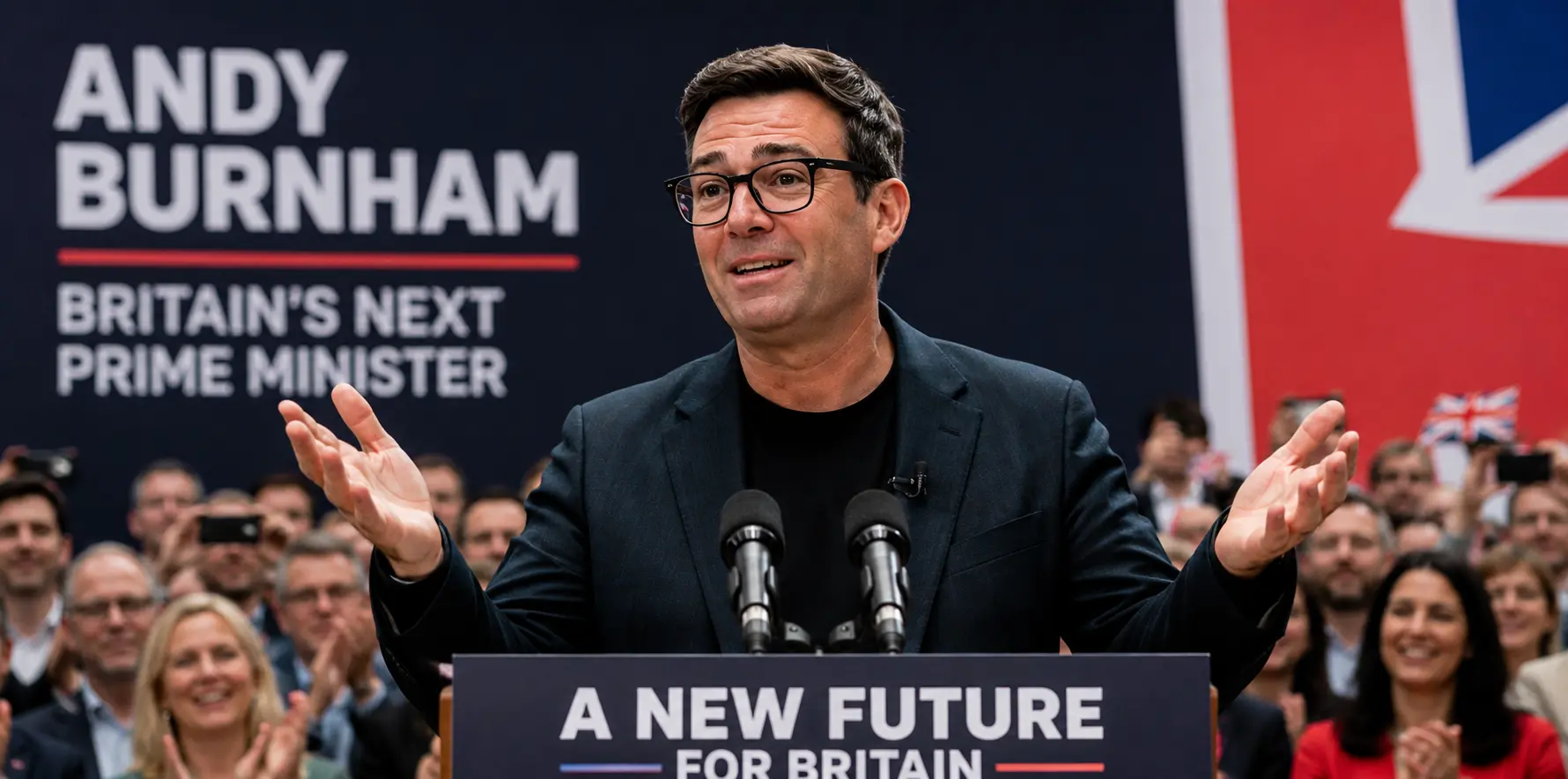

Britain is preparing for another change in leadership, with veteran Labour politician Andy Burnham set to become the country’s next prime minister following Keir Starmer’s resignation. The transition marks yet another chapter in the United Kingdom’s turbulent political landscape, where leadership changes have become increasingly frequent over the past decade. Unlike a general election, Burnham’s rise comes through the Labour Party’s internal leadership process, allowing him to assume office because Labour continues to hold a parliamentary majority.
Burnham’s path back to national politics has been remarkable. After serving as Mayor of Greater Manchester for several years, he returned to Westminster through a by-election before rapidly securing overwhelming backing from Labour MPs to succeed Starmer. With 349 of Labour’s 401 MPs supporting his leadership bid, no rival candidate was able to mount a serious challenge, effectively clearing his path to Downing Street.
For many Britons, Burnham is already a familiar political figure. Before becoming mayor, he held several senior cabinet positions under previous Labour governments, including roles in health, culture and local government. During his time as Mayor of Greater Manchester, he built a reputation as one of England’s strongest advocates for devolving powers away from Westminster, arguing that local leaders should have greater control over transport, housing, skills development and regional investment.
That philosophy is expected to define his premiership.
One of Burnham’s flagship proposals is a significant transfer of decision-making powers from central government to cities and regional authorities across England. He has described the plan as one of the biggest shifts in power in modern British history, aiming to reduce long-standing regional inequalities by allowing local governments greater control over economic development and public services.
The timing of his appointment is particularly significant. Britain continues to face sluggish economic growth, high public debt, pressure on public services and a rapidly changing international environment. Voters are also becoming increasingly fragmented, with Labour, the Conservatives and Reform UK all competing for support ahead of the next general election, which must be held by 2029. Burnham therefore inherits not only the responsibilities of government but also the challenge of rebuilding public confidence in Labour’s leadership.
Burnham’s domestic agenda is expected to focus heavily on improving the National Health Service (NHS), tackling housing shortages and boosting regional economic growth. Throughout his political career, he has argued that economic opportunities should not be concentrated in London and the South East. Instead, he wants to strengthen manufacturing, improve public transport and encourage private investment across northern England and other underserved regions. Supporters believe this approach could narrow the UK’s longstanding regional wealth gap, while critics question whether such ambitions can be achieved amid tight public finances.
The economy will likely be Burnham’s biggest challenge from day one. Britain continues to face modest economic growth, persistent inflationary pressures and rising demands on public spending. Businesses are seeking greater policy stability after years of political uncertainty, while households remain concerned about the cost of living. Financial markets will closely monitor Burnham’s first budget and economic appointments for signs of how his government intends to balance investment with fiscal discipline.
Foreign policy will also be closely watched. Burnham is expected to maintain Britain’s strong commitment to NATO and support for Ukraine while continuing close cooperation with European allies on defence, trade and security. At the same time, he is expected to pursue a more pragmatic relationship with the European Union without revisiting Brexit itself. Strengthening economic ties with key partners, including the United States and Commonwealth countries, is also expected to remain a priority as Britain seeks to boost investment and trade in an increasingly competitive global economy.
Another defining issue for the new prime minister will be constitutional reform. Burnham has long advocated for greater devolution, arguing that elected regional leaders should have wider powers over transport, housing, policing and economic development. His government is expected to introduce legislation aimed at giving local authorities more financial autonomy and decision-making powers. If implemented successfully, the reforms could significantly reshape how England is governed and reduce the concentration of power in Westminster.
Politically, Burnham faces immediate pressure to unite the Labour Party while preparing for the next general election. Although he secured overwhelming backing from Labour MPs, he must now convince the wider public that his government can deliver tangible improvements after years of political instability. Opposition parties are expected to scrutinise every major policy decision, particularly on taxation, public spending and immigration, making his first months in office crucial for establishing public confidence.
Burnham’s rise also reflects a broader shift in British politics. Having built much of his recent reputation as a regional leader rather than a Westminster insider, he represents a different style of leadership focused on local government, public services and regional empowerment. Whether that approach translates into successful national leadership will shape Britain’s political direction for years to come.
As Andy Burnham prepares to enter 10 Downing Street, he inherits a country facing economic uncertainty, geopolitical challenges and growing public expectations. His premiership offers Labour an opportunity to redefine its vision for modern Britain, but the success of that vision will ultimately depend on whether his government can turn ambitious promises into measurable results for people across the United Kingdom.