








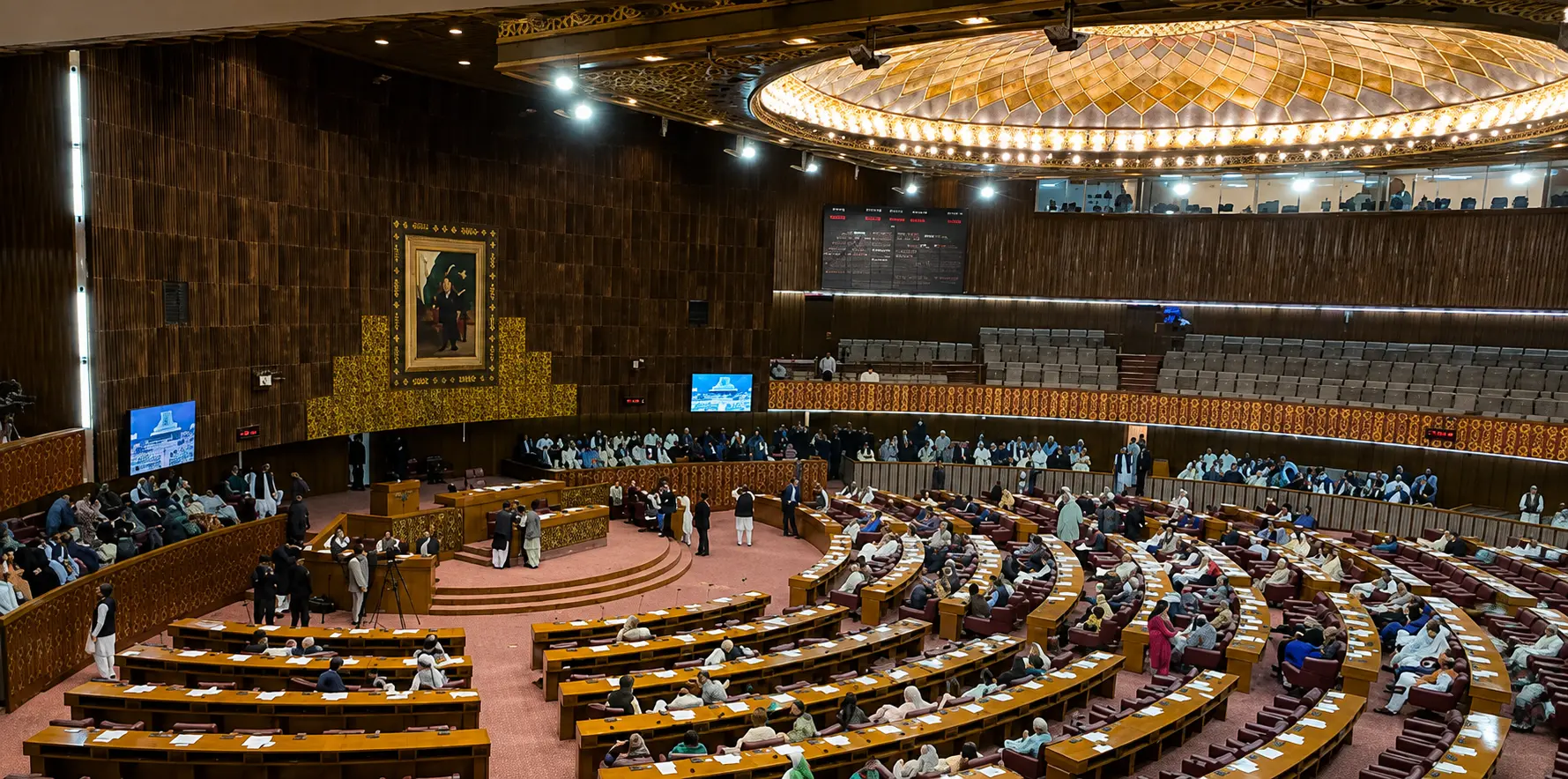

Pakistan’s National Assembly has passed the Defence Forces Act 2026 and amendments to the National Command Authority Act 2010, giving legislative effect to major changes in the country’s military command structure introduced through the 27th Constitutional Amendment.
The two bills were approved by a majority vote on Thursday after being introduced through a supplementary agenda. Opposition lawmakers boycotted the voting process and walked out of the National Assembly, arguing that they had not been given sufficient time to examine and debate the legislation.
The Defence Forces Act establishes the Defence Forces Headquarters as the headquarters of Pakistan’s armed forces and formalises the powers of the Chief of Defence Forces, or CDF.
Under the legislation, the CDF will exercise operational command and control over the armed forces while remaining accountable to the federal government. The office is also given responsibility for multi-domain integration, operational coordination and the joint conduct and oversight of matters involving the military.
The CDF will have additional authority over personnel matters, including powers under relevant laws to retire, release or dismiss personnel, except individuals appointed under Article 243 of the Constitution. The office can also approve or reject resignations, retain personnel in service and exercise other responsibilities assigned by the federal government.
The legislation follows the 27th Constitutional Amendment, which restructured the country’s senior military leadership by providing for the Chief of Army Staff to simultaneously serve as Chief of Defence Forces and abolishing the office of Chairman Joint Chiefs of Staff Committee.
Field Marshal Asim Munir was appointed Pakistan’s first CDF in December and serves concurrently as Chief of Army Staff.
The National Command Authority amendments align the country’s strategic command legislation with the new structure. References to the Chairman Joint Chiefs of Staff Committee have been replaced by references to the Chief of Army Staff and Chief of Defence Forces.
The broader framework also established the position of Commander National Strategic Command. General Aamer Raza was appointed to that position in July after being promoted to four-star rank.
The government says the legislation is necessary to provide the administrative and legal framework required to implement the constitutional changes. The Defence Forces Act takes effect retrospectively from November 13, 2025, while the National Command Authority amendments operate retrospectively from November 27, 2025.
The opposition, however, objected to how the legislation was handled. Opposition leader Mahmood Khan Achakzai asked the government to provide lawmakers with two or three days to study the bills before voting, while JUI-F lawmaker Aliya Kamran complained that opposition members had not received copies.
The passage marks a significant institutional change in Pakistan’s defence architecture, formally concentrating joint operational coordination under the CDF framework while replacing elements of the previous joint chiefs structure.
Attention will now shift toward implementation, including how the Defence Forces Headquarters operates in practice and how responsibilities are distributed across Pakistan’s army, navy, air force and strategic command.