







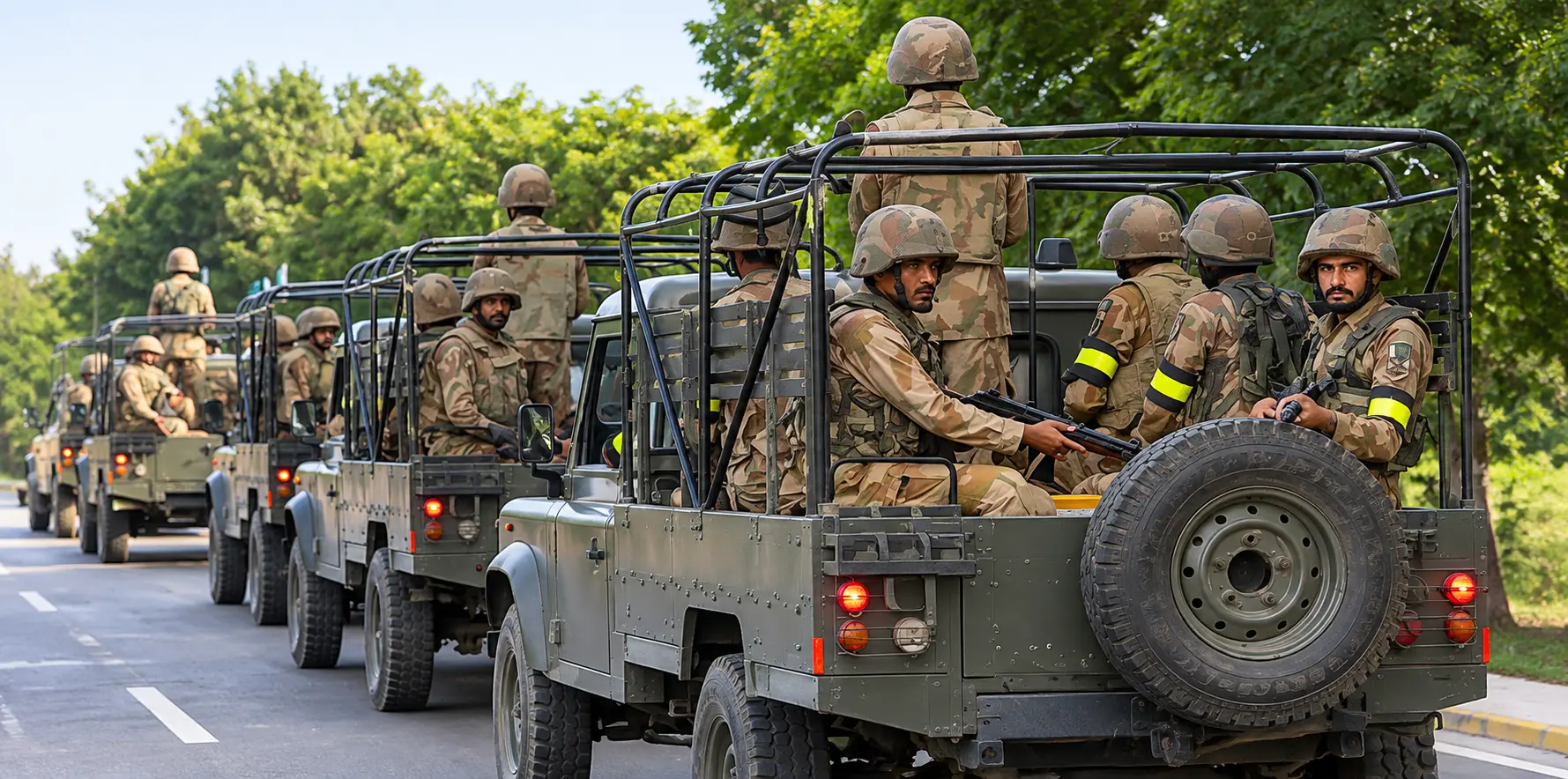

Pakistan’s security forces have killed 74 suspected militants during intelligence-based operations in Khyber Pakhtunkhwa and Balochistan, according to the military’s media wing. The operations targeted suspected militant networks in North Waziristan, Orakzai and Quetta district, where authorities also reported recovering weapons, ammunition and explosives. The announcement on November 13, 2026, comes amid renewed concerns over militant violence, particularly in areas where security personnel and civilians continue to face attacks. While the military described the operations as significant counterterrorism successes, the wider challenge remains preventing armed groups from rebuilding their networks and carrying out further attacks.
Pakistan Security Operations Target Militant Networks in KP
The Inter-Services Public Relations (ISPR) said security forces conducted a series of intelligence-based operations across Khyber Pakhtunkhwa during the preceding 48 hours. According to the military, personnel killed 35 suspected militants in Mir Ali, North Waziristan, and another eight in Orakzai district. These operations involved exchanges of fire as security personnel targeted suspected militant positions. The military said the engagements disrupted networks associated with the banned Tehreek-i-Taliban Pakistan (TTP), which the state refers to as Fitna al-Khawarij. The reported deaths bring the KP total to 43. However, the military statement did not provide a complete account of the identities of those killed, and the casualty figures have not been independently verified.
Security Forces Recover Weapons and Explosives
During follow-up searches, security personnel recovered a substantial quantity of weapons, ammunition and explosive materials, according to ISPR. The recovered items reportedly included improvised explosive devices and locally manufactured explosives. Such materials can pose serious threats to civilians, security checkpoints and public infrastructure when used in militant attacks. The military said the recoveries prevented suspected militants from using the equipment in future violence. Authorities also confirmed that further searches were continuing in the affected areas to locate any remaining armed individuals. These operations may help disrupt immediate threats, but longer-term security depends on preventing new supplies of weapons and explosives from reaching militant networks.
Balochistan Operation Accounts for 31 Reported Deaths
In Balochistan, ISPR reported that security forces killed 31 suspected militants during an intelligence-based operation in the Kurram area of Quetta district. The operation began on November 3 and involved multiple engagements with suspected militant hideouts. According to the military, personnel recovered additional weapons, ammunition and explosives from the locations. The military described the targeted groups as receiving support from India, an allegation that has not been independently established in the reporting available. Pakistan has repeatedly accused external actors of supporting militant violence within its territory, while such claims remain matters of dispute. The latest operation forms part of a wider campaign to dismantle armed networks operating in Balochistan, where security challenges have affected communities, transport routes and development activity.
Rising Militant Attacks Increase Security Concerns
The latest operations follow a period of increased militant activity across Pakistan. According to figures released by the Pakistan Institute for Conflict and Security Studies, the country recorded 49 militant attacks between October 30 and November 5, compared with 31 during the preceding week. Those incidents resulted in 25 deaths and 21 injuries. The increase indicates that militant violence remains a serious concern despite continuing security operations. Khyber Pakhtunkhwa and the former tribal districts have experienced recurring attacks, placing pressure on security personnel and communities. However, changes in weekly attack figures do not necessarily establish a sustained national trend. Longer periods of monitoring are needed to determine whether militant activity is increasing consistently or fluctuating between reporting periods.
President and Prime Minister Respond to Operations
Prime Minister Shehbaz Sharif praised security personnel for their efforts against militant groups and reaffirmed the government’s commitment to counterterrorism.
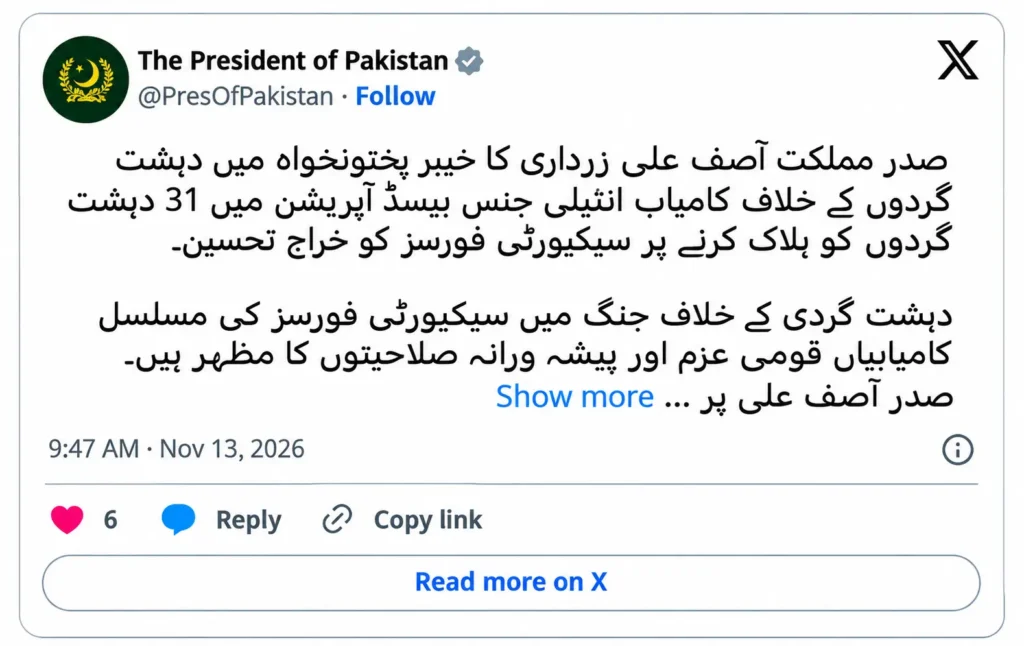
In a statement addressing operations in Kurram, he commended the personnel involved in targeting suspected militant hideouts and recovering weapons and explosives. The prime minister said the campaign would continue under the National Action Plan, which provides a policy framework for addressing terrorism and related security threats. President Asif Ali Zardari also praised the security forces and expressed support for continued counterterrorism measures. Both leaders described the operations as part of the country’s efforts to protect national stability. Their statements reflect the government’s position, although the effectiveness of the wider campaign must be assessed through security outcomes over time.
Counterterrorism Requires More Than Military Operations
Intelligence-based operations can disrupt militant groups by targeting suspected hideouts, recovering weapons and limiting their ability to organise attacks. However, military action alone cannot address every factor that contributes to persistent insecurity. Effective counterterrorism also requires reliable intelligence, coordination among law enforcement agencies and protection for communities vulnerable to violence. In regions affected by repeated operations, residents may face disruptions to transport, business activity and everyday life. Maintaining public confidence therefore depends on clear communication, lawful enforcement and measures that minimise risks to civilians. Authorities must also ensure that investigations distinguish between individuals involved in armed activity and those who have no connection to militant networks. These safeguards remain important for both public safety and long-term stability.
Border Security and Regional Cooperation Remain Important
Pakistan’s security challenges are also connected to the broader regional environment. Armed groups can exploit difficult terrain, remote settlements and gaps in border monitoring to move personnel or equipment. This makes intelligence sharing and coordination between civilian and military institutions essential. Islamabad has repeatedly raised concerns about militant activity linked to neighbouring Afghanistan, while relations between the two countries have faced disagreements over cross-border security. Addressing these issues requires sustained diplomatic engagement alongside domestic security measures. Improved border management may reduce some risks, but it cannot replace effective policing, local intelligence networks and broader efforts to prevent recruitment into armed organisations.
Pakistan Faces a Continuing Test of Security Stability
The reported deaths of 74 suspected militants represent a substantial development in Pakistan’s ongoing counterterrorism campaign. Security forces say the operations disrupted militant networks in Khyber Pakhtunkhwa and Balochistan while recovering materials that could have been used in future attacks. Nevertheless, the recent increase in reported militant incidents demonstrates the difficulty of achieving lasting stability through individual operations. The government’s next challenge is to translate immediate security gains into a sustained reduction in violence.
For communities affected by militancy, the most meaningful measure of success will be fewer attacks, safer public spaces and the ability to live and work without recurring security threats.