








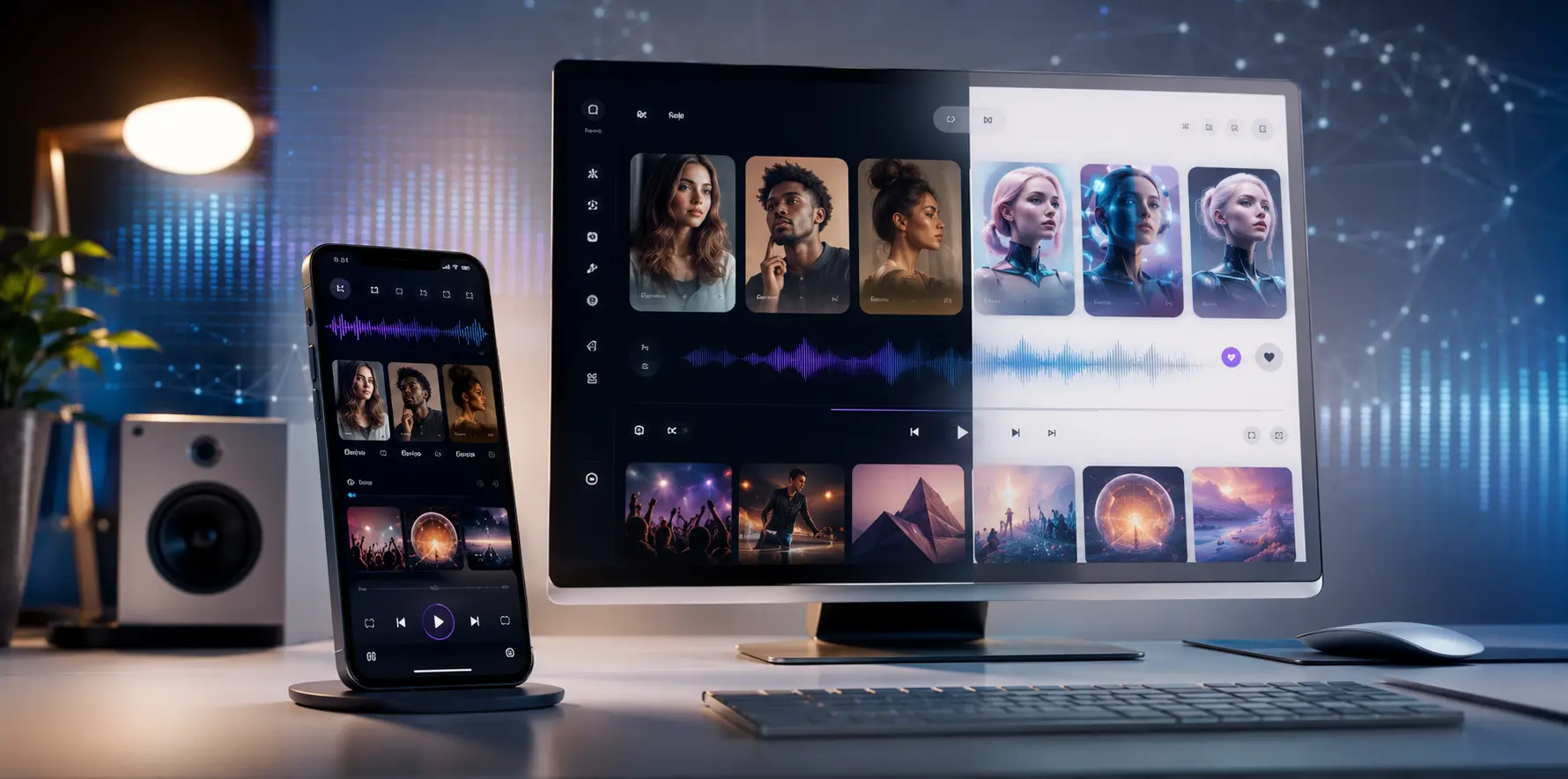

Spotify is introducing a new labelling system for AI-generated artist identities, marking a significant attempt by one of the world’s largest music streaming platforms to distinguish synthetic personas from real performers.
Starting in mid-September, Spotify will place an “AI Persona” badge on selected artist profiles whose public identities may be artificially generated and do not represent real people. The company said the change follows concerns from listeners who encountered profiles that appeared to feature human artists but were actually built around AI-generated identities.
The badges will not be limited to artist profile pages. Spotify says they will appear in profile banners and About sections, as well as in search results and alongside tracks displayed in playlists, making the disclosure more visible as listeners navigate the platform.
Artists can now voluntarily disclose through Spotify for Artists that their profiles represent AI Personas. Spotify will also independently review accounts where the public-facing identity appears to use photorealistic AI-generated imagery. If the platform applies a badge following a review, the artist will be notified and given an opportunity to disclose the use of an AI persona or appeal the decision.
The policy goes beyond labelling. Spotify says AI Personas will be excluded by default from its editorial and algorithmic recommendations. That means music from those profiles generally will not be promoted through Spotify’s recommendation systems unless users have chosen to follow the artist.
Importantly, Spotify says the badge concerns an artist’s public identity rather than how the music itself was produced. A real musician using AI tools during the creative process would therefore not automatically qualify as an AI Persona simply because artificial intelligence contributed to a song.
The distinction addresses an increasingly complicated issue for the music industry. Generative AI can now produce convincing songs, vocals, artwork and fictional performers, making it more difficult for listeners to know whether the artist they encounter online represents an actual person.
For musicians, labels and streaming businesses, Spotify’s approach could also influence discoverability. Removing AI Personas from recommendations by default gives greater prominence to what Spotify describes as authentic artists building music careers, while still allowing synthetic performers to remain available to listeners who actively seek them out.
The move signals a broader shift in the streaming industry from simply hosting AI-generated material toward establishing clearer rules around transparency and identity. As synthetic music becomes increasingly sophisticated, platforms are likely to face growing pressure to tell audiences not only what they are listening to, but who, or what, created the artist behind it.