


Pakistan loves celebrating its artists. A Grammy win becomes a moment of national pride. A television drama reaching international audiences is treated as another success for Pakistani entertainment. We praise the talent, share the performances and take pride in how far our creative industry has come.
But behind the applause, there’s a question we rarely ask: Are the people creating all this work actually being paid what they deserve?
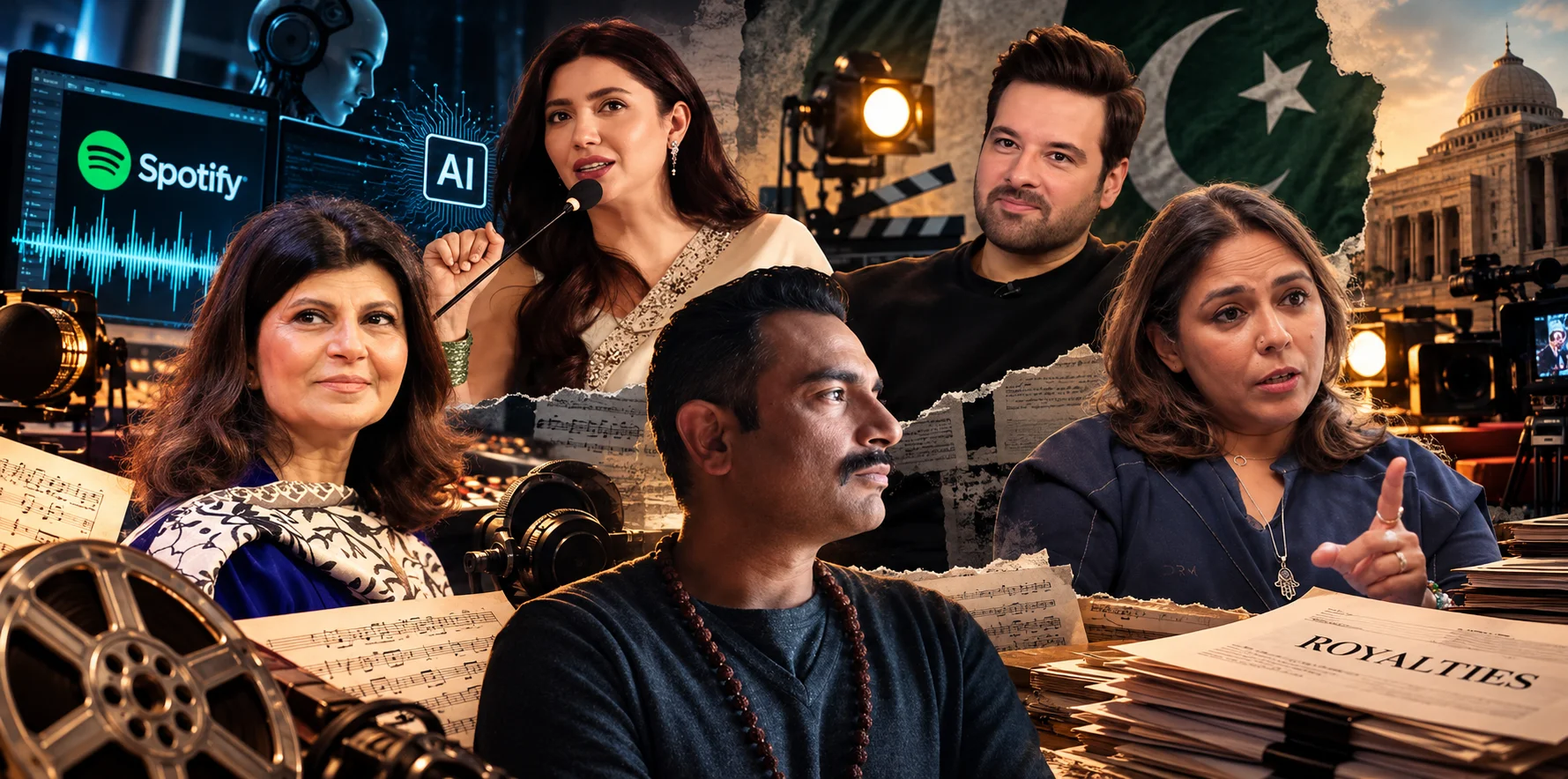
This week, two of Pakistan’s most respected artists brought that question back into focus.
When Sarmad Khoosat learned that his acclaimed drama Humsafar was getting a Spanish-language release, his response was hardly celebratory. “If only there were royalties,” he wrote.

Meanwhile, Grammy-winning musician Arooj Aftab questioned why artificial intelligence companies should be allowed to learn from musicians’ recordings without compensating the people who created them.

One is fighting for recognition of work produced fifteen years ago. The other is questioning how today’s technology profits from existing music.
Different industries, different generations of creative work, but the same problem: everyone seems to benefit from art except, too often, the artists themselves.
And as more Pakistani performers speak publicly about unpaid dues, missing royalties and unfair contracts, it becomes increasingly difficult to treat these complaints as isolated incidents.
When a Hit Drama Keeps Earning but Its Creators Don’t
Humsafar premiered in 2011 and helped establish Pakistani television’s popularity beyond national borders.
Its upcoming Spanish release is another commercial opportunity for the drama. Yet Khoosat’s response raises questions about whether the people behind successful productions receive compensation when their work is reused.
He is hardly the first to raise the issue.
In 2021, actor Mikaal Zulfiqar questioned why he received no recurring payments when his drama Diyar-e-Dil continued airing.

Actor Ali Kazmi has also described receiving royalties for some international productions while receiving no comparable payments for his Pakistani television work.
The problem has historical roots. During the 1990s, television performers accepted higher payments from PTV in exchange for giving up existing rerun royalties.
What may have appeared financially beneficial at the time became increasingly consequential as private channels, international distribution and digital platforms expanded.
A drama can now generate revenue through television advertisements, YouTube uploads, international licensing and repeated broadcasts.
But the people who created it may have contracts that provide no additional compensation.
Some Artists Are Still Waiting for Their Original Payments
Royalties are only part of the problem.
In July 2025, filmmaker Mehreen Jabbar, during a live interview, publicly criticised the difficulty of collecting payments from production companies. She described artists having to pursue money owed to them repeatedly, comparing the experience to begging.

Veteran actor and writer Mohammad Ahmed subsequently spoke about similar difficulties.
He described completing projects and then waiting months for payments, even while managing ordinary household expenses.
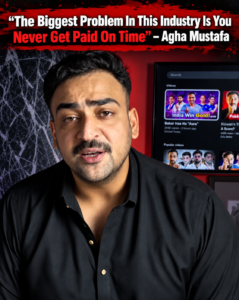
In September 2026, actor Agha Mustafa raised another example.
He said a television project had finished in June, but by September he had still not received his outstanding payment.
He also expressed concern that repeatedly demanding his dues could damage his professional reputation.
These accounts reveal a troubling imbalance. Production companies can expect performers to arrive on time, memorise scripts and meet demanding schedules. Yet some performers say they cannot expect the same reliability when their payments become due.
In May, actor Zhalay Sarhadi used comedy to address the issue, sharing a video about repeatedly asking producers when they intended to pay. The joke worked because the situation was familiar.
Naila Jaffery’s Experience Should Not Be Forgotten
The late actor Naila Jaffery became an important voice in the campaign for royalties in 2021.
While undergoing cancer treatment, she spoke about her financial difficulties and the absence of recurring payments from television productions in which she had appeared.

Her situation exposed the vulnerability of performers whose earlier work remains popular but no longer provides them with income.
In March 2026, Mahira Khan returned to the issue, arguing that established stars might survive without royalties while junior performers and technicians face considerably greater financial insecurity.

Her distinction matters. An industry does not consist only of its leading actors.
Supporting performers, editors, camera operators, makeup artists, assistants and production workers also contribute to successful projects.
If those people cannot depend on timely payment, the glamour associated with television offers little protection against financial hardship.
Even Familiar Television Faces Report Unpaid Dues
The problem is not restricted to drama productions.
In April 2026, actor and model Nadia Hussain said she had been waiting more than two years for payments connected to appearances on a popular morning television programme.
Her account demonstrated that visibility does not necessarily guarantee financial security.
A performer can appear regularly on television, remain recognisable to audiences and still struggle to recover money for completed work.
When such complaints repeatedly emerge from established professionals, it becomes difficult to dismiss them as isolated misunderstandings.
Arooj Aftab Is Questioning the Next Threat to Artists’ Income
While television professionals continue debating older payment practices, musicians are confronting artificial intelligence.
Arooj Aftab recently supported calls for AI-generated music to be clearly identified and for musicians to receive compensation when their recordings are used to train commercial systems.

Her concerns are particularly relevant as streaming services introduce new systems for identifying AI-generated content.
Spotify has reported major growth in Pakistani music consumption. In April 2026, the platform said streams of Pakistani artists had increased more than sevenfold since its arrival in the country in 2021.
That growth demonstrates the international potential of Pakistani music.
But greater distribution does not automatically guarantee fair compensation.
Musicians must navigate streaming agreements, copyright ownership, licensing arrangements and now AI training practices.
The question is no longer simply whether Pakistani artists can reach global audiences.
It is whether their financial rights can keep pace with that reach.
Pakistan Needs More Than Awards and Applause
Pakistan’s entertainment industry frequently celebrates international recognition.
A Grammy win becomes a national achievement. A drama reaching another country becomes evidence of cultural influence. A film appearing at an international festival becomes a moment of collective pride.
There is nothing wrong with celebrating these successes. But admiration becomes hollow when the same industry struggles to pay people for work they have already completed.
Fair compensation requires transparent contracts, enforceable payment schedules, clearer licensing terms and meaningful mechanisms for collecting royalties where those rights exist.
AI introduces another urgent responsibility: ensuring that musicians understand and can negotiate how their recordings are used. These changes will not happen through appreciation posts or award ceremonies.
They require institutions, producers, broadcasters and creative professionals to treat artistic work as a profession with enforceable financial rights.
Pakistan does not lack talented artists. It lacks consistent systems to ensure that their success translates into financial security.
A drama should not have to become internationally famous before its creators can discuss royalties. An actor should not have to make a public video to receive overdue payments. A musician should not have to discover that technology has commercially benefited from their recordings without a meaningful discussion of consent and compensation.
Art deserves admiration.
The people who make it deserve to be paid.