




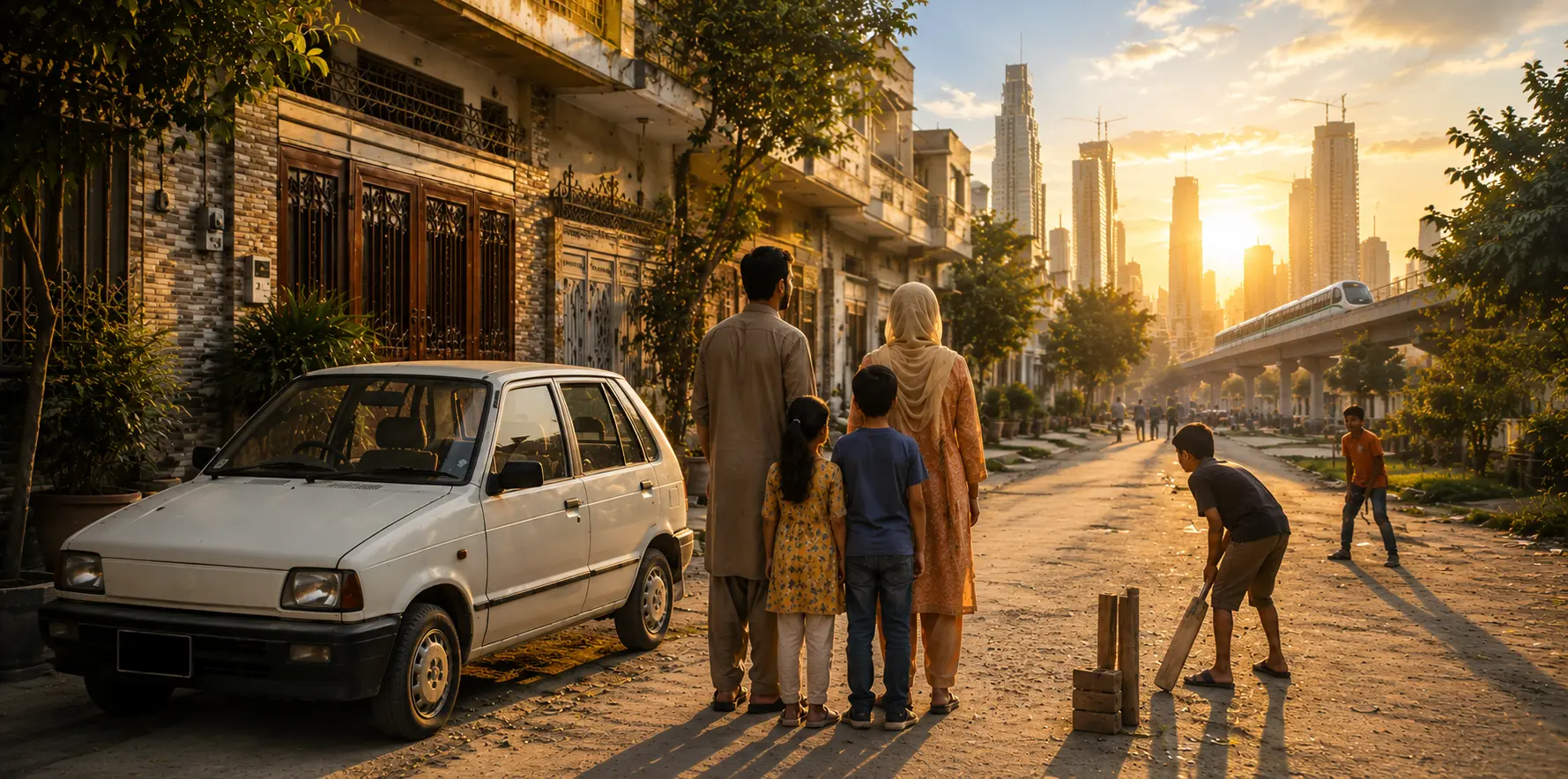

For millions of Pakistanis, the Suzuki Mehran was never just a car. It was the family’s first major purchase, the vehicle that carried children to school every morning, the companion on countless Eid visits, and the trusted hatchback that somehow managed to fit the entire family for a weekend trip to Murree. Long before SUVs became symbols of success and digital dashboards took over modern interiors, the Mehran quietly became part of everyday life. It wasn’t designed to impress with luxury or performance. Instead, it earned something far more valuable: the trust of an entire nation.
When Pak Suzuki ended production of the Mehran in 2019 after nearly three decades, it wasn’t simply discontinuing a model. It marked the end of one of Pakistan’s longest and most successful automotive stories. Even today, years after production stopped, the little hatchback remains one of the most common vehicles on Pakistani roads, proving that true icons don’t disappear when factories stop making them.
Introduced in 1989 as the successor to the Suzuki FX, the Mehran arrived at a time when owning a car was still out of reach for many middle-class families. Built on the fifth-generation Suzuki Alto platform, it offered something Pakistan desperately needed: reliable and affordable personal transportation. That straightforward formula quickly won over buyers across the country.
One of the biggest reasons behind its success was its simplicity. The Mehran was inexpensive to maintain, easy to repair and supported by a nationwide network of mechanics and spare-parts dealers. Whether someone lived in Karachi, Lahore, Peshawar, Quetta or a small town hundreds of kilometres away, finding replacement parts or a mechanic familiar with the car was rarely a challenge. For thousands of families, the Mehran transformed car ownership from a distant dream into an achievable reality.
Its popularity wasn’t driven by flashy advertising or premium features. It spread through experience. Owners recommended it to friends and relatives because it simply worked. Mechanics trusted its uncomplicated engineering, while families appreciated that it rarely demanded expensive repairs. Over time, the Mehran became much more than a vehicle—it became a familiar part of Pakistan’s streets, neighbourhoods and homes.
Almost every Pakistani who grew up during the 1990s or early 2000s has a story connected to the Mehran. For some, it was the first car they learned to drive. Others remember family road trips where luggage somehow fit into a tiny boot and every seat was occupied. Many still recall rolling down the manual windows during hot summer afternoons or hearing the unmistakable sound of its small engine starting on cold winter mornings. These small memories turned an ordinary hatchback into something deeply personal.
The Mehran became a regular sight outside schools, government offices, markets and wedding halls. Driving schools relied on it because it was forgiving for beginners, while countless shopkeepers, sales representatives and small business owners depended on it to earn a living. Its constant presence made it one of the few vehicles that almost every Pakistani recognised instantly.
Even by the standards of its own time, the Mehran was never packed with modern features. It offered no luxury equipment and very little technology. Yet that never stopped people from buying it. Owners valued its excellent fuel economy, low maintenance costs and dependable mechanical design far more than premium interiors or advanced gadgets. In a country where practicality often matters more than prestige, those qualities made all the difference.
As the global automotive industry evolved, however, criticism of the Mehran became increasingly difficult to ignore. New vehicles introduced airbags, anti-lock braking systems (ABS), stronger crash protection and more efficient engines, while the Mehran remained largely unchanged. Automotive experts frequently criticised its outdated safety standards and ageing design, arguing that it had stayed in production far longer than similar models elsewhere in the world.
Despite those concerns, demand remained remarkably strong. Buyers understood its limitations but continued choosing it because it remained one of the most affordable and economical cars available. For many first-time buyers, the Mehran still represented the easiest path to owning a personal vehicle.
In March 2019, Pak Suzuki officially discontinued the Mehran and replaced it with the newer Suzuki Alto. From a business perspective, the decision reflected changing customer expectations, stricter safety regulations and the need for more modern vehicles. For millions of Pakistanis, though, the announcement felt emotional. It wasn’t simply the retirement of another car; it was the end of a vehicle that had quietly accompanied generations through school days, weddings, family holidays and everyday routines.
Although production ended years ago, the Mehran continues to thrive in Pakistan’s used-car market. Thousands remain on the road as family cars, driving school vehicles and dependable transport for small businesses. Its affordable spare parts and the vast number of mechanics who know the car inside and out have ensured that it remains relevant long after leaving the production line.
Very few automobiles become part of a nation’s culture, but the Mehran achieved exactly that. It appeared in family photo albums, television dramas, wedding processions and countless childhood memories. It became the first car many Pakistanis ever drove and the vehicle parents proudly purchased after years of saving. Today, social media is still filled with nostalgic stories about first road trips, first salaries spent buying a Mehran and families who refuse to sell the car despite owning newer vehicles.
Some cars are remembered because they changed technology. Others become famous for speed or luxury. The Suzuki Mehran earned its place in Pakistan’s history for a much simpler reason. It became the country’s everyday car—reliable, affordable and always ready for the next journey. Decades after its launch and years after its production ended, it continues to represent the aspirations, memories and resilience of millions of Pakistanis. That is a legacy no specification sheet can ever measure.