








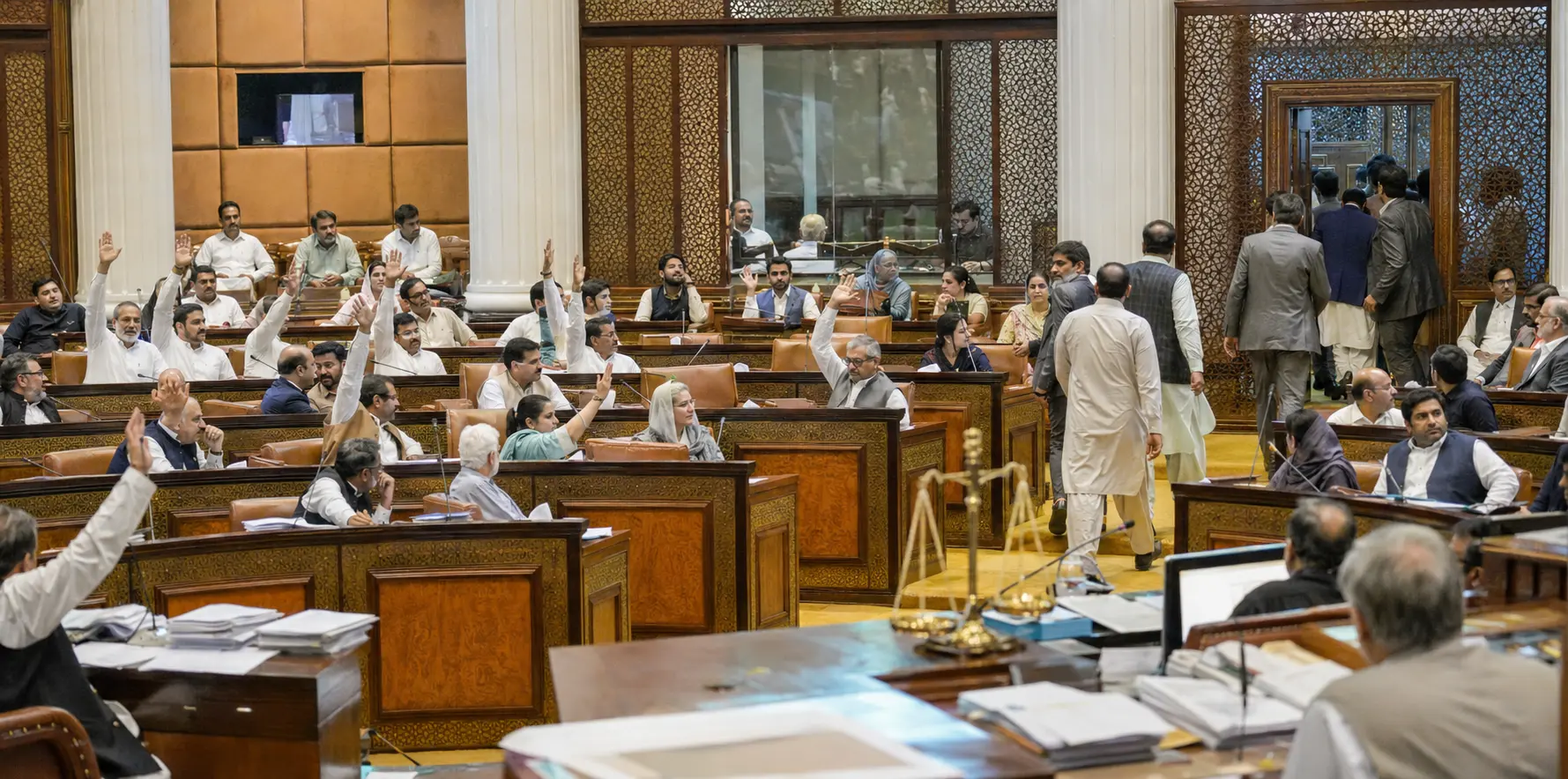

The Punjab Assembly passed the Anti-Terrorism (Punjab Amendment) Bill 2026 on August 31, introducing a new mechanism for conducting sensitive terrorism trials under heightened security despite strong objections from opposition lawmakers.
The legislation establishes a category known as a “special security case,” allowing extraordinary protections to be introduced when authorities determine that people involved in terrorism proceedings face significant security risks.
Under the new framework, the identities of judges, lawyers, prosecutors, police officers and witnesses involved in designated cases may be concealed. Proceedings may also be conducted at protected premises or through video links instead of conventional open courtroom arrangements.
A BS-20 government official would also participate in the process for determining which cases receive the special security designation.
The provisions triggered a heated debate in the Punjab Assembly. Opposition legislators argued that concealing the identities of key participants and restricting conventional courtroom proceedings could undermine transparency and defendants’ fair-trial protections.
Opposition members also claimed that the legislation could potentially be used against political opponents before walking out of the proceedings. That remains an allegation made by opposition lawmakers rather than an established consequence of the law.
The government defended the legislation on security grounds. Officials and the assembly speaker argued that exceptional safeguards are necessary in terrorism cases where judges, prosecutors, investigators, lawyers or witnesses could face threats because of their involvement in proceedings.
The legislation could materially change how Punjab conducts its most sensitive terrorism trials. While protecting witnesses and judicial officials can be crucial in high-risk cases, implementation will need to balance those security requirements against constitutional guarantees surrounding due process and access to justice.
Questions are also likely to emerge over how cases are selected for special treatment, what information defendants and their lawyers can access, and whether the designation itself can be effectively challenged.
The involvement of an administrative official in the designation process could receive particular scrutiny over judicial independence and the separation of executive and judicial functions.
The law may also face constitutional examination over the division of legislative authority between provincial and federal institutions.
Much will therefore depend on the procedural safeguards developed around the legislation. Clear rules governing evidence, legal representation, appeals and judicial oversight will be critical if heightened security measures are to operate without weakening meaningful fair-trial protections.
With the bill passed despite an opposition walkout, the political debate is now likely to shift from its passage to its implementation and any subsequent challenges before the courts.