








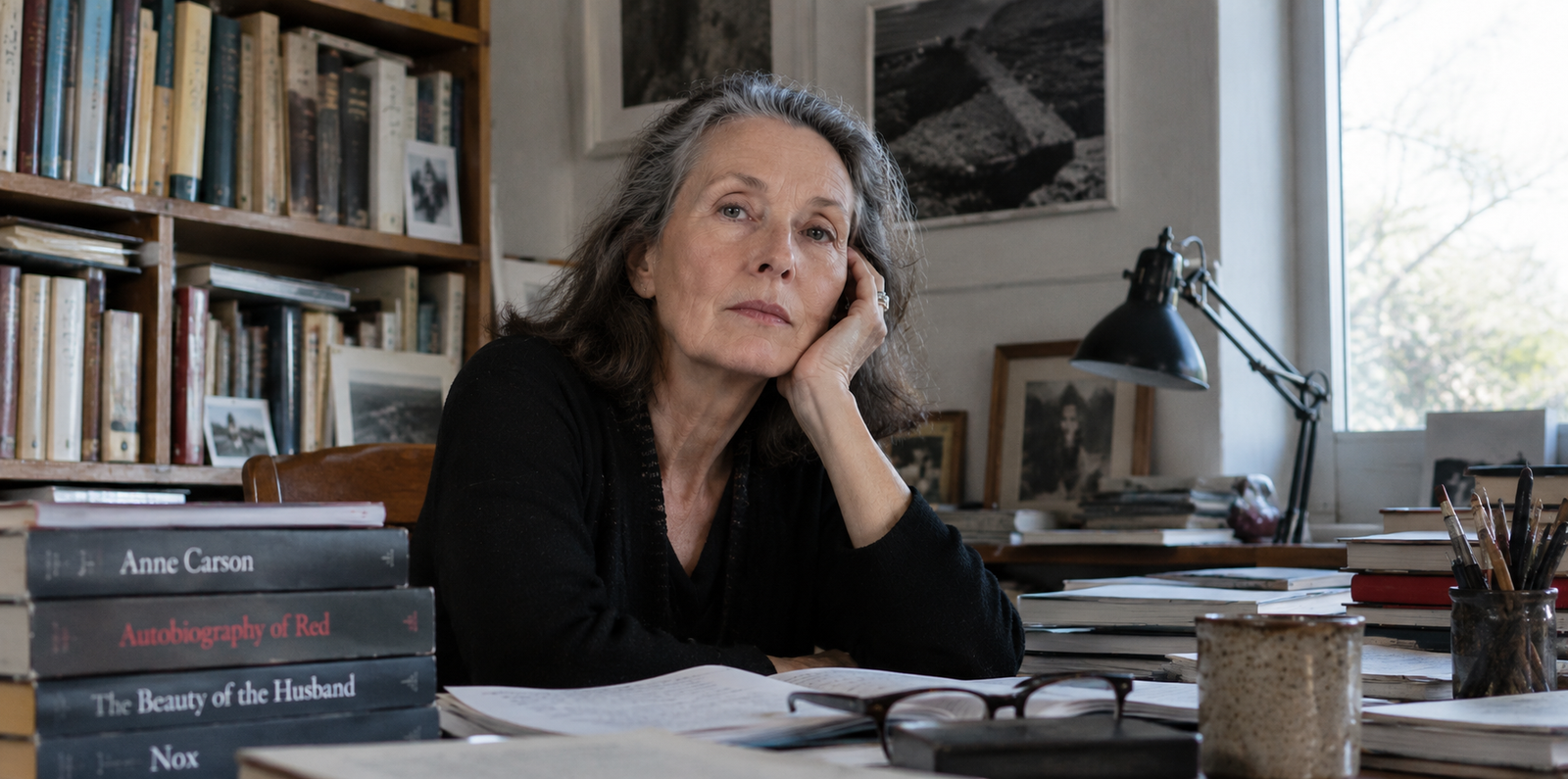

Anne Carson can turn a Greek monster into a heartbroken teenager, write about grief through a box of scattered memories and make ancient poetry sound like something someone said yesterday. Her books can be strange, funny, heartbreaking and occasionally confusing, sometimes within the same few pages. Yet that unpredictability is exactly what makes her one of contemporary literature’s most fascinating writers.
On October 8, 2026, the Canadian poet and classicist was awarded the Nobel Prize in Literature. The Swedish Academy recognized her inventive writing and her ability to create new literary forms through classical traditions. For readers familiar with her work, the recognition feels fitting. Carson has spent decades proving that literature does not have to follow anyone’s rules.
What makes her particularly interesting is how she handles difficult subjects without becoming intimidating. Her writing moves between ancient mythology, philosophy, everyday conversations and unexpected humor. A reader might begin with a serious discussion of history and suddenly encounter a squirrel, a failed romance or an observation that changes the mood entirely.
The Classics Professor Who Makes Ancient Literature Feel Alive
Born in Toronto in 1950, Carson trained as a classicist and built her career around ancient Greek literature, poetry, translation and scholarship. She has taught at universities across North America, but her academic background tells only part of the story.
Rather than treating ancient literature as something distant, Carson makes it feel surprisingly familiar. Her characters experience jealousy, loneliness, desire and disappointment, emotions that have barely changed over thousands of years.
Humor is another important part of her writing. Carson understands that even serious subjects can contain something ridiculous. Her observations can be dry, playful or unexpectedly funny, making readers laugh when they least expect it.
This combination of intelligence and humor gives her work its distinctive appeal. She does not simplify complicated ideas, but she makes exploring them enjoyable.
A Writer Who Refuses to Stay in One Genre
Carson’s first book, Eros the Bittersweet, published in 1986, grew out of her doctoral research. It explores love and desire through classical literature, combining academic criticism with imaginative writing.

Her collection Short Talks, first published in the early 1990s, takes a completely different approach. Each piece is remarkably brief, sometimes only a few sentences, yet manages to suggest an entire story or argument.
The subjects range from historical figures and art to animals and everyday observations. Carson often begins with something ordinary before taking the reader somewhere unexpected. The result can resemble poetry, an essay or a joke, depending on how it is read.
In Men in the Off Hours, published in 2000, she moves between war, history, relationships and personal reflection. One piece may resemble an academic essay, while the next looks unmistakably like a poem.
For Carson, poetry is not limited to carefully arranged lines. It can exist inside almost any form of writing.
The Greek Monster Who Became a Heartbroken Teenager
Carson reached a wider audience with Autobiography of Red, published in 1998. The book reimagines Geryon, a winged monster from Greek mythology, as a sensitive young man navigating love, identity and rejection.

It sounds like an unusual premise for a romance, but that is part of its charm. Geryon may be red and have wings, yet his feelings are entirely recognizable. He falls in love, experiences disappointment and struggles with growing up.
Written as a novel in verse, the story combines the emotional intimacy of fiction with the concentrated language of poetry.
Carson moves between tenderness, humor and sadness without making the transitions feel forced.
Readers do not need extensive knowledge of Greek mythology to understand the story. The awkwardness of first love and the pain of rejection are familiar enough.
Books That Don’t Always Look Like Books
Carson’s experiments extend beyond language. Sometimes, she changes the physical form of a book entirely.
In Nox, published in 2010, she explores the death of her brother Michael through photographs, letters, translations and fragments of memory. Instead of conventional chapters, the material appears in a long accordion-fold book housed inside a box.

The format resembles a collection of family keepsakes. Readers encounter pieces of a life without receiving a complete account, reflecting how memories become fragmented after someone dies.
Her collection Float offers another experiment. It contains separate booklets inside a transparent case, allowing readers to choose their own reading order.
These unusual designs are not simply decorative. They show how the structure of a book can become part of the story itself.
Why Missing Words Matter
Carson’s translations are equally distinctive. In If Not, Winter, she translates the surviving fragments of Sappho, the ancient Greek poet whose work exists largely in incomplete pieces.

Instead of reconstructing missing passages, Carson preserves the gaps. Some lines end abruptly, while others contain only a handful of surviving words.
This approach gives the poems an unexpected emotional quality. Readers become aware of everything that time has erased, and the missing words begin to matter almost as much as those that remain.
Carson understands that silence can communicate something powerful without needing an explanation.
Why Anne Carson’s Nobel Prize Matters
Carson’s writing is not always easy. Her books contain obscure references, unexpected changes in form and ideas that sometimes require a second reading. Yet beneath these experiments are familiar experiences involving love, grief, loneliness and human relationships.
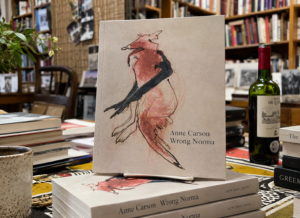
Her 2024 collection, Wrong Norma, shows that she remains just as adventurous. The book combines stories, poems, translations and unusual narratives, often mixing humor with serious reflections on life.
The 2026 Nobel Prize recognizes that creative freedom. Carson has demonstrated that a poet can also be a scholar, a translator can become a storyteller and an ancient myth can become a modern love story.
For newcomers, Autobiography of Red offers an engaging introduction, while Short Talks reveals her humor and imagination. Readers interested in her more experimental work may find Nox particularly rewarding.
Anne Carson has spent decades making familiar stories feel strange and strange stories feel familiar. Her Nobel Prize recognizes a writer who continues to find new possibilities in literature, even when it seems everything has already been written.